
Gin and the English: An Illustrated History by Paul Jennings is the latest book to publish in our Historic England imprint. This work looks at the history of gin from its arrival in England in the sixteenth century to the present day. It takes the story from its use as a medicine, through the Gin Craze of the eighteenth century, to the cocktails of the inter-war years, to the designer gins of today. In this blog post, author Paul Jennings introduces us to this new book and the evolution of our relationship with gin over the last 400 years.
We have always had an ambiguous relationship with alcohol. People love it for the pleasure it brings and others hate it for the harm it can do to individuals, families and the wider society. This makes it a fascinating subject. Alcohol is so much more than a drink in a glass, but is embedded in our economy, society and culture. Gin and the English: An Illustrated History approaches it in that spirit and brings to that study many years of research into English drinking habits and drinking places. It is published by Historic England in partnership with Liverpool University Press and illustrated with over sixty images.
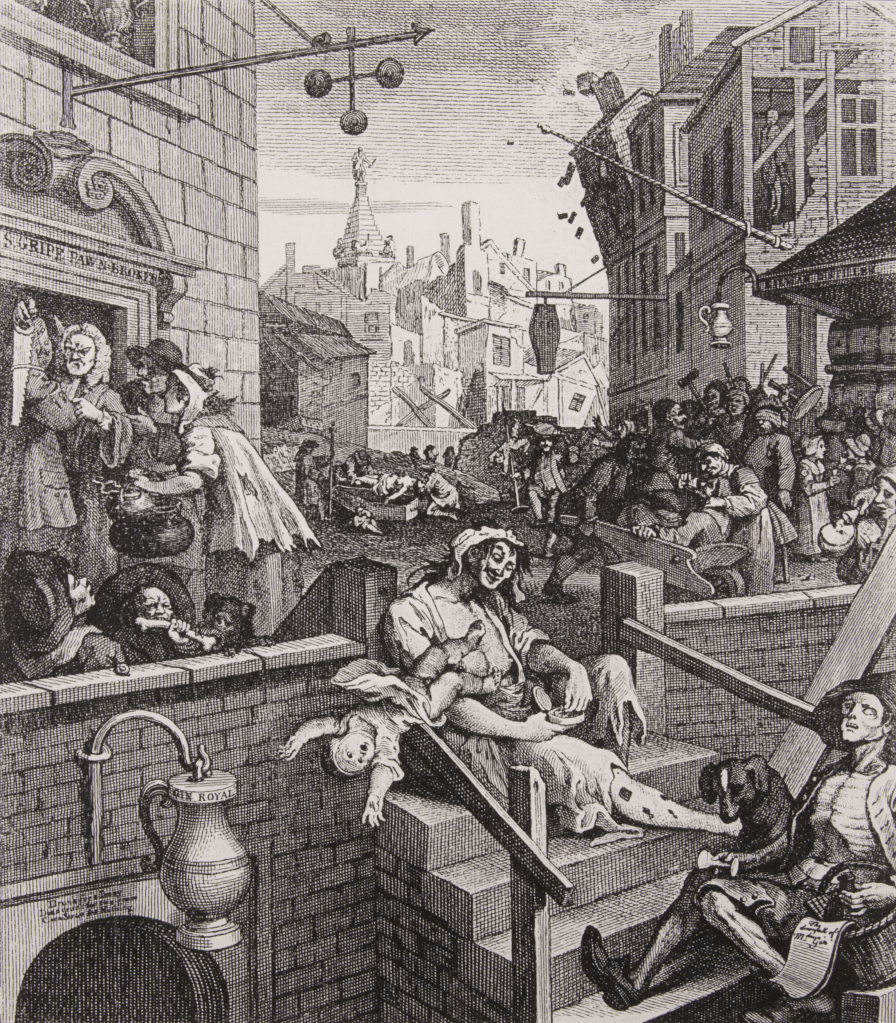
Gin has so many meanings. We think of the expression ‘Mother’s Ruin’, which tells us immediately how much the spirit has been associated with women over the centuries. One thinks, of course, of Hogarth’s famous 1751 engraving of Gin Lane, with its central horrifying image of a drunk woman allowing her infant to fall to its death in front of the gin shop’s sign. This was at the height of the so-called Gin Craze of the early eighteenth century when consumption soared. It was still then a relatively new drink to England, having arrived from the Low Countries in the sixteenth century and slowly become popular in the seventeenth. But it took a relaxation of any government controls and a favourable economic climate to produce an epidemic of heavy drinking and the immortal, if probably apocryphal, saying:
Drunk for a Penny
Dead drunk for two pence
Clean straw for Nothing.
Drinking gin was something done by all classes, but above all the working class. Famous names produced it, like Gordon’s or Booth’s. In the late eighteenth and early nineteenth centuries, new types of drinking place were developed to attract customers. These became the celebrated gin palaces – extravaganzas of fine woodwork, coloured tiles, glass and mirrors and gaslight – some of which survive to this day, like the Princess Louise in Holborn. All the while, the temperance movement campaigned tirelessly against its evils.
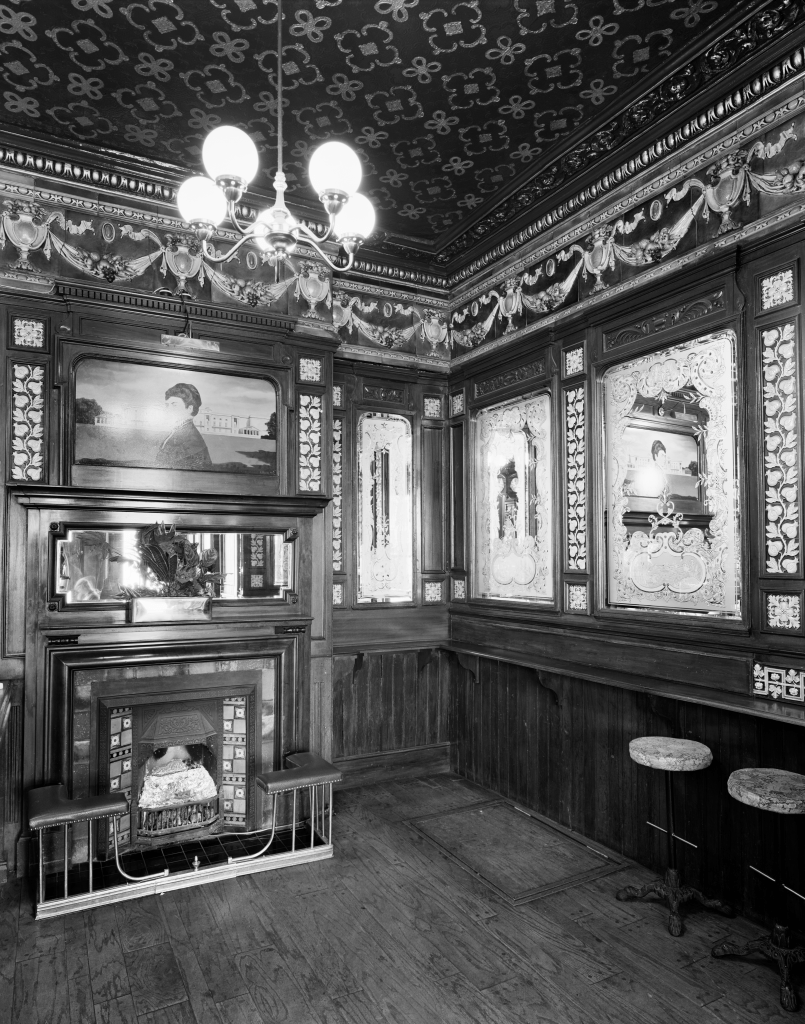
[Paul D. Berkshire Collection. Source: Historic England Archive]
The twentieth century, partly as a result of restrictions introduced during the First World War, saw a big drop in alcohol consumption. Working people largely ceased to drink gin. Instead, the better-off adopted it in the 1920s and 30s for cocktails – Noel Coward and all that. Then, after another war, gin came to be seen as a rather old-fashioned, conservative sort of a tipple, redolent of military men drinking their gin and tonics in an Empire soon to vanish or secretive elderly ladies hiding it from the neighbours. Its darker side was also foreground, including its use to bring on a miscarriage as portrayed, for example, in the 1960 film Saturday Night and Sunday Morning. Among the young, vodka became the tipple of choice, while whisky had long been the favourite of middle-class men.
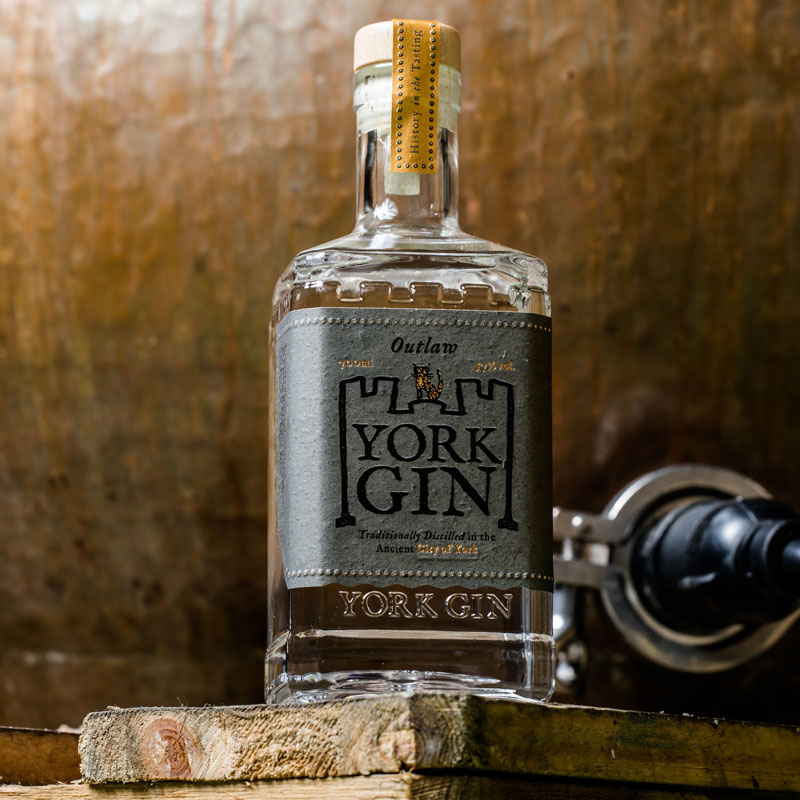
But then, towards the end of the last century, gin again underwent something of a cultural shift. It once again became fashionable, part of a new liking more generally for craft or designer products and a product of growing affluence for some. A plethora of new gins were produced by small distillers, permitted now to produce smaller amounts, with names redolent of local places and history like Cambridge or Whitby or York Gin. Women were prominent among these new drinkers, enjoying their wine and gin, when once a nice cup of tea would have done the trick. And once again, this provoked concern about the consequences for their health of this ‘mummy drinking culture’, as it was termed. There was even a series of novels by Gill Sims, beginning with Why Mummy Drinks in 2017.
We can see how gin has a unique history, one which has seen many changes over the four hundred years of England’s relationship with the spirit, and which it will without doubt continue to do. It is the aim of Gin and the English: An Illustrated History to tell, in a lively and accessible but scholarly way, something of that relationship and its history.
Find out more about Paul Jennings’ new book Gin and the English: An Illustrated History on the Liverpool University Press website.

Follow us for more updates
Sign up to our mailing list
Twitter | Instagram
www.liverpooluniversitypress.co.uk
 Liverpool University Press Blog