
This special issue of Sculpture Journal offers the first sustained, collective study of Westminster Abbey’s sculptural canon, repositioning the Abbey not as a series of isolated monuments but as a densely interconnected pantheon shaped by centuries of artistic, religious, and political forces. Emerging from the 2024 Henry Moore Institute conference Monuments in Conversation, the issue invites readers to re-evaluate how monuments function within this singular space—and how their meanings shift through changing contexts, technologies, and audiences. The following Q&A with guest editor Gemma Shearwood provides insight into the motivations behind the issue, its methodological innovations, and the fresh perspectives it brings to pantheon studies.
Origins and Motivations
- What inspired you to devote a special issue of Sculpture Journal to Westminster Abbey’s monuments?
GS: Following the success of the “Sculpture and Empire” special issue of Sculpture Journal (June 2024) focussing on St Paul’s Cathedral, I felt that it was important to have a corresponding special issue focussing on Westminster Abbey as an older sister pantheon. Indeed, to some extent it is difficult to fully comprehend the significance of one without the other. I hope that previous readers of the St Paul’s special issue will enjoy finding comparisons and contrasts at Westminster Abbey, and new readers of the Westminster Abbey special issue might go back to see how the pantheon concept develops at St Paul’s. Where this special issue diverges from the St Paul’s special issue is in the range of themes discussed. Whereas the St Paul’s special issue focussed strictly on empire and was arranged by imperial geographies, this special issue reflects a wider variety of themes which comprise the abbey’s sculptural pantheon.
The special issue emerged from a conference held at the Henry Moore Institute in July 2024. Responding to the prominence of Westminster Abbey in British and global discourse following the funeral of Queen Elizabeth II in September 2022 and coronation of King Charles III in May 2023, this conference brought together scholars from different disciplines at different stages of their career to discuss Westminster Abbey in relation to their various fields of expertise. The range of topics discussed by contributors evinced the variety of the Westminster Abbey pantheon. Yet, overlaps between contributions also demonstrate the recurrence of particular themes. I was delighted when all of the panellists agreed to transform their papers into articles for publication, and the issue as it exists now is a faithful textual reproduction of the verbal conversations held on the day.
- How did the coronation of King Charles III shape or sharpen the timeliness of this issue?
GS: The coronation was a resignification of Westminster Abbey’s role in British politics, society, and culture. This is what makes the pantheon so special to study: it is the only collection of sculpture which has this unique relationship with monarchy and government. King Charles III’s coronation was also the first coronation since the formal dissolution of the British Empire and formation of the Commonwealth. Hence, this was an opportunity to re-evaluate the relationship between monarchy, government, and the legacies of empire in a pantheon with such strong imperial connections – as discussed in my own contribution to the special issue.
The proliferation of digital and broadcast media means that King Charles III’s coronation was by far the most widely visible coronation of a British monarch to date. The proliferation of images of the abbey through coverage of the coronation ceremony on people’s phones, tablets, laptops, televisions, and in newspapers or magazines echoes the proliferation of reproductions of monuments such as the Shakespeare monument discussed in the special issue by Samantha Lukic-Scott.
As a regular visitor to the abbey for my own research, I found that it became much busier with tourists around the coronation and following the funeral of Queen Elizabeth II, which was reflected in the enhanced visitor numbers in 2023 and 2024 which surpassed pre-Covid figures. Thus, the abbey in these years was filled with even more conversations than usual. Hence, this special issue probes what is at stake if this enhanced visibility continues and what visitors or consumers of virtual content might actually be engaging with both visually and in the longer history of Westminster Abbey as a site of tourism and landmark in national cultural consciousnesses.
- Why do you think scholarship on the Abbey’s sculptural fabric has been relatively scarce compared to its architecture and religious role?
GS: This is a great question and one which is hard to explain because from my perspective the sculptural fabric is the most fascinating thing about the abbey! I wonder if it is a legacy of the historic treatment of sculpture in the Westminster Abbey context. Since at least the mid-eighteenth century there were complaints about the sculptures as inappropriate and unsightly. In the mid-nineteenth century these complaints became particularly vocal, with critics such as William Morris decrying that “their ugliness must be endured” and that they detracted from the integrity of the gothic architectural surroundings. There were also regular complaints that the sculptures were detrimental to the sanctity of the space and a distraction from Anglican worship. Hence, there was almost a bifurcation between ‘academic’ interest in the architecture or in the institutional religious history as unblighted by sculpture, and ‘touristic’ interest in the monuments which could be satiated by simple guidebooks. As this special issue proposes, the monuments, institution, and architecture are symbiotic, with monuments responding to their location in the building and engaging with their religious contexts. Hence, although this special issue prioritises the monuments, it does not concentrate on them in isolation, thereby demonstrating how the sculptural pantheon works in harmony and in tension with its material and institutional surroundings.
Conceptual Framework
- The issue positions Westminster Abbey as a “trans-medial, trans-temporal” sculptural canon. Could you explain how this approach differs from traditional art-historical studies of monuments?
GS: Most conventional approaches to studying monuments tend to isolate them from their contextual and circumstantial surroundings, which limits our ability to interpret them as markers within the socio-cultural landscape. This is especially crucial in monuments studies because they are intentionally memorialising – in that they retain a personal and cultural memory that is projected towards a future society. In Westminster Abbey, this memorialising impetus acquires national and international significance as the resting place of monarchs, high-profile Britons, and imperial actors. Coronations, state occasions, and regular ceremonies reimbue the sculptural fabric with ongoing significance. Hence, this special issue considers the monuments against the context of their creation and installation in the eighteenth century alongside the longer history of their continual exposure. This is the strength of remaining ‘inside’ Westminster Abbey for the duration of this special issue which allows for deeper penetration into the pantheon and its developments over time.
- What do you hope readers take away from considering the abbey as a site of sculptural “conversations”?
GS: I hope readers develop curiosity about the abbey pantheon which will encourage them to investigate further and find their own ‘conversations’ with and between the monuments. The issue presents just nine examples from hundreds of possible avenues for discussion. The benefit of the approach signalled by this special issue also is that it is eminently transferable to other sculptural pantheons and monumental collections in regional cathedrals and parishes. Indeed, it is even possible to begin thinking about conversations between pantheons as well as between sculptures. I hope they also appreciate how monuments occupy complex intersections between Anglican religious sculpture, public political sculpture, private commemorative sculpture, and artistic secular sculpture. Church monuments are a uniquely complex though vital part of British sculptural history which are too often overlooked in favour of secular monuments. But I think that this special issue demonstrates how they can they enrich the study of British sculpture by helping us to understand the practices of sculptors, conservators, curators, and patrons.
Editorial and Research Process
- What challenges did you face in balancing close readings of individual monuments with the larger thematic concerns of the abbey as a whole?
GS: There is a good balance across the special issue between contributors focussing on larger thematic concerns and close readings of monuments. For example, M G Sullivan’s essay addresses fourteen canonical contributions to the Westminster Abbey pantheon by Francis Leggatt Chantrey, whereas Sarah Monks concentrates on a single monument to Mary Kendall and Catherine Jones as a vehicle to explore female self-hood. Yet, all of the authors achieve a remarkable harmony within their essays between minute detail and broader metanarratives. For instance, Claudine van Hensbergen uses the individual monument to Abraham Cowley as a key to unlock the organisational foundations of Poets’ Corner, meanwhile Marjorie Coughlan uses a wide range of sources and reinterpretations of Isaac Newton’s legacy to reflect back onto the single detail of the celestial globe in his monument. I think the apparent deftness and precision with which all authors balance careful object-focussed scrutiny with interpretations of generalised trends in the abbey and beyond testifies to the utility of considering the Westminster Abbey pantheon as a series of monumental conversations.
New Insights and Surprises
- Did any contributions overturn long-held assumptions about particular monuments or sculptors?
GS: Each author presents brilliant and creative interpretations which overturn conventional readings of these monuments and readers should expect to have their assumptions challenged in numerous stimulating ways. To select a few, Charlotte Davis boldly challenges historic censure of Grinling Gibbons’s Cloudesley Shovell monument and successfully turns the tide of unfair art criticism back on itself in ways that I think will be most surprising to readers familiar with long-held popular assumptions about this monument and its impact on Gibbons’s reputation as a stone carver. Additionally, Claudine van Hensbergen presents a compelling case for redating the Abraham Cowley monument to seven years earlier than previous assumptions. Some authors introduce new readings to monuments which have not been subject to much previous discussion. Michael Smith’s essay takes seriously a loosely-grouped category of largely overlooked monuments which he labels as “smaller”. I confess I would probably have spent little time with the George Lindsay Johnstone monument compared to its “larger neighbours”. Smith demonstrates how mistaken I would have been and overturns prevailing presumptive preferences for discussing bigger sculptural groups.
- Were there monuments that you personally began to see differently as a result of this project?
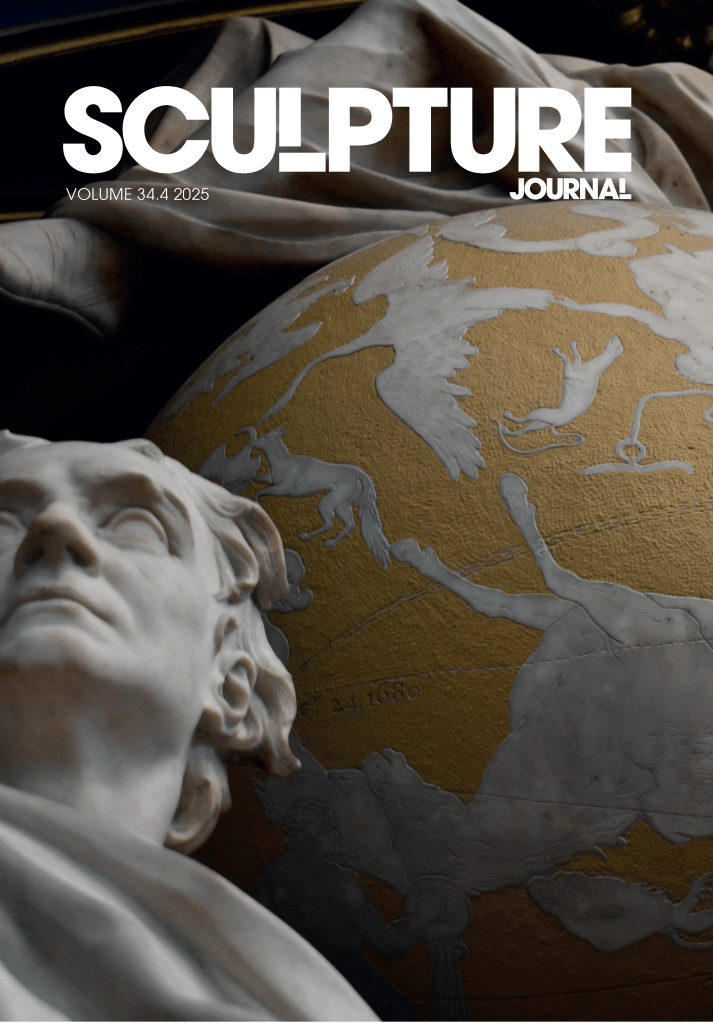
GS: This is a lovely question. All of the essays have prompted me to reconsider the monuments in new ways. I’ve been researching the eighteenth-century abbey pantheon for several years and thought I knew most of the monuments quite well, so it has been delightful to be re-introduced to them. If I had to pick just one example: I will never look at the Isaac Newton monument in the same way again. Marjorie Coughlan’s diligent decoding of the monument’s iconography dispelled my straightforwardly hegemonic interpretations by suggesting subversive references to Newton’s interest in alchemy. I went from viewing the monument as conservative and in truth a little boring to feeling actively excited and curious to find out more. Indeed, the celestial globe has become the cover of the issue because I was completely convinced by Coughlan’s analysis of its allure in the monument – some might even say it has an interpretive gravitational pull, apropos to the commemoration of Newton. I think I also would credit a newly enriched appreciation for Francis Leggatt Chantrey’s monuments to M G Sullivan’s astute analysis of how they respond to their surroundings. I feel I now have a deeper understanding of Chantrey’s subtle genius which has made me more interested in the intricate details – I will now always approach his work with one eye on the surroundings for any lifted motifs or curated ‘eyelines’.
Contemporary Resonances
- The articles engage with themes like gender, sexuality, decolonisation, and artificial intelligence. How do these contemporary concerns shape our interpretation of eighteenth-century monuments?
GS: This special issue proposes that the histories of the monuments are still ongoing because the Westminster Abbey pantheon is still evolving in ways which reverberate back to the past and forward to the future. Since the abbey occupies a pivotal role in British and post-colonial consciousnesses as the site where the monarch and head of the Commonwealth is crowned, it is prudent to really think critically about the continual resignification of these monuments when rights for many women, gender non-conforming individuals, and LGBTQIA+ people are insecure across Britain, the Commonwealth, and beyond. Jason Edwards’s afterword presents a powerful case for the politicising of the pantheon along these lines. Indeed, the eighteenth-century Westminster Abbey pantheon was always politically live as a place where issues of the day were discussed publicly and where notions of supposed ‘Britishness’ or conceptions of the empire were articulated through the sculptural fabric. Hence, using the pantheon to discuss contemporary concerns is faithful to the spirit of the eighteenth-century monuments.
- How do you see the abbey’s monuments continuing to influence public memory and national identity today, especially given their global visibility?
GS: Due to its connections with the monarchy as the coronation church, a royal peculiar, and the site of periodic special services such as the Commonwealth Day celebration or the regular “Together at Christmas” carol concert, Westminster Abbey will continue influencing public memories and national identities for as long as the monarch is head of the government and the Commonwealth. The Dean and Chapter certainly seem to be aware of the role played by monuments in this. In recent years, retrospective commemorations such as the monument to Ignatius Sancho (2023) have revisited the eighteenth century to expand the representation of this period in the abbey, presumably with the view to redefine public memories. This type of conscious and careful revision has the power to positively influence public memories and national identities by creating a pantheon that more accurately reflects Britain’s historic diversity which was obscured by the original eighteenth century monuments, thereby offering opportunities to trace the origins of Britain’s present multi-culturalism. Given the pantheon’s global visibility and in a post-Brexit context, incorporating more global figures in the pantheon might also help to strengthen Britain’s relationship with the rest of the world. For example, there are already several monuments to Americans such as Franklin Delano Roosevelt, confirming and reflecting the so-called ‘special relationship’ between Britain and the USA.
- In a world where reproductions and digital surrogates are increasingly common, how might the experience of viewing these monuments in situ be changing?
GS: As part of the preparation for the conference, all the contributors took a visit to Westminster Abbey in June 2024 to discuss the monuments in situ and explore the surroundings. We felt that this type of ‘live’ experience was essential to our study. However, since 2016 Westminster Abbey has featured an online virtual tour created by Stirking Places, comprised of 175 panoramas and 2,100 individual images. The tour was intended as an educational tool and features an interactive overlay. Engagement with the tour reached almost four million views on Google before the Covid-19 lockdowns which drastically expanded the scope for virtual engagement with cultural heritage at the abbey and several other institutions such as the British Museum. That said, the virtual tour is limited in terms of access to all areas of the abbey, and the resolution does not afford much magnification for close scrutiny of the monuments. In this respect, the abbey’s official catalogue of images, augmented by personal photographs since the ban on private photography was lifted in 2020, is essential – especially for those unable to visit Westminster Abbey for a number of reasons. We are very grateful that the Dean and Chapter granted us kind permission to use personal photographs we took on our visit in June 2024 for this special issue.
Izabella Gill-Brown’s contribution to this special issue also demonstrates an innovative approach to how digital surrogates can help in conserving the monuments. Drawing from her own experiences, she presents insights into how using Artificial Intelligence to rehearse hypothetical conservation treatments can inform physical conservation practice. Hence, she inverts the primacy of direct or ‘live’ viewing which informed our initial site visit in June 2024 to instead place virtual encounters before real world application. Such a combined approach between digital and live experiences using new technologies might be the future of tourism in the abbey, with the possibility for app-based interpretations in front of the monuments.
Looking Ahead
- What do you hope this issue contributes to the broader field of pantheon studies and the study of sculptural canons?
GS: This is the first edited collection dedicated entirely and exclusively to the sculptural pantheon at Westminster Abbey. Therefore, given the significance and prominence of Westminster Abbey in British pantheon studies, it fills a crucial gap in scholarship to date. I hope that the special issue will precipitate much more scholarship concentrating on this topic in future, rather than existing as a single stand-alone work. In terms of broader pantheon and sculptural canon studies, I hope the interdisciplinarity of this special issue reveals that it is possible to have a diverse and varied discussion covering a range of themes within a single pantheon, and that such sustained florescence not only enhances our understanding of the place hosting the discussions but also reverberates beyond to enrich our understanding of pantheons or other sculptural canons more generally.
If you are based at a university or research institution, please consider recommending a journal subscription to Sculpture Journal to your librarian. Institutional subscriptions provide full online access to the complete archive—nearly 30 years of scholarship dating back to 1997—and support the ongoing publication of this vital resource.

Follow us for more updates
Sign up to our mailing list
Follow us on social media
www.liverpooluniversitypress.co.uk
 Liverpool University Press Blog