
In Ireland, 1st February is St Brigid’s Day, honouring St Brigid of Kildare and marking the beginning of spring. The holiday is also used to celebrate Irish women. Here, author of Irish Emigration to England Explored through Buildings, Samantha Lyster, discusses the impact Irish women had on English architecture.
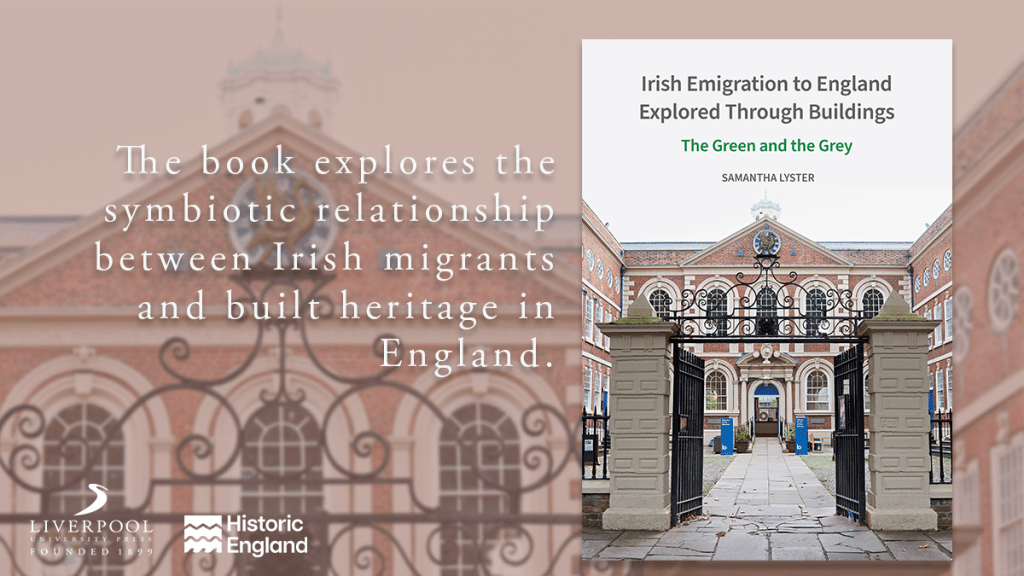
St Patrick’s Day is a fixture in the British calendar, but there’s another Irish patron saint that rarely makes the news here. February 1st is the traditional day to celebrate St Brigid of Kildare. She was apparently born around 450 AD and founded an Abbey among her many accomplishments. She is an inspiration for many Irish women, and I was reminded of her story during research for my book Irish Emigration to England Explored Through Buildings. One chapter explores female migrants, as historically more women than men emigrated – a pattern most untypical amongst migrant groups. Below, in their honour, are several buildings in England that feature in the book and are associated with remarkable Irish women.
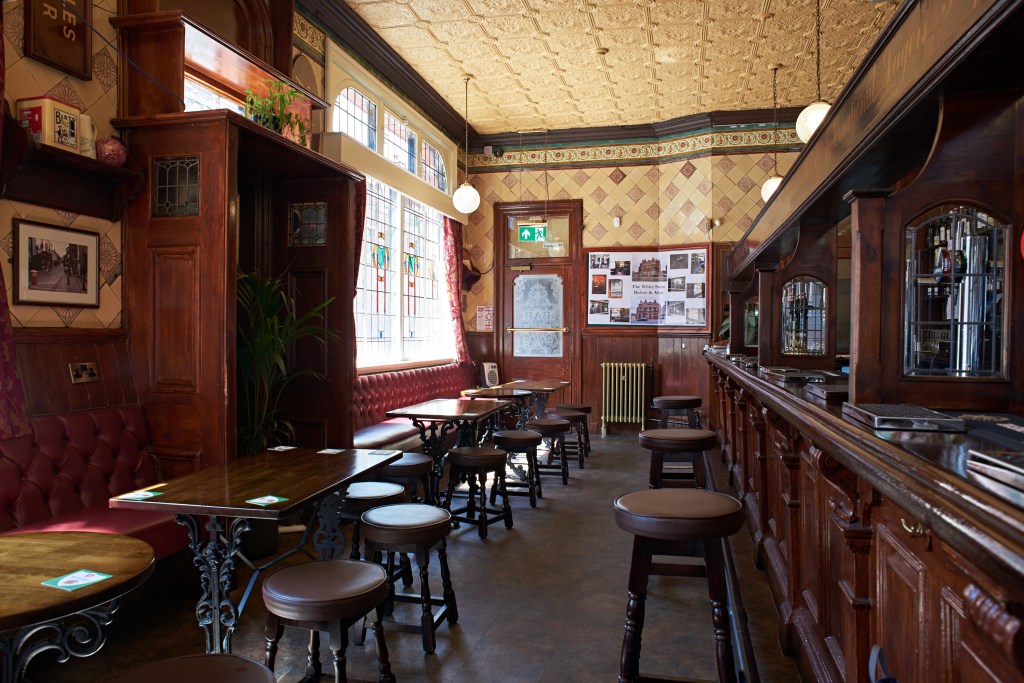
The Grade II White Swan is an English pub that was adopted by the Irish. In 1969 a Roscommon couple, Michael and Agnes Creaton, took it on. Sadly, Michael died in 1975, but Agnes kept the tenancy and passed it to her daughter Angela, who ran the pub until 2019. The pub, built in 1899-1900 by James and Lister Lea for Ansells Brewery, boasts almost all its original features, including glazed Minton tiles lining the walls and passageways.
Photo: Stephen Morgan
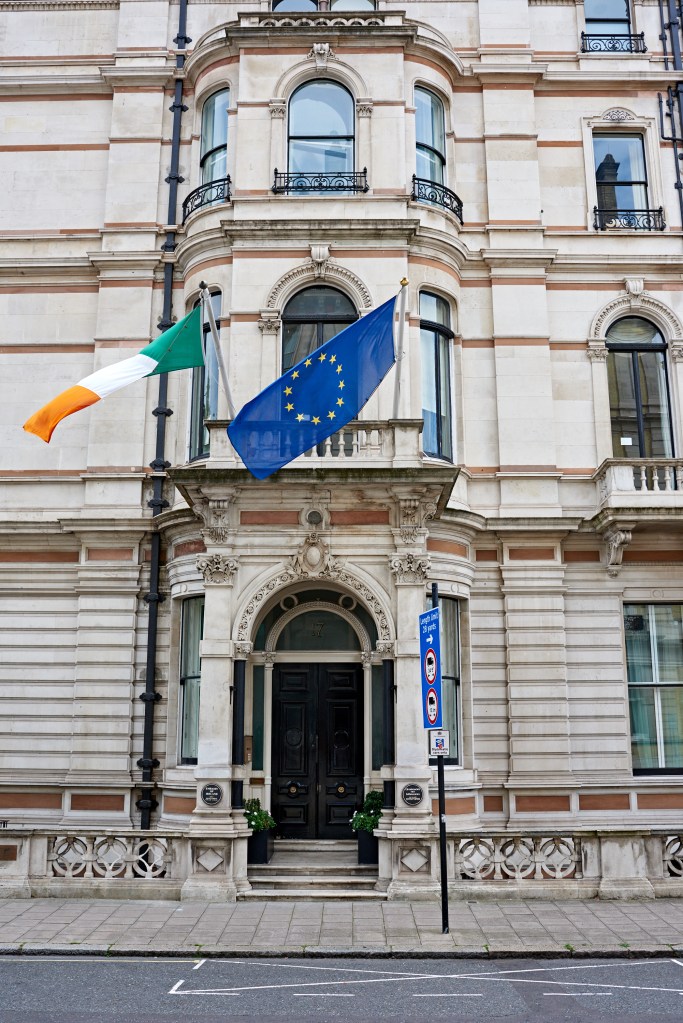
In 2025 Ireland elected Catherine Connolly as its 10th President, the third woman to hold the role since its inception in 1938. The President is effectively Ireland’s Head of State, with a wide range of powers, including appointing the country’s Ambassadors. The Embassy will be holding St Brigid Day celebrations in its magnificent Grade II four story mansion dating from 1868. Designed by Thomas Cundy III, it was built in a French Renaissance style. It was leased to the Commissioners of Public Works in Ireland In September 1949. The Irish government carried out an extensive refurbishment in 1953. Since then, its interiors have little changed, apart a select redesign by the Dublin-born but London-based architect Angela Brady.
Photo: Stephen Morgan
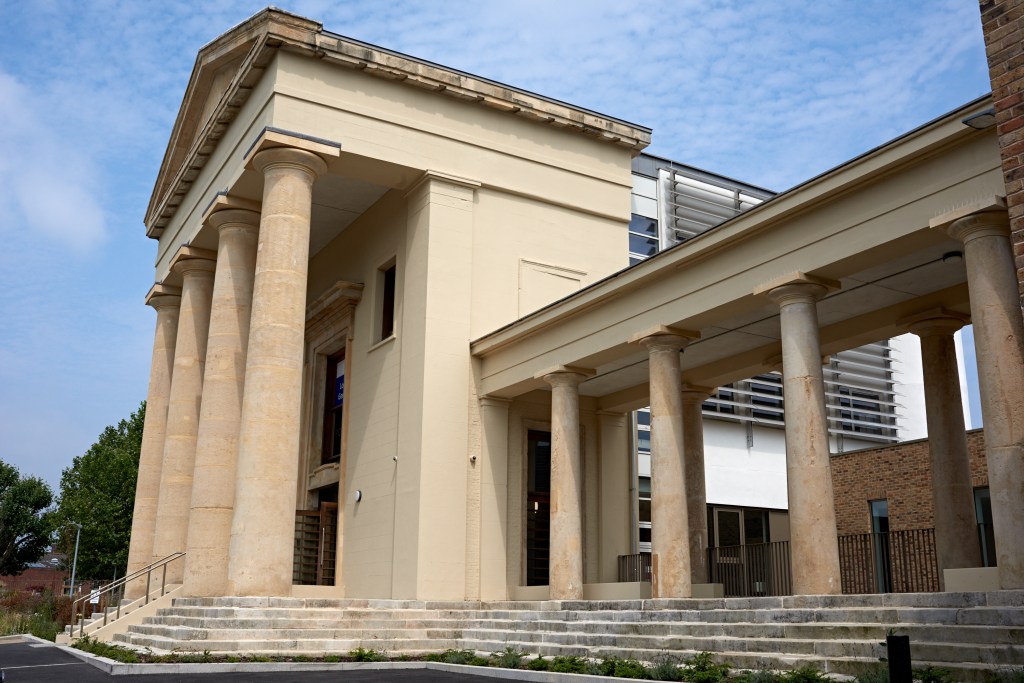
Angela Brady is also one of the architects behind the sensitive re-imagining of the Grade II Clapton Portico. The Greek classical Portico is all that remains of the London Orphan Asylum, which was completed in 1825. In 2003 the Learning Trust was awarded funding to build an extension that became the Portico City Learning Centre. Brady, a former President of RIBA, held workshops with residents to ensure their input into the project, which received the 2007 Hackney Design Award.
Photo: Stephen Morgan
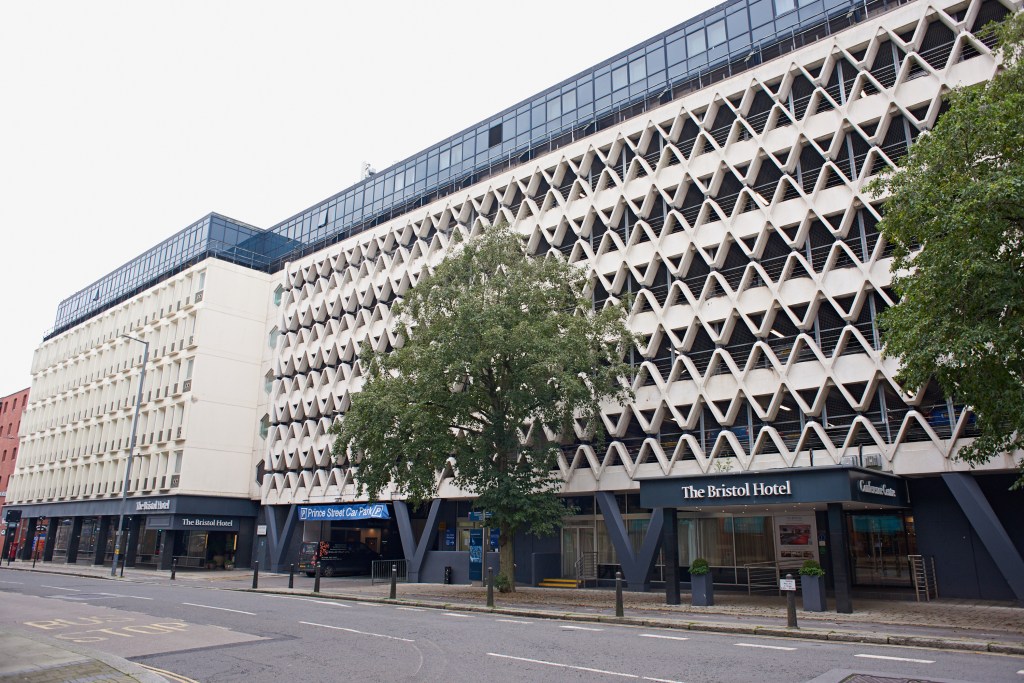
The Bristol Hotel is part of The Doyle Collection, a hotel dynasty founded in 1959 by Pascal Vincent Doyle. The business is now headed by his daughter Bernie Gallagher. An economics graduate, she has steered the Doyle Group from mid-market operators to owners of design-led hotels with a reported turnover of over 147m Euro in 2023. The 1966 purpose-built Brutalist hotel and its adjacent car park, designed by the architects Kenneth Wakeford Jarram & Harris, are often cited as examples of significant mid-Century design.
Photo: Stephen Morgan
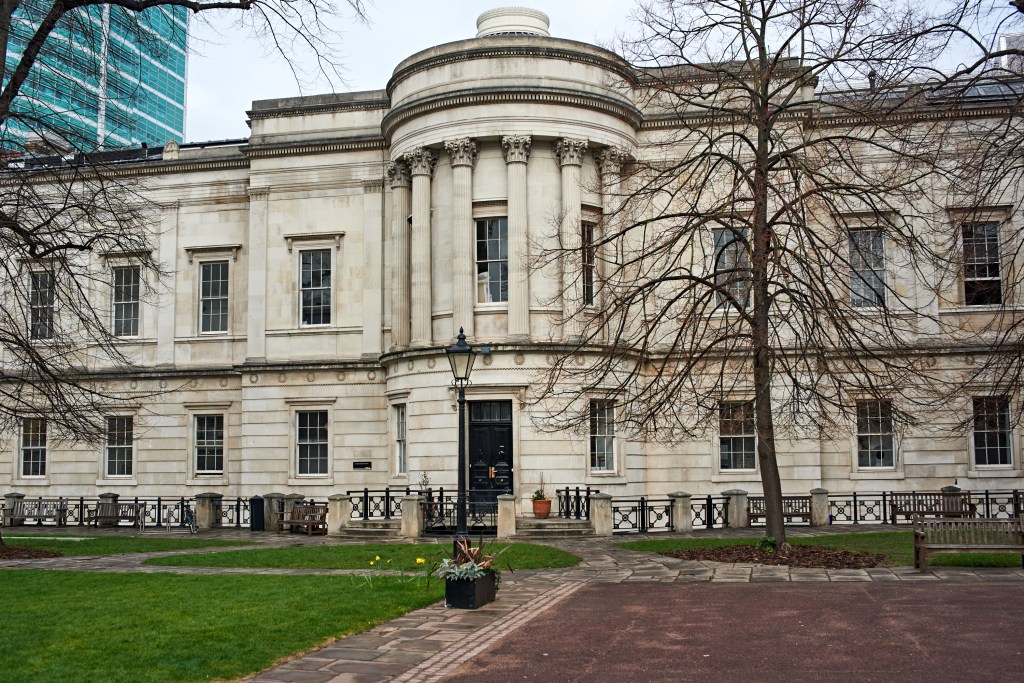
The Slade, located in the Grade I North Wing at UCL’s Bloomsbury campus, has been incredibly popular with Irish students. From 1930s onwards, at least 30 Ireland-born artists are known to have studied there, including a more recent attendee, the County Down born and raised Beth McAlester. McAlester graduated last year, not only with First Class Honours, but also with a handful of art prizes. She has commented on how the Slade has developed her practice and credits it with growing her confidence as a painter.
Photo: Stephen Morgan
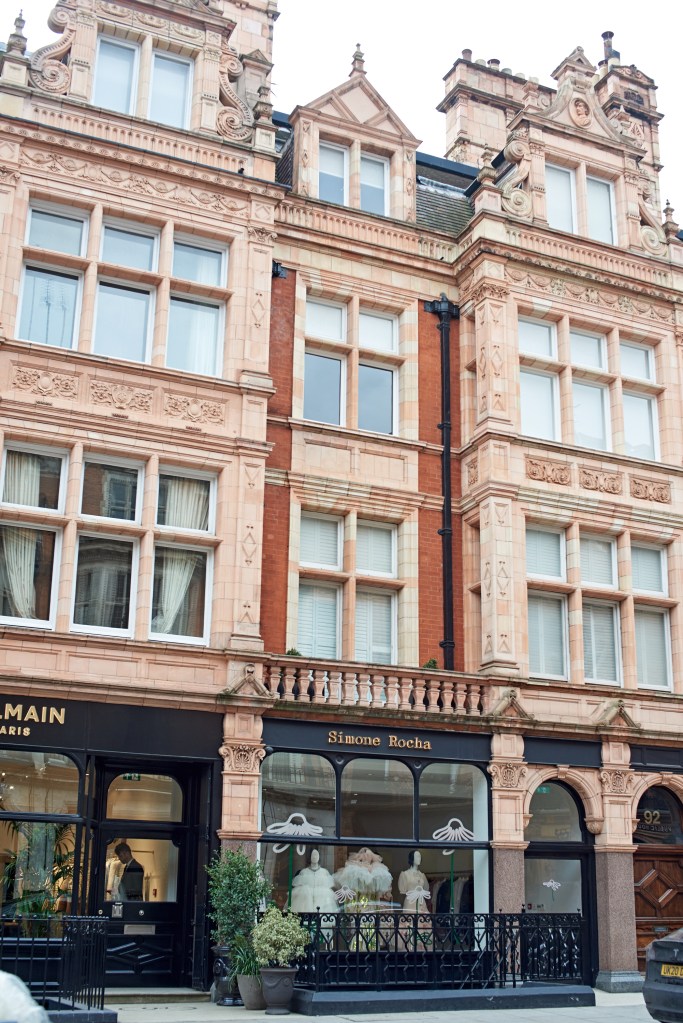
This impressive late Victorian Mayfair store is currently occupied by the Irish designer Simone Rocha. Dublin-born Rocha is the daughter of designer John Rocha, but has carved her own career internationally with her hyper feminine designs and collaborations with retailers such as H&M. The three-story Grade II listed building is in a Franco-Flemish Renaissance style and exceptionally pretty, as delicate and ornate as one of Rocha’s dresses.
Photo: Stephen Morgan
Samantha Lyster is a freelance journalist. Irish Emigration to England Explored through Buildings is available via the LUP website now.
Follow us for more updates
Sign up to our mailing list
Follow us on social media
www.liverpooluniversitypress.co.uk
 Liverpool University Press Blog