
Building for the Atomic Age: an industrial archaeology of the United Kingdom’s nuclear industry by Wayne Cocroft was published by Historic England and Liverpool University Press in February 2026. 2026 also marks 70 years since the Calder Hall reactors began generating electricity for the national grid. This heavily illustrated book for the first time presents a general overview of the nuclear industry in the United Kingdom focussing on its technologies and their impact on the country’s built environment and landscape. To mark its publication, the author presents a small selection of the pictures used in the book.
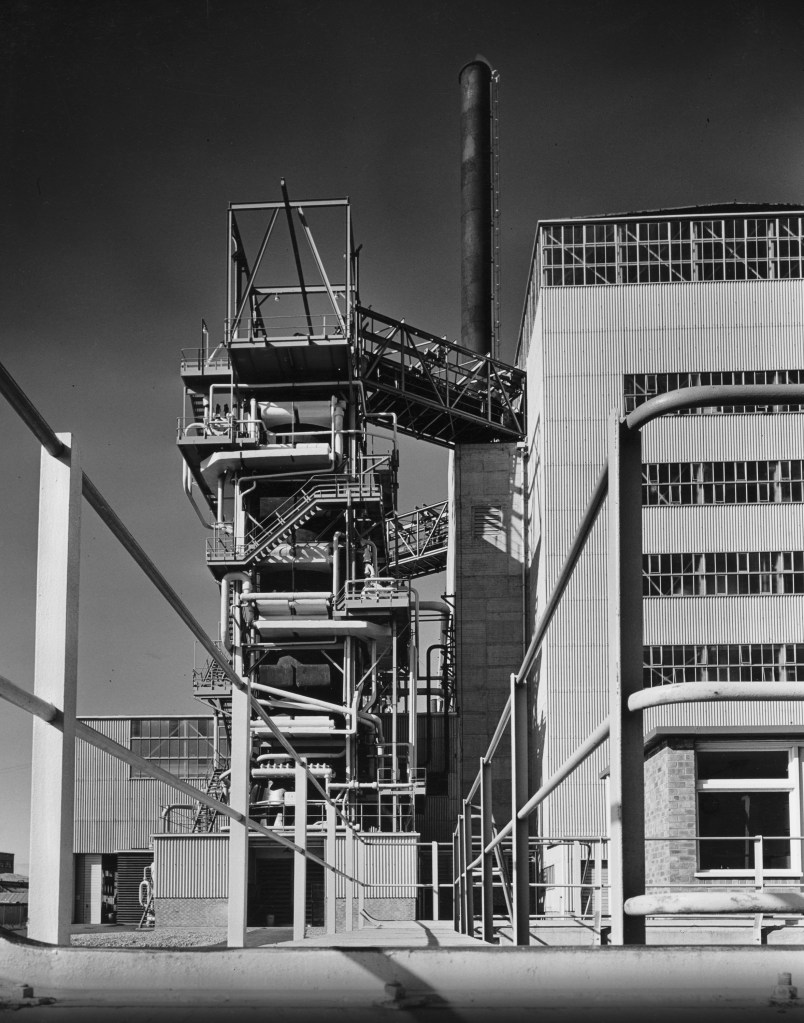
This view shows to the left a heat exchanger and to its right the utilitarian steel-framed reactor structure clad in asbestos sheeting.
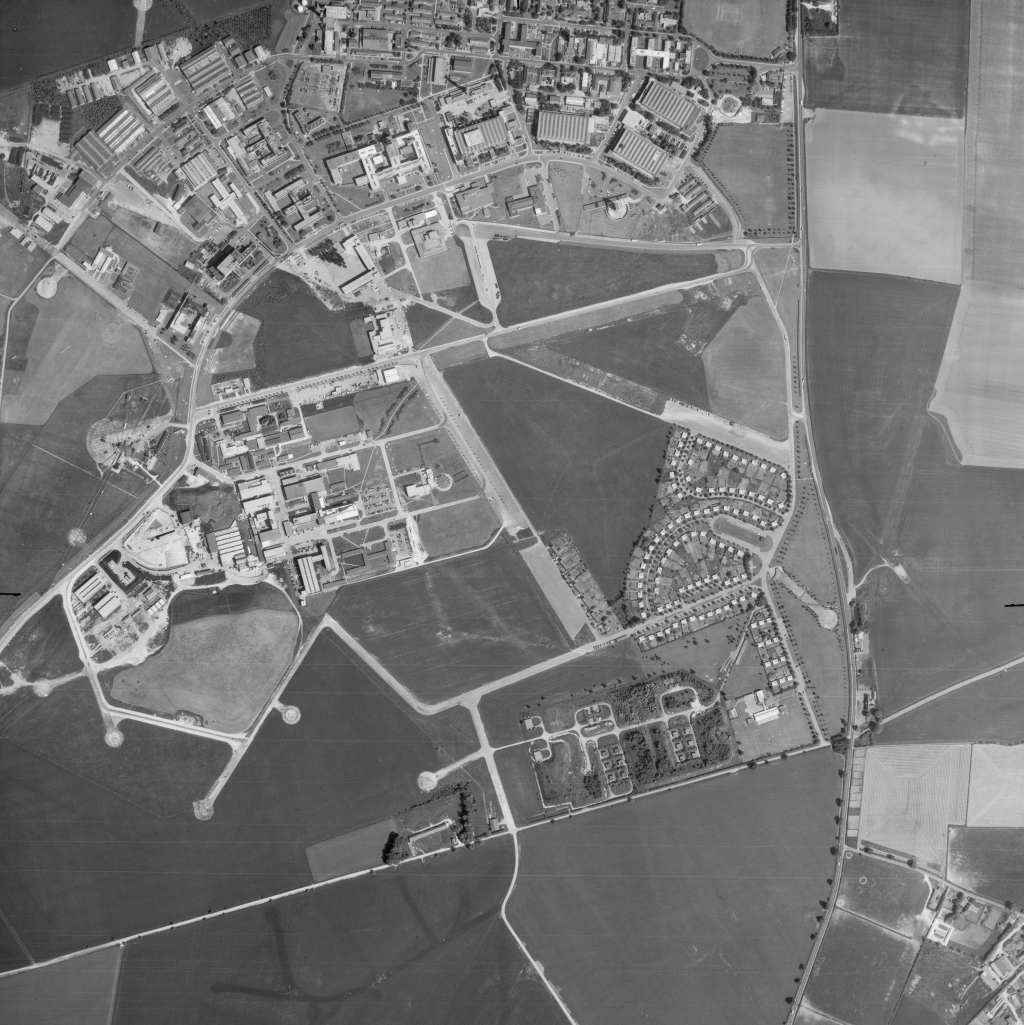
Soon after the end of the Second World War the airfield was transformed into a world class research centre. On 15 August 1947 the Graphite Low Energy Experimental Pile achieved criticality. It was the first successful reactor in western Europe and ran until 1990. In the middle of the airfield is the mid-1960s Rutherford Laboratory bounded by two former runways and to its right an estate of pre-fabs built for the establishment’s work force.
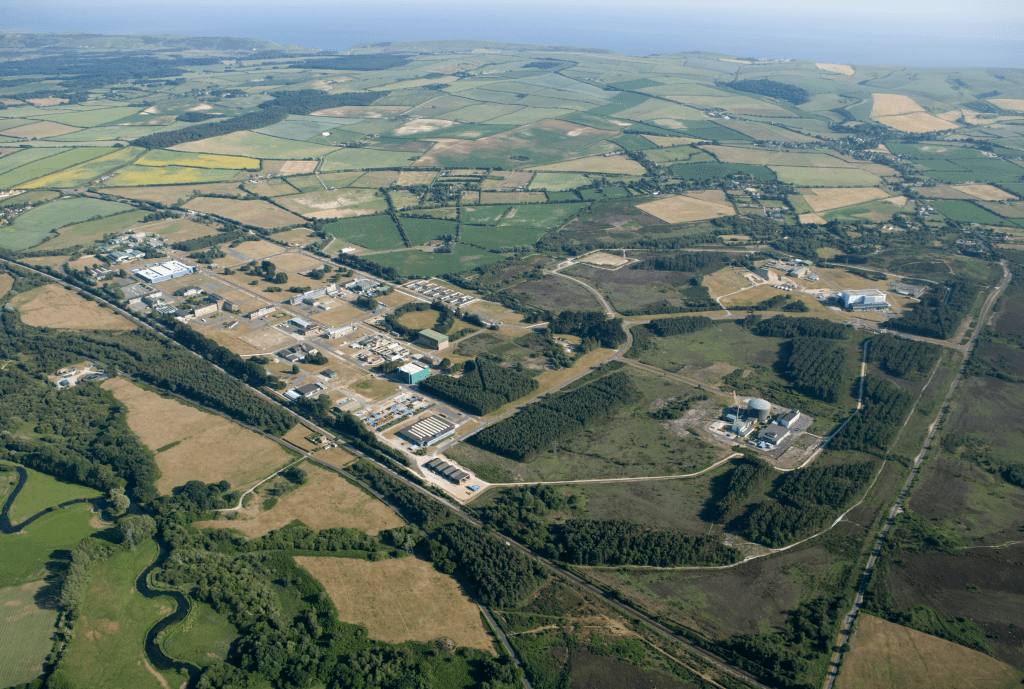
Here local worries about the industrialisation of the countryside were addressed by restricting building heights and the use of a mixture of buff and dark Swanage bricks for facings. Where asbestos sheets were used, instead of their usual light grey finish, they were coloured in two shades of grey/green. At ground level trees obscured its structures and within the site boundary swathes of grass and heath land melded with the local landscape.
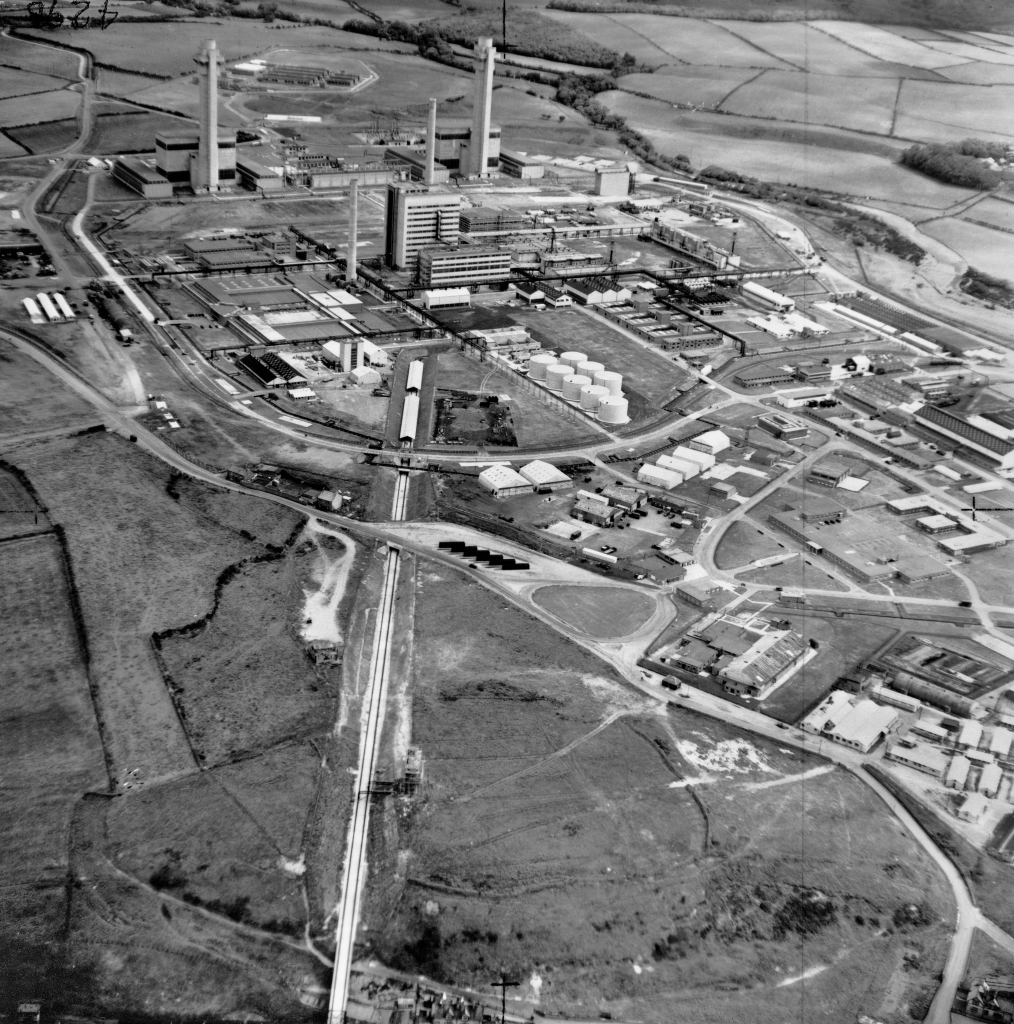
Production of nuclear materials was concentrated in the northwest of England. Plutonium manufacture was carried out at the Windscale Works (Sellafield). To the top of this view is the Piles Group, distinguished by the two, tall ventilation stacks and in the middle is the Separation Group with waste storage tanks and the discharge pipeline leading towards the Irish Sea. To the bottom right is the Main Group comprising the administration block and other supporting activities.
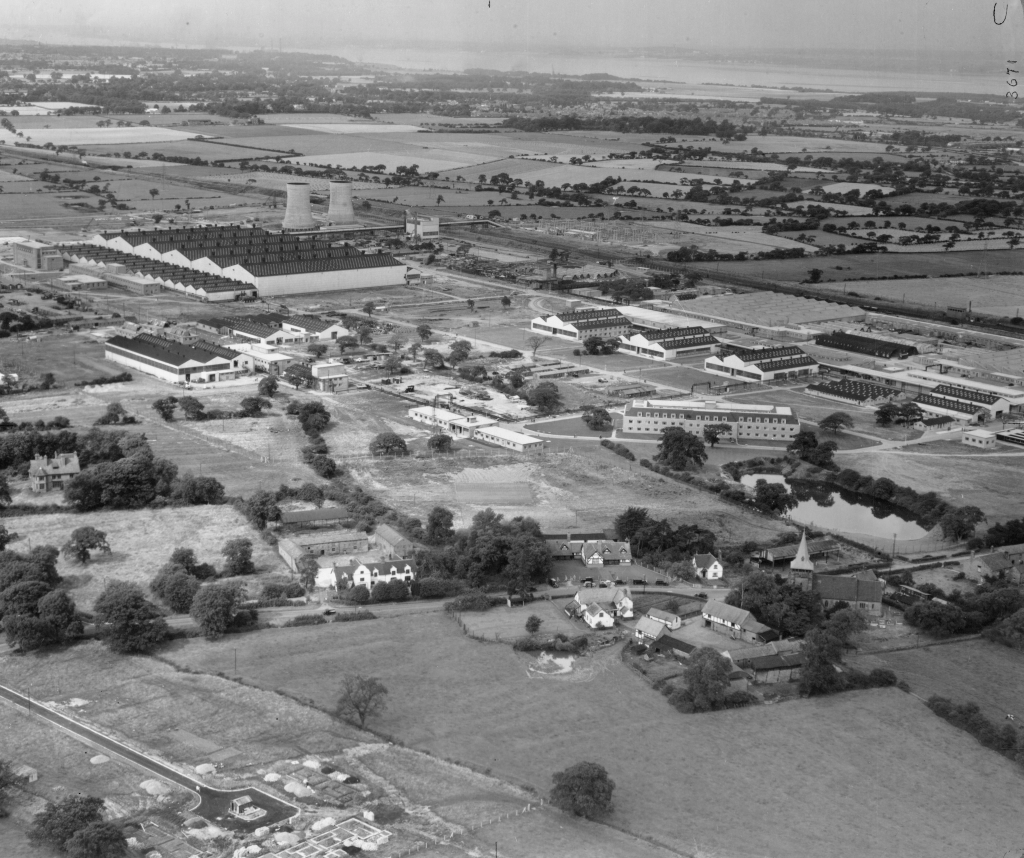
Here a former wartime munitions works was transformed into a uranium enrichment plant. Despite its national strategic importance local concerns were raised about its visual impact on proposed greenbelt land. To allay these fears undertakings were given to make the plant as inconspicuous as possible. These may have included setting the three-storey administrative building at an angle to the works’ main axis and the retention of mature trees to screen the factory from the village.
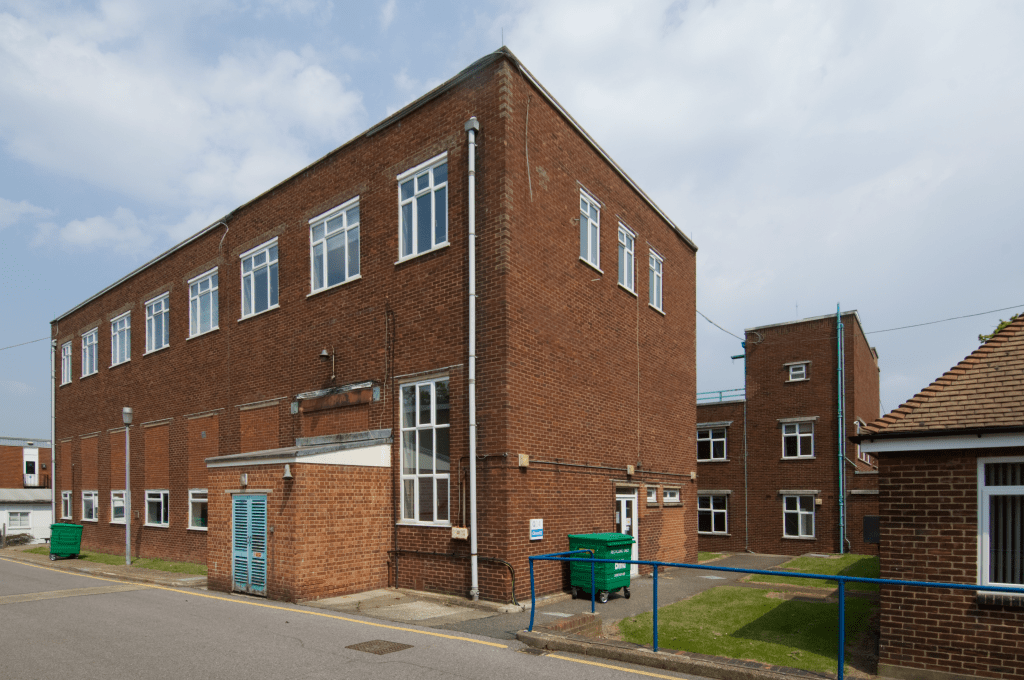
In this purpose-built workshop all the components of Britain’s first atomic bomb, Blue Danube, were assembled. Internationally it is one of the earliest surviving buildings built especially for a nuclear programme. It is listed Grade II.
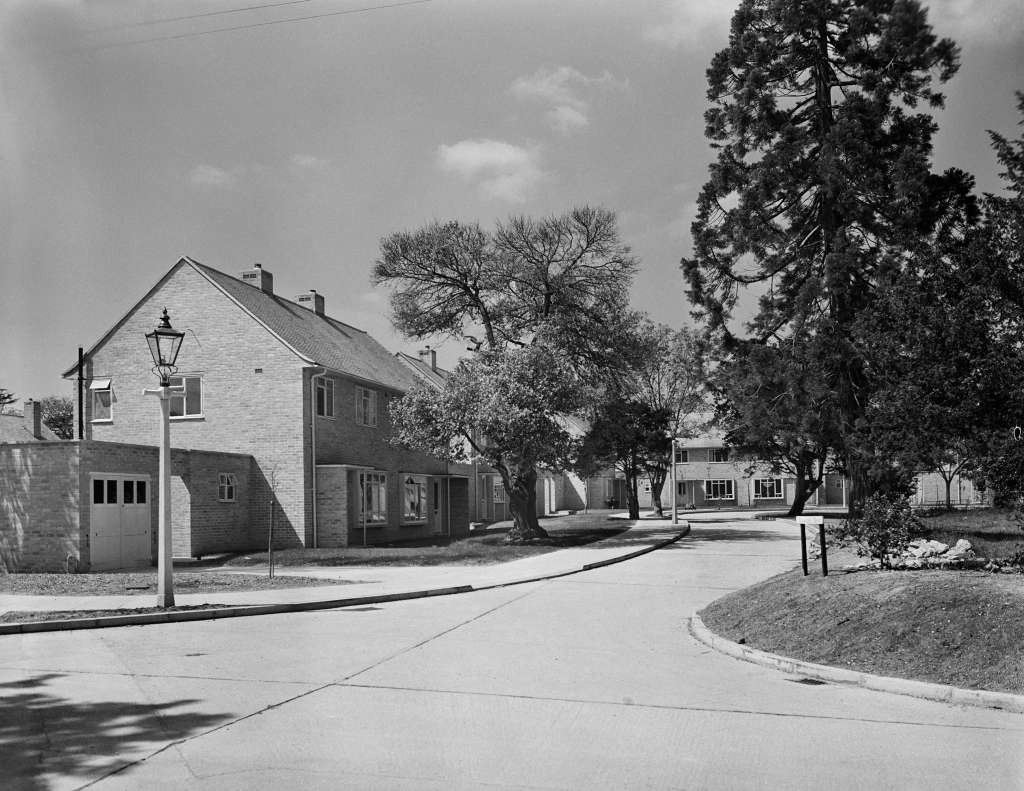
Due to wartime losses, in post-war Britain housing was at premium, and the offer of accommodation might be a deciding factor in the competition for scarce technical staff. In contrast to some other countries the general policy was to integrate personnel into their local communities with housing allocations on new estates matched to working grades. At Abingdon for senior Harwell scientists a generously spaced housing estate was set in former parkland. However, at night technology from the previous century in the form of newly installed gas lights lit this ‘atomic’ community.
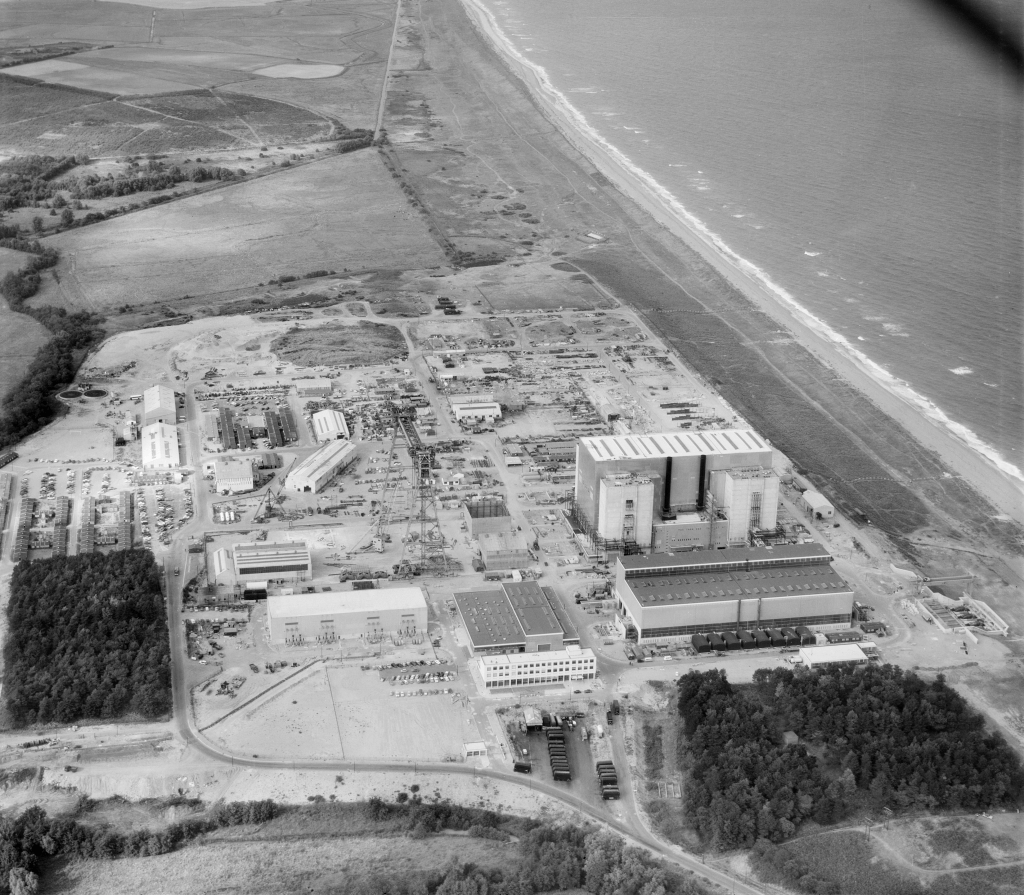
For the construction of new power stations, the 1957 Electricity Act required the consideration of amenity, including natural beauty, by any development. This also applied to the Central Electricity Generating Board’s fleet of Magnox nuclear reactors. At Sizewell the lead architect was Frederick Gibberd, where the grey of the concrete and asbestos sheeting of the main structures was seen as a virtue, blending the station into the coastal landscape. Landscape advice was provided by Peter Youngman, with screening at ground level provided by retained woodland and new planting. Using an earlier landscape device, later a ha-ha was added to give a clear view from the curving approach road of the three-storey, white administrative building.
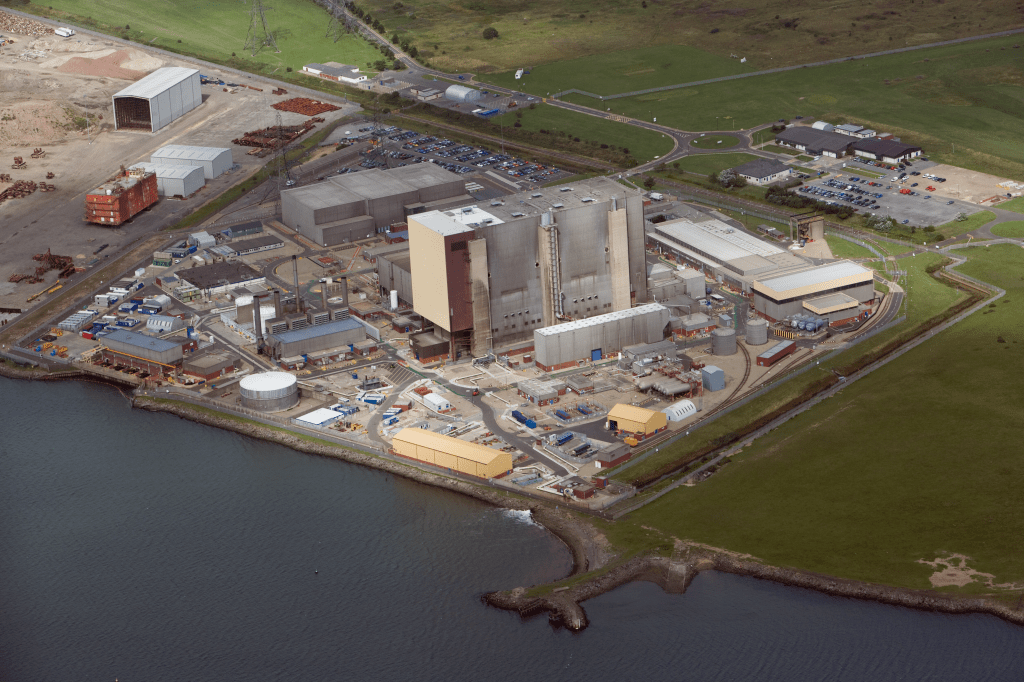
Compared to the Magnox stations the later generation of Advanced Gas Cooled Reactors exhibited greater similarities in their design. One characteristic feature was the presence of buttresses on the main reactor hall which had been used to support cranes during construction. Here the original clean design of distinctive functional building blocks has been obscured by the inevitable sprawl of temporary buildings and open storage needed by an operational station. The consulting architects were Frederick Gibberd and Partners.
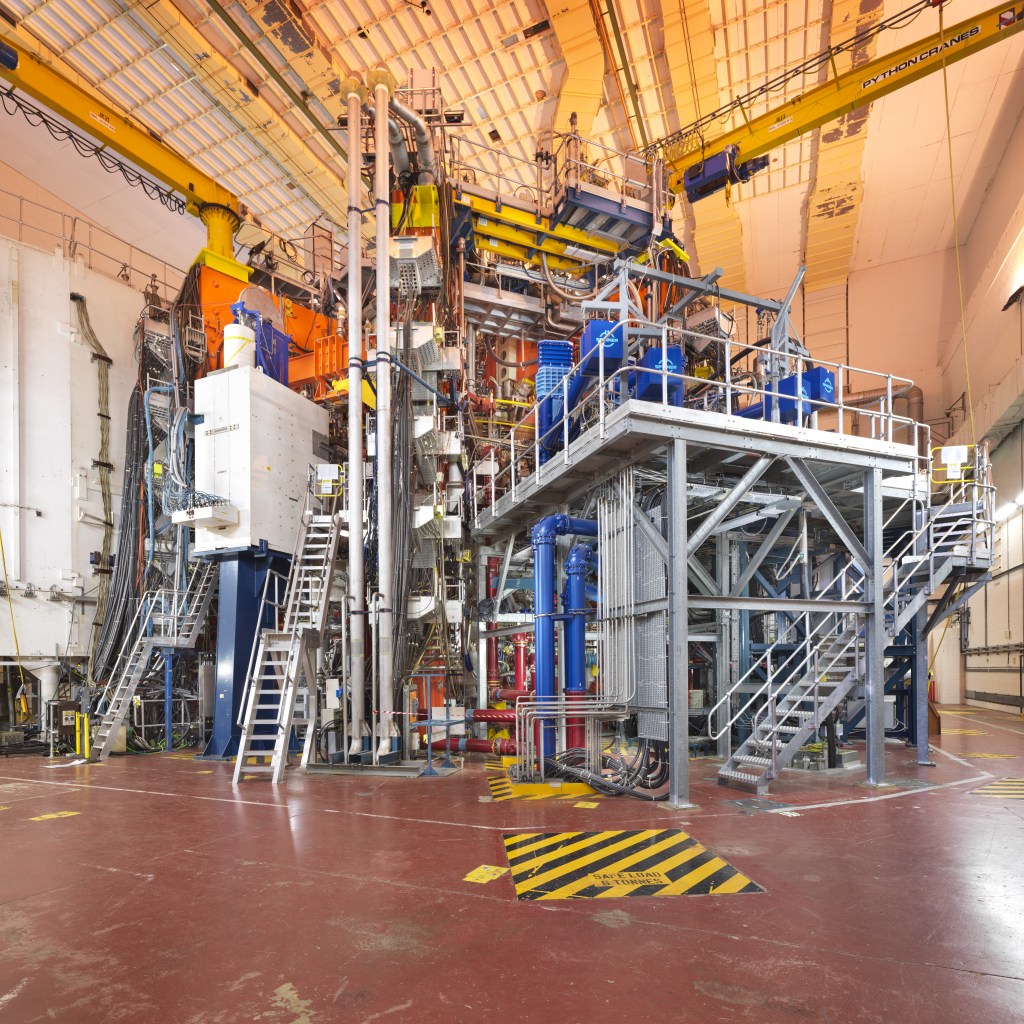
The Joint European Torus (JET) is surrounded by diagnostic equipment. It became operational by June 1983 and in 1991 was the first facility to produce controlled fusion power. In late 2023, just prior to entering decommissioning, its final experiments consistently produced high fusion power for 5 seconds, setting a world record.
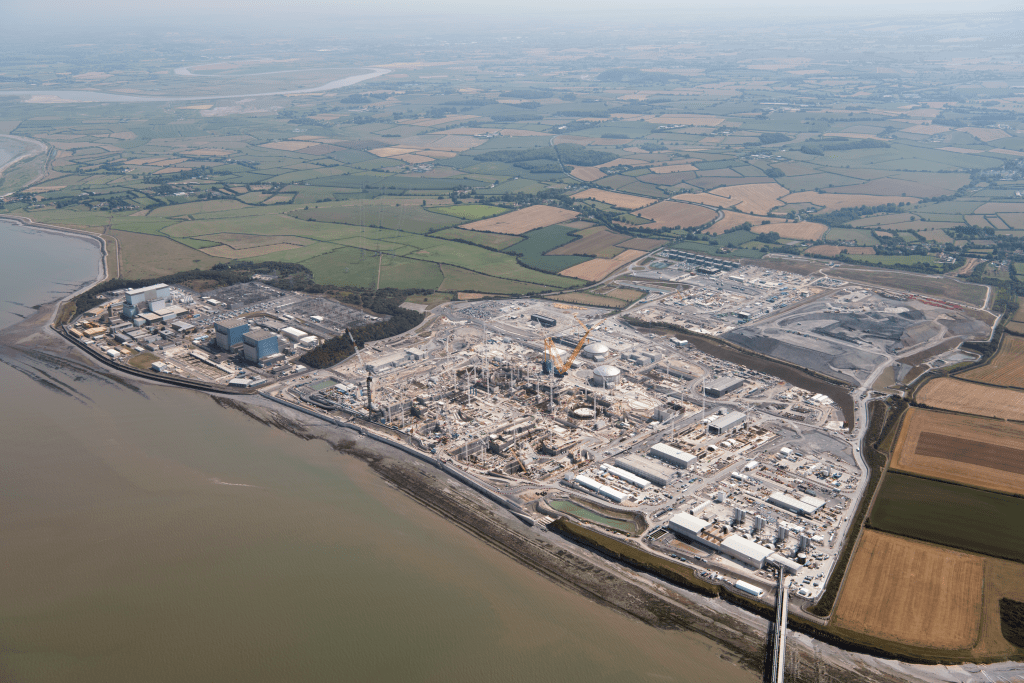
As part of the government policy to achieve carbon net zero by the middle of the century the United Kingdom is committed to a programme of new nuclear power stations. At Hinkley Point work is underway on a pair of European Pressurised Water Reactors with a projected power output of 3.2GW. To the middle left are the decommissioned Magnox and Advanced Cooled Reactor stations.
Find out more about Building for the Atomic Age: an industrial archaeology of the United Kingdom’s nuclear industry by Wayne Cocroft on the LUP website >

Follow us for more updates
Sign up to our mailing list
Follow us on social media
www.liverpooluniversitypress.co.uk
 Liverpool University Press Blog