
Mieczysław Weinberg: Between East and West, edited by Michelle Assay and David Fanning, is a collection of 17 articles devoted to the Polish-Jewish-Russian composer whose life and works constitute the 21st century’s most important rediscovery in the field of art music.

Figure 1: Weinberg’s father, Shmuel, with two of his sisters. Photo provided by Tommy Persson; copyright: Olga Rakhalskaya
Born in Warsaw in 1919, where he grew up playing piano in his father’s Jewish theatre orchestra, Mieczysław Weinberg twice escaped Nazi invasions: the first time in September 1939 to Minsk (his mother, father and sister were not so fortunate and died in the camps), the second time two years later to Tashkent, where a number of prominent Soviet composers were in evacuation. While in Uzbekistan he was talent-spotted by friends in the Shostakovich circle, who recommended him for relocation to Moscow once the tide of the War had shifted.

Figure 2: Weinberg, seated on the right, next to his composition teacher in Minsk, Vasily Zolotaryov. Photo provided by Tommy Persson; copyright Olga Rakhalskaya
From October 1943 until Shostakovich’s death in 1975 Weinberg was the senior composer’s closest creative colleague. The two shared each other’s latest works, playing them through on the piano before their official performances. Respect and influence flowed in both directions.

Figure 3: Weinberg, late 1940s. Photo provided by Tommy Persson; copyright Olga Rakhalskaya
Weinberg’s reputation soon burgeoned, initially in the field of chamber music. However, after the War he shared in the general persecution of Soviet composers at the hands of the so-called ‘anti-formalism’ campaign, with its instructions to compose music for and intelligible to the People, or else. Furthermore, his Polish-Jewish background played against him during the simultaneous ‘anti-cosmopolitan’ (read anti-Semitic) campaign unleashed by Stalin in his paranoid final years. In 1953 Weinberg was briefly incarcerated in the Lubyanka and Butyrka prisons, accused – ridiculously – of ‘Jewish bourgeois nationalism’, until Stalin’s death led to his release. The experience damaged his always less-than-robust health. But he was able to maintain his skills as a pianist, to a level where he was able to step in for an indisposed Sviatoslav Richter at the first performance of Shostakovich’s Seven Romances on Verses of Alexander Blok, on 23 October 1967.

Figure 4: The first performance of Shostakovich’s Seven Romances on Verses by Aleksandr Blok, with Weinberg at the piano, Galina Vishnevskaya (standing), David Oistrakh (violin), and Mstislav Rostropovich (cello). Photo provided by Tommy Persson; copyright Olga Rakhalskaya
Through the course of the 1950s, 1960s and 1970s, Weinberg’s recovered his creative vigour and reputation, to a position where his music was widely performed by some of the Soviet Union’s starriest performers, such as violinist David Oistrakh, cellist Mstislav Rostropovich, conductor Kirill Kondrashin and the Borodin Quartet. However, Shostakovich’s death in 1975 deprived him of a significant pillar of support. Younger audiences were already shifting their attention away from the Shostakovich circle towards the newly fashionable ‘second Soviet avant-garde’. Modest in character, disinclined to self-promotion or any activity within the corridors of Soviet cultural power, and difficult to promote as an exportable commodity given his background, Weinberg found himself gradually sidelined as a Shostakovich epigone, and in his last years he led an increasingly hermetic existence, beset by health problems and deprived of the income he had once enjoyed from commissioned film scores (of which he produced nearly 70).
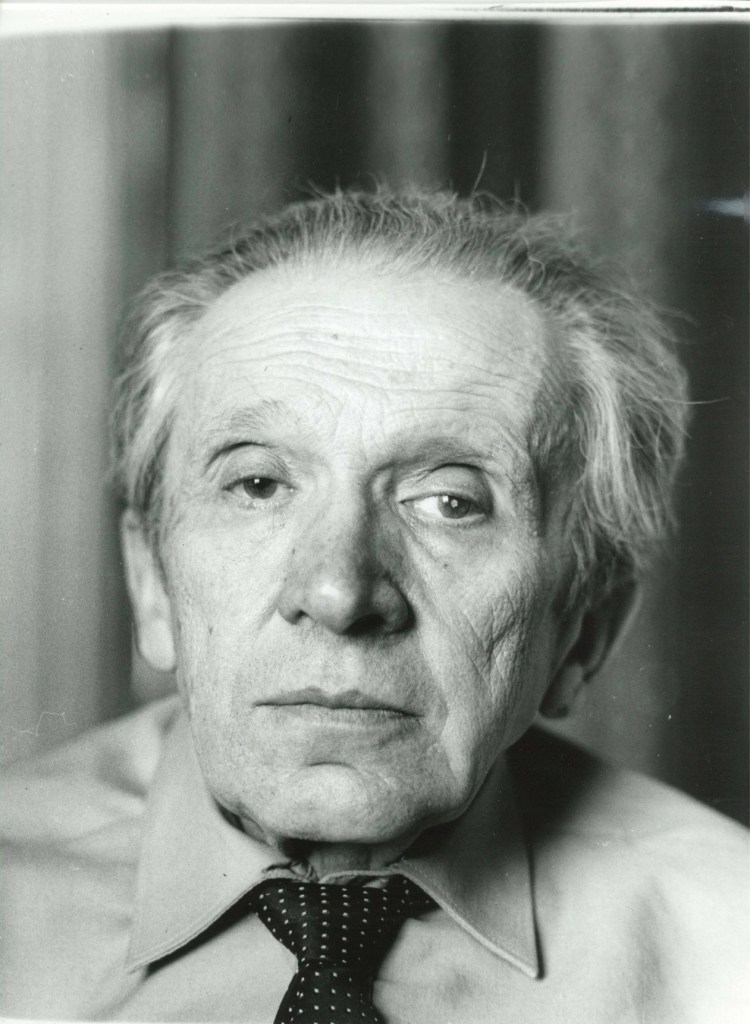
Figure 5: Weinberg in 1989. Photo provided by Tommy Persson; copyright Olga Rakhalskaya
Weinberg’s posthumous rediscovery has been largely driven by performers, critics and scholars in the West. A double revelation came with the first performance of his cycle of 17 string quartets in Manchester in 2009 and his first opera, The Passenger, set mainly in Auschwitz, in Bregenz in 2010. Following from these, the remainder of his copious production – some 7 operas, 30 sonatas, 26 symphonies, and so on – has gradually been recorded and made inroads into the permanent repertoire.
Scholarship has been a little slower to catch up. Nevertheless, since David Fanning’s Mieczysław Weinberg: In Search of Freedom (2010) – the first life-and-works study in any language – there have been no fewer than eight book-length studies, from the UK, Germany, Poland and Russia, along with numerous articles, international conferences, and dissertations. The co-editors of the new British Academy volume supply an introductory survey of Weinberg research – including his problematic early reception in the Soviet musical press – from its inception to the present day.
The book, co-edited by Fanning and Michelle Assay, arises from the Weinberg centenary conference held at the University of Manchester in January 2019 with the support of the British Academy and the Adam Mickiewicz Institute, Warsaw. It consists of 17 contributions by authors from all of the above-mentioned countries, plus the United States, Australia and Canada. The articles cover aspects of Weinberg’s life (including new information on the fate of his family), his layered national and artistic identities, his texted works (songs, cantata-symphonies and an operetta), and his musical language (in particular his propensity for quotation, self-quotation and engagement with the works of Shostakovich and others in the Russia-Soviet tradition).
Two articles cover the topic of ‘Keeping Weinberg Alive’. Tommy Persson details his procurement of medications from Sweden that literally helped prolong the composer’s life, as well as his personal funding of recording ventures that prepared the ground for the later Weinberg renaissance. World-leading violinist Gidon Kremer recounts his personal rediscovery of Weinberg and the numerous recording and performance projects that ensued.
Also included is an interview between Michelle Assay and Victoria Bishops, Weinberg’s first daughter, whose reminiscences offer a rare glimpse into life with the composer – her ‘non-standard Papa’, as she calls him – from the late-1940s to the late-1960s, covering life at home and outside, his sometimes caustic, but strictly private, opinions on some of his contemporaries, and his tastes in music and the other arts.

Figure 6: Weinberg with his first wife, Nataliya, and first daughter, Victoria. Photo provided by Tommy Persson; copyright Olga Rakhalskaya
The upshot is a state-of-the-art picture of Weinberg research. At a moment when the fate of artists driven into exile by the traumas of the mid-20th century is a topic of intense fascination, and when the future of art music in the humanist tradition is under pressure from commercial and fashionable quarters, it is timely to be reminded of music that nearly disappeared from view but which now inspiring audiences anew with its ethical urgency and master-craftsmanship.

Mieczysław Weinberg: Between East and West, edited by Michelle Assay and David Fanning, is now available 20% off on our website.
Michelle Assay is principal investigator of the Marie Curie/UK Research and Innovation-funded project, ‘Women and Western Art Music in Iran’, which traces the fate of Iranian female musicians whose careers fell victim to the controls that came to effect following the 1979 Revolution. The project is hosted at King’s College London and the University of Toronto. Michelle has taught at seven universities and higher education establishments across the world, covering of topics from music and politics (notably in totalitarian contexts such as those of Iran and the Soviet Union) to music and other media (in particular Shakespeare’s afterlife in music). Born in Tehran and graduated as a pianist from the National Music Academy of Ukraine and Conservatoire de Paris, she holds a PhD from the Sorbonne and University of Sheffield. From 2019 to 2021 she was a Leverhulme Early Career Fellow on Shakespeare and Censorship at the University of Huddersfield. She is the author of several prize-winning publications on Shakespeare’s Russian and Soviet afterlife and chair/founder of the Shakespeare and Music Study Group as well as the Music and Mental Health Group. She is the co-author with David Fanning of a major forthcoming life-and-works volume on Mieczysław Weinberg. She appears on BBC Radio 3 and 4 and is a regular contributor to Gramophone magazine.
David Fanning is Professor Emeritus of the University of Manchester and Visiting Scholar at the University of Toronto. He is author and editor of books, critical editions and articles on Nielsen, Shostakovich, Expressionism, Music under German Occupation, the 20th-century symphonic tradition, and Shakespeare and Music. For the past 20 years he has been at the forefront of the rediscovery of the Polish-born, Soviet-settled composer Mieczysław Weinberg: author of the first life-and-works volume in any language (Wolke Verlag, 2010) and co-editor of a 17-author collection of state-of-the-art research essays (British Academy Proceedings, 2026). Since 1980 he has been a music critic, broadcaster, essayist and public speaker, and as a pianist he has had long-standing partnerships with the Lindsay String Quartet and the Quatuor Danel.
Follow us for more updates
Sign up to our mailing list
Follow us on social media
www.liverpooluniversitypress.co.uk
 Liverpool University Press Blog