
An Exhibition History of Victorian Leeds by Rebecca Wade reveals the origins of Leeds’ permanent cultural institutions and the influential networks that shaped the city’s relationship with fine and decorative arts, industry and the sciences. To mark the publication of this new book, the author explores a small but significant space that held the first teaching collection for art and design education in Leeds and staged a series of influential exhibitions during the mid nineteenth century.
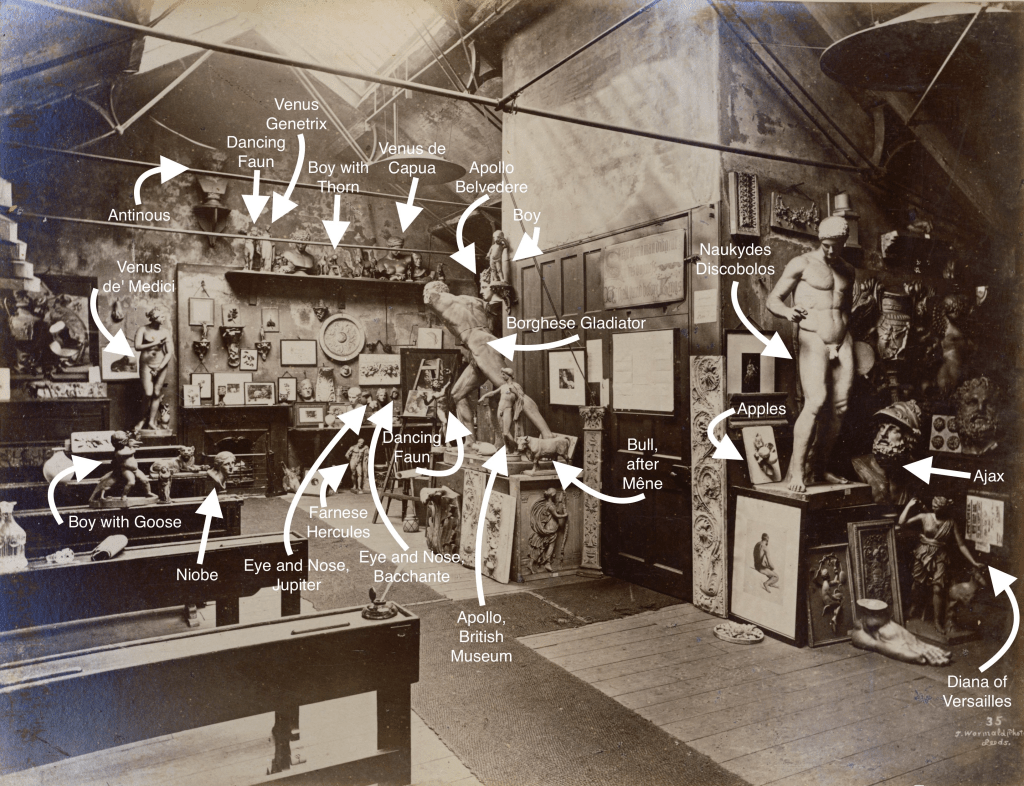
Leeds School of Design was part of the first generation of regional branch schools established on the model of the Government School of Design at Somerset House in London. Funded by a centralised system of grants, these schools can be considered the earliest example of state-sponsored education in Britain. The grants not only contributed to the salary of an art master, but also towards the formation of a teaching collection of plaster casts, prints and books. Many of these examples are visible in a photograph of the attic of 22 East Parade taken by Joseph Wormald of Leeds, taken before the school moved into purpose-built accommodation in the new Leeds Institute of Science, Art and Literature in 1868.
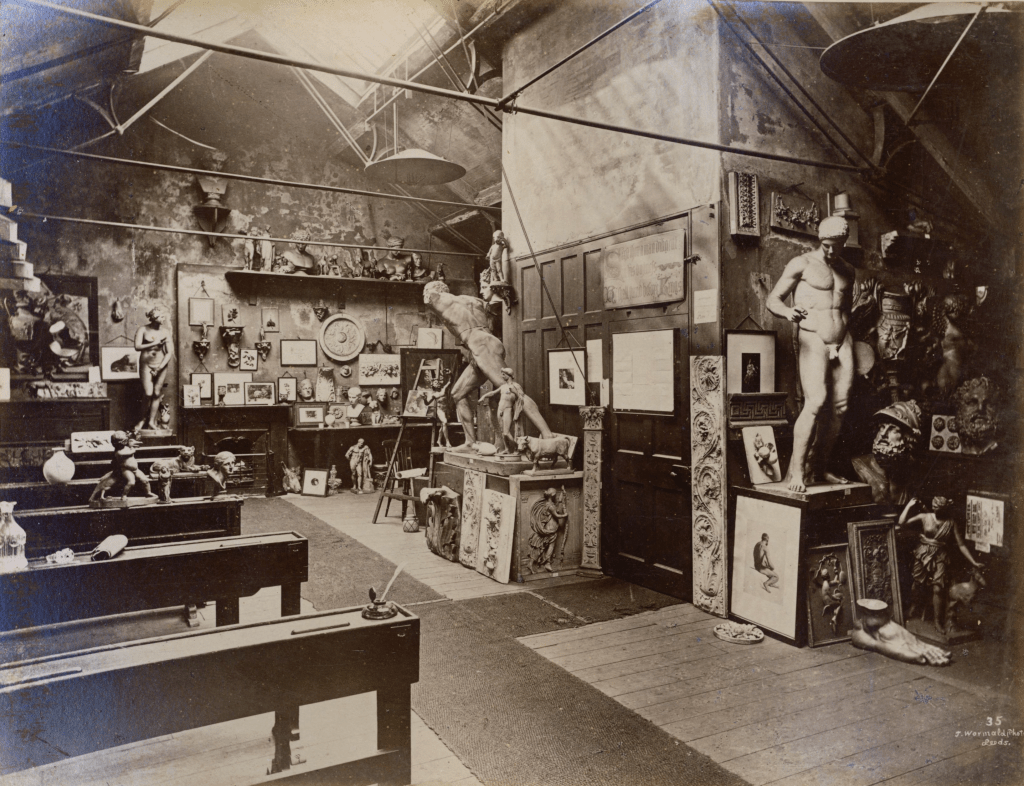
The Leeds Mechanics’ Institution and Literary Society first applied for government funding to set up their own School of Design in 1842, but their request was rejected because the scheme was not intended to subsidise the work of existing voluntary societies. The Institution submitted a second application in 1846 with one crucial change: they proposed to accommodate the new school in an eighteenth-century merchant’s house at 22 East Parade near to, but not within, their premises at 12 South Parade. This small but significant separation enabled the Committee to persuade the Council of the Schools of Design that their intention was to found at least a semi-autonomous school. The Committee described 22 East Parade as located in ‘the best part of the town and very nearly central’ and having been inspected and approved by John Patterson, Master of the York School of Design.
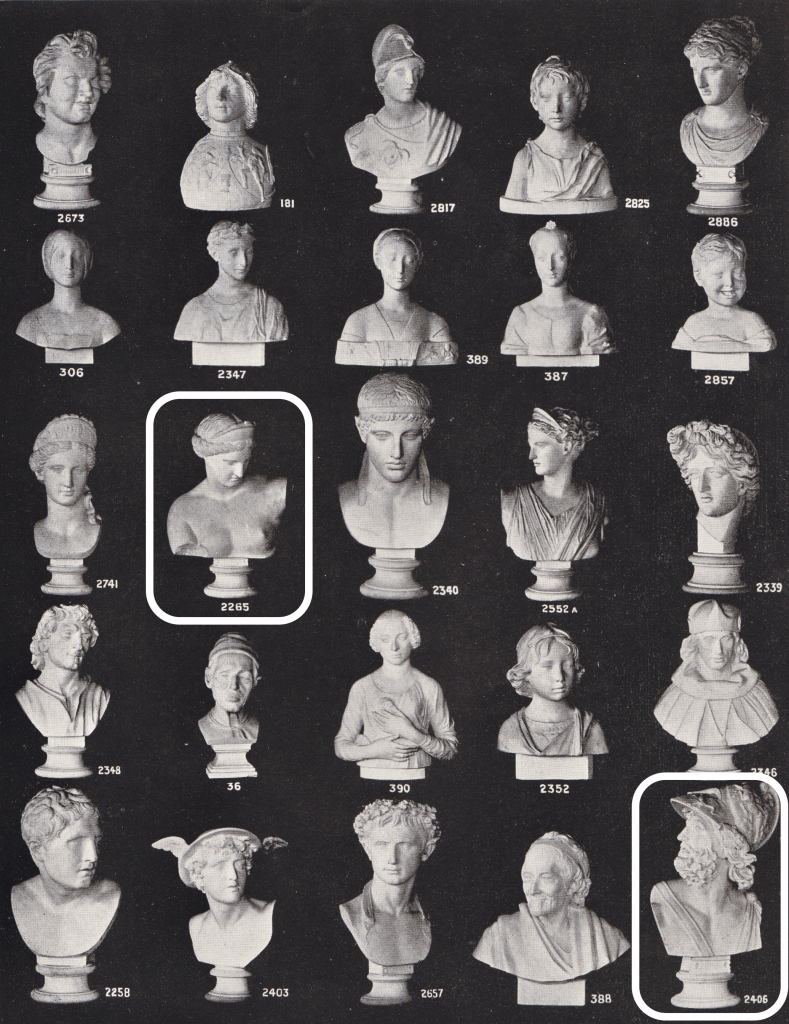
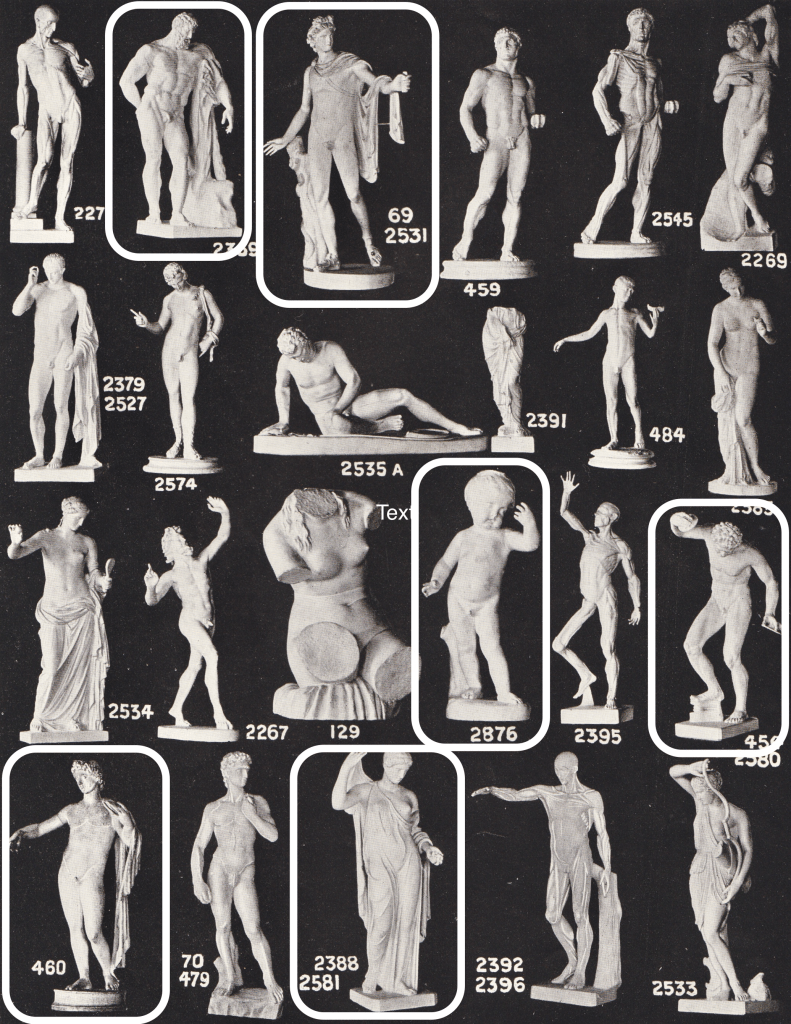
A local subscription amounting to £66 had been raised in support of the second application, from ‘gentlemen anxious to promote the establishment of an efficient School of Design in Leeds’ and used as a measure of public support for the scheme. The Council in turn granted £80 towards the salary of the Master, £50 for furniture and £50 for examples of art. These standardised examples formed the inaugural teaching collection and the first four cases of plaster casts were transported from the formatore Domenico Brucciani’s workshop in Covent Garden to Leeds in November 1846, which can be cross referenced through the business’s catalogues. The contents of the cases were listed as follows:
1 Bust of Apollo
1 Bust of Niobe
1 Bust of Antinous
11 copies by Machinery of Antique Statues
4 pieces Trajan Frieze
16 hands and feet
2 Anatomical Arm & Leg
2 pieces Roman Arabesque
1 Roman Cornice
2 pieces from door of St. John.
This standard collection was almost immediately augmented with further examples from the canon of antique sculpture. The larger statues bought to supplement the collection were, however, not covered by the grant and appear to have been purchased on the ‘kind advice’ of the Director of the Head School at Somerset House:
The casts, drawings and other examples which the Council have done us the favor [sic] to send us by way of grant, have all arrived safely: and in addition to them, for the sake of opening with a good popular impression, we have ordered and obtained, at our own expense, but with the kind advice of your Director, Mr. C.H. Wilson, full sized casts of the Apollo Belvidere [sic], the Venus de Medici, the Venus of Milo, Germanicus, the Fighting Gladiator, the Discobolus, the bust of Ajax and some smaller ornaments and anatomical parts.
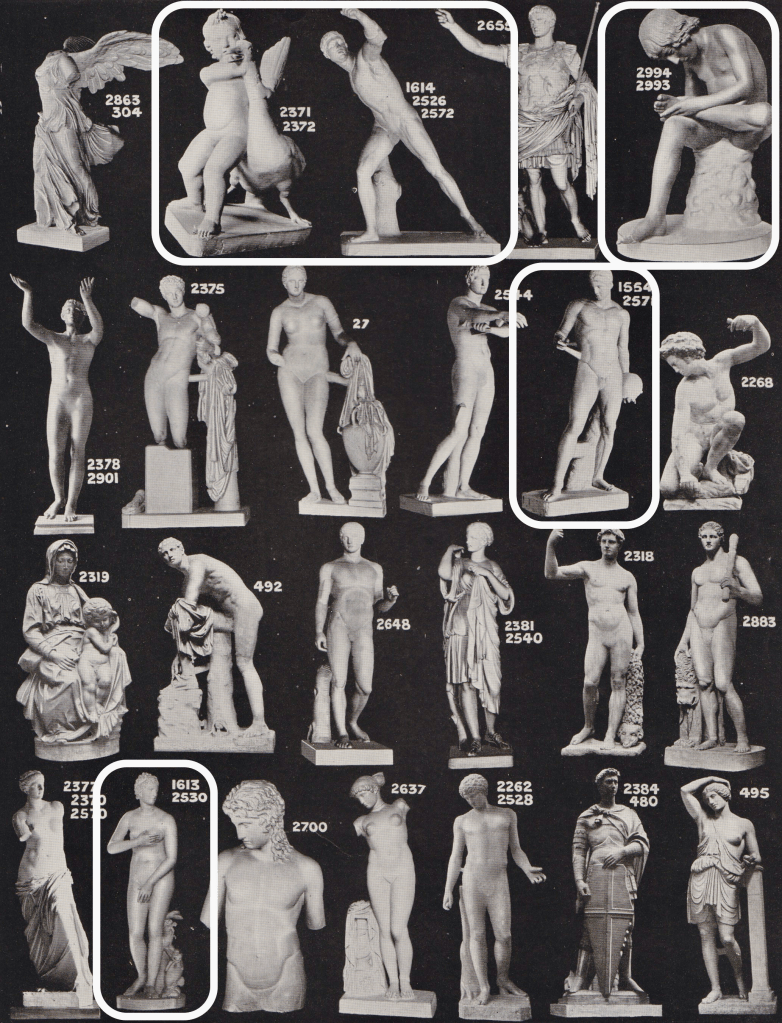
The addition of these objects certainly resulted in a stronger collection, but also led the school into debt before teaching had even commenced. By February 1847 the debt had still not been cleared and the the significant sum of £57 8s. was owed to Brucciani. The debt can, however, be considered productive because it motivated the school to hold public exhibitions and conversazioni to raise funds, build its reputation and encourage more students to enrol. Two of these exhibitions, of French manufactures in 1846–47 and of the ‘Travelling Museum’ in 1855–56, were particularly important and form part of An Exhibition History of Victorian Leeds.
The small attic rooms at 22 East Parade were too hot in the summer, too cold in the winter and leaked when it rained, but they were a crucial staging post in the journey towards the formation of institutions that continue to construct the cultural life of the city. Without the art school in the attic, Leeds would be without its direct descendent Leeds Arts University—the only specialist arts university in the north—and Leeds Museums and Galleries with its outstanding collections of fine and decorative arts, natural science and industry, recognised by Arts Council England’s Designation Scheme.
Find out more about Rebecca Wade’s new publication on the Liverpool University Press website.

Follow us for more updates
Sign up to our mailing list
Twitter | Instagram
www.liverpooluniversitypress.co.uk
 Liverpool University Press Blog