
The Black Legend of Spain and its Atlantic Empire in the Eighteenth Century: Constructing National Identities, edited by Catherine M. Jaffe and Karen Stolley, has recently been published in the Oxford University Studies in the Enlightenment series. This blog post explores the enduring impact of the “Black Legend,” a narrative portraying Spain and its empire as cruel and intolerant, examining its historical roots, global dissemination, and influence on national identities, cultural stereotypes, and modern debates about colonialism and memory.
What are the stories that we tell about ourselves and others, and how do those stories contribute to the construction of a collective memory and identity? The ways in which a nation or group is represented, both for internal and external consumption, the stories that are told about its ambitions and triumphs, its shortcomings and defeats, its character — all this resonates throughout history long beyond the particular moment when those stories began to take shape.
The Black Legend (“Leyenda Negra”) refers to the representation of Spaniards and the Spanish Empire as cruel, religiously fanatical and intolerant, and greedy for gold — a picture that emerged from accounts of Spanish abuses during the sixteenth-century conquest of the Americas. Those accounts were — at least initially — an inside job. They were produced by Spanish missionaries who denounced the excessive violence and greed of Spanish conquistadors. The most famous (or infamous) of these early modern whistleblowers was Bartolomé de las Casas, who wrote Brevísima relación de la destrucción de las Indias (1542; published 1552), a short pamphlet written with the goal of reminding Phillip II of his obligation to protect and defend the indigenous population. The Brevísima was a polemic and a nudge (today it would be a TWEET IN CAPITAL LETTERS) — a little book with a big bang. It was translated into Latin and other European languages, including a 1656 English translation titled Tears of the Indians. Being a True and Historical Account of the Cruel Massacres and Slaughters of Above Twenty Million of Innocent People. The translations were widely disseminated, often with graphic engravings of scenes of horrific torture that served to fan the fires of anti-Spanish outrage at a time when tensions between Catholic Spain and Protestant Europe were rising.
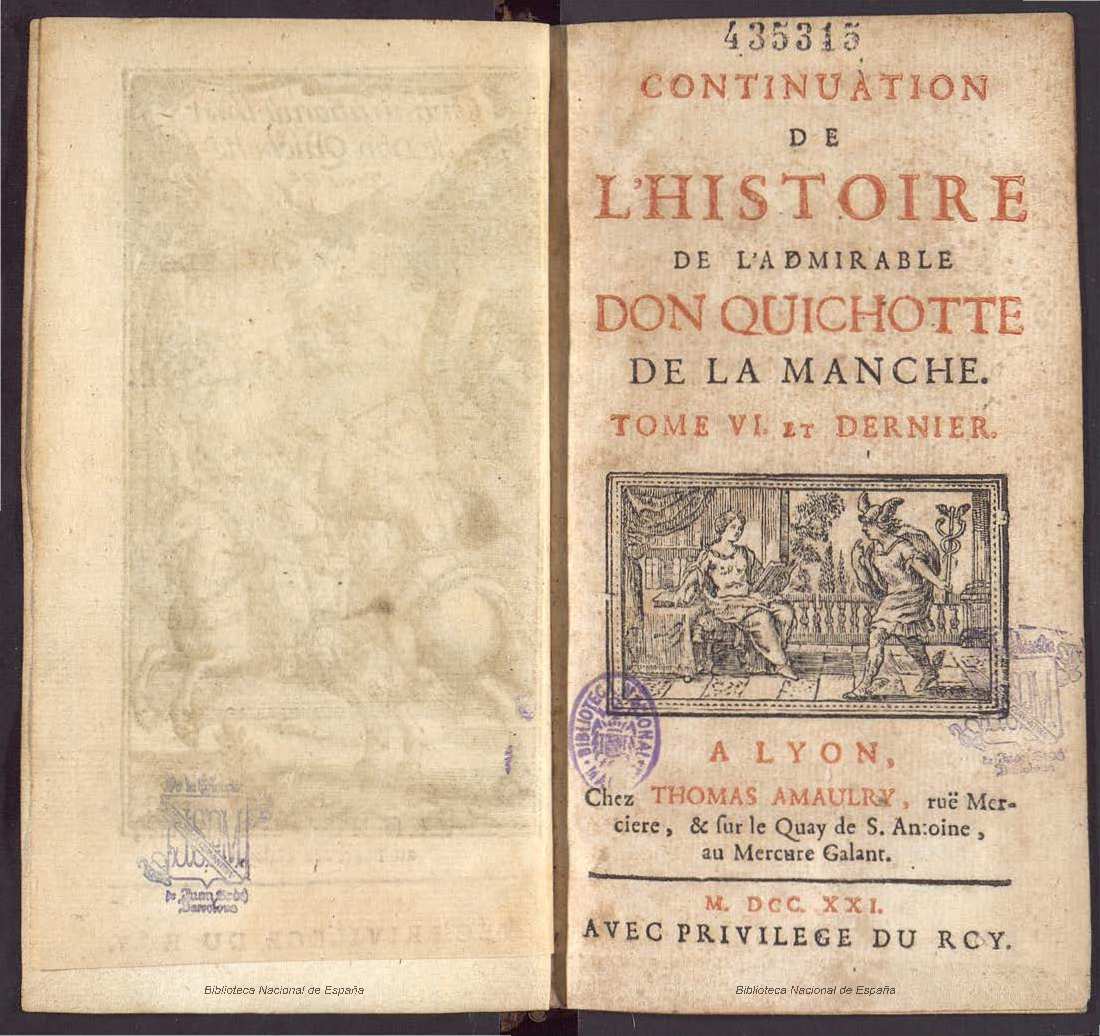
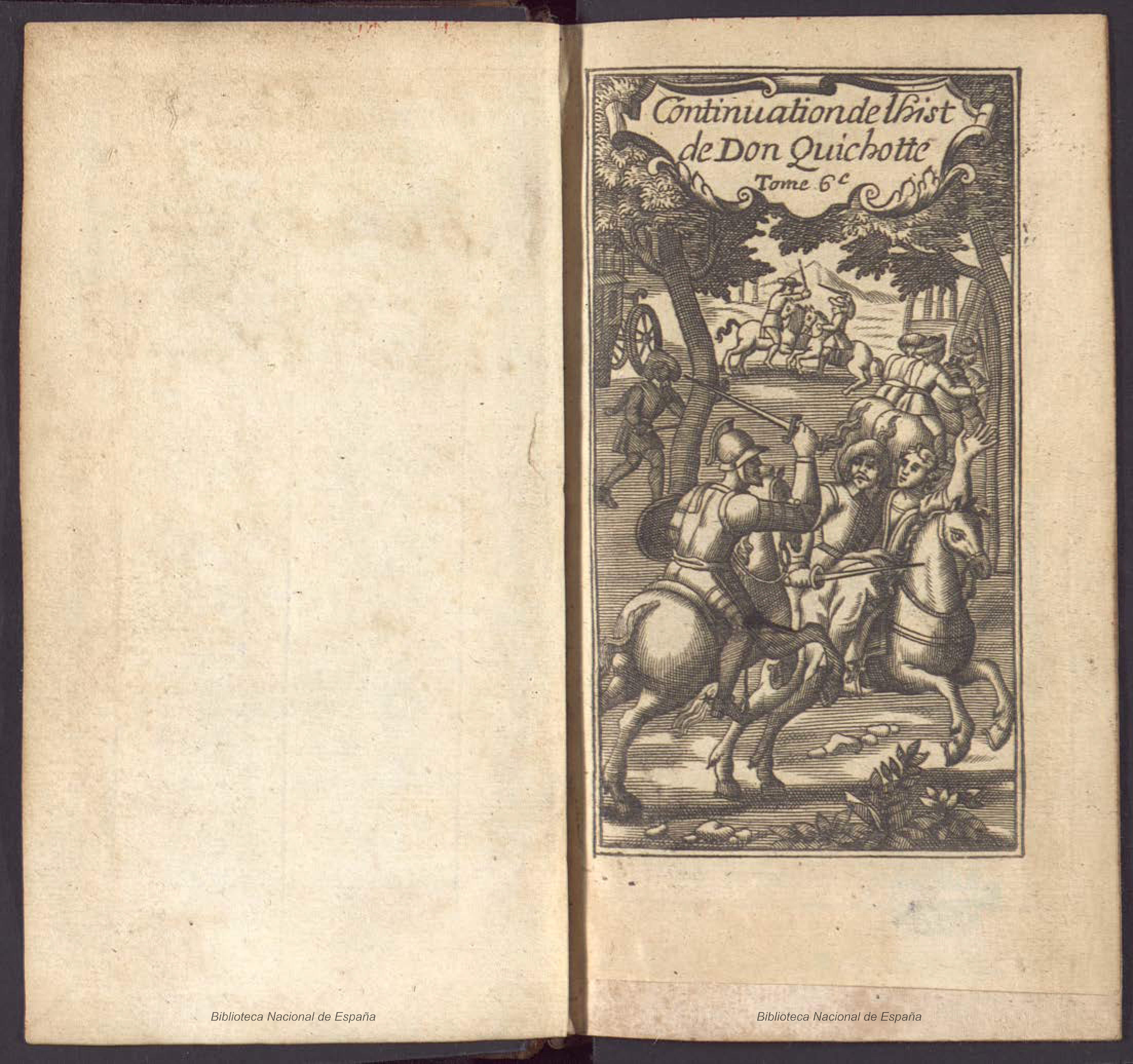
Images from the collections of the Biblioteca Nacional de España.
Spaniards reacted against the circulation of these pejorative images in literature, political discourses, and the arts, leading to internal debates that swung between grievance, self-defense and self-criticism. The Black Legend lived on in the eighteenth century, paradoxically persisting during a period when Spanish imperial power was waning, and cultural and political hegemony was shifting from Spain to France and England. Outside of Spain, during the independence and post-colonial periods in Latin America, newly emerging nations invoked the Black Legend to distance themselves from their colonial legacy and to establish their own modern, national identities by inventing a continuity with pre-Hispanic indigenous culture. In nineteenth-century Spain, the Black Legend became grounds for contention between liberals and reactionary nationalists mourning the loss of empire, giving rise to a Golden Legend (“Leyenda Dorada”) that emphasized and exalted Spain’s glorious past. Historian and writer Julián Juderías popularized the term “Black Legend” and pushed back against itin his 1917 book La leyenda negra.[1] Juderías’s defense — that many of the abuses and defects attributed to Spain are present in other countries as well — sounds a great deal like today’s “what aboutism?”
But the demonization of sixteenth- and seventeenth-century Spain that fueled the Black Legend could be given a positive spin as well, as we see in the romanticization and exoticization of Spain that infused some nineteenth-century representations of Spaniards by foreigners. Washington Irving’s A History of the Life and Voyages of Christopher Columbus (1828) and Tales of the Alhambra (1832) are well-known examples. A similar vision of Spain informed the development of a stereotypical Spanish “brand” (“Spain is different”) that was embraced very effectively as a tourism economic engine during the Franco era.
The Black Legend has once again come to the fore in Spain today, in debates about Spanish identity and national unity raised by Catalan and Basque regionalist separatist movements and the publication of two intensely polemical books—Imperiofobia y leyenda negra (Empirephobia and the Black Legend), by the literary scholar María Elvira Roca Barea (2016), and political philosopher José Luis Villacañas’s 2019 rebuttal, Imperiofilia y el populismo nacional-católico (Empirephilia and national-catholic populism).[2]
The Black Legend — the idea that Spain is different, not quite European, not quite modern — figures, at times deliberately but often unconsciously, in discussions about colonialism, empire and national identity in Europe and the Americas. We offer a couple of examples that will be relevant for colleagues in English and American Studies. First, as Barbara Fuchs has argued, Daniel Defoe positions the eponymous hero of his adventure novel Robinson Crusoe (1719), although maybe not completely successfully, as a very different sort of European interloper than the earlier Spaniards — a kinder, gentler conqueror.[3] Second, stories about settler colonialism and frontier independence in North American (such as the Little House on the Prairie books and television series) and accompanying narratives of U.S. exceptionalism, manifest destiny and Anglo-America’s articulation of its empire as anti-empire develop in implicit opposition to the story of Spanish Empire and the Black Legend. The same can be said of fears of racial contamination and hybridity that are part of the Spanish experience and which we also see in current debates in the US about immigration across our southern border.[4]
A couple of key concepts proved useful in thinking about the Black Legend and about storytelling more generally: “imagology,” the study of national stereotypes, or the supposed universal characteristics of a specific nation, which suggests that sets of images about a country as systems hold symbolic power rather than historical truth; and historian Pierre Nora’s distinction between history as a critical and analytical discourse of representation of the past, and memory as living, affective, and symbolic, vulnerable to remembrance and amnesia.[5]
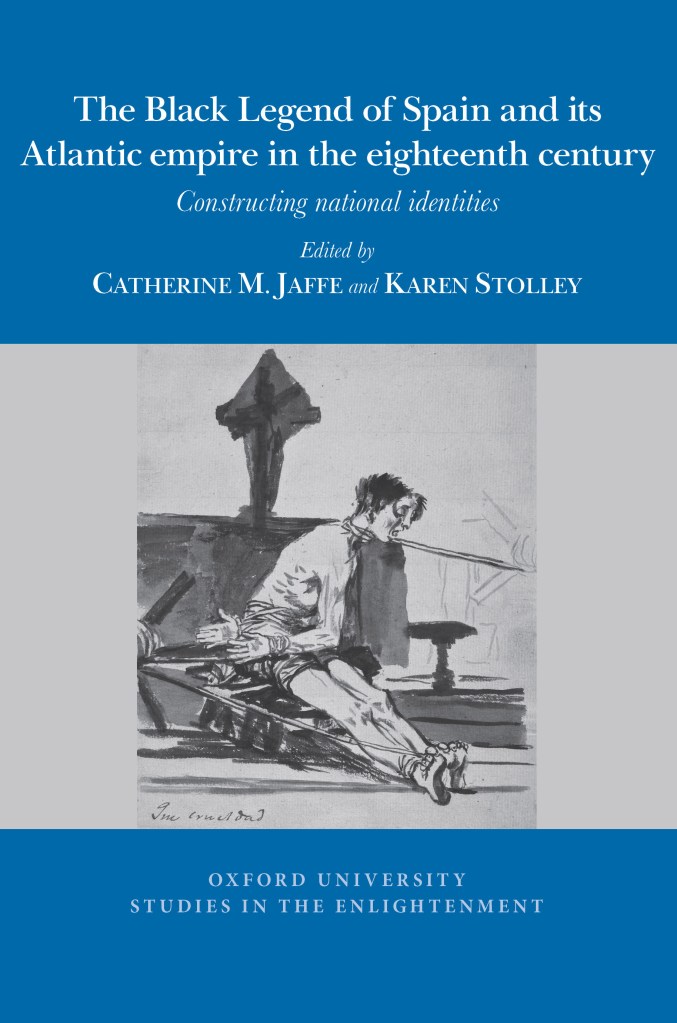
The volume is divided into three sections. The first section, “Debating and negotiating the Black Legend in the Hispanic world,” sets the stage with several chapters that study the intellectual debates about exceptionalism or victimhood that, grounded in the discourse of the Black Legend, emerged in the eighteenth century. In the second section of the volume, “Translating the Black Legend,” contributors explore the rich history of the translation and circulation of texts related to the Black Legend in the eighteenth century. The third section, “Deploying the Black Legend beyond the Hispanic world, offers examples of how the Black Legend resonated in eighteenth-century cultural production in music and theater, in travel literature, and in the plastic arts.
We had several goals in editing this interdisciplinary volume of essays: first, to broaden a conversation about the role of the Hispanic world (that is, Spain and Spanish America) in a global eighteenth century; to reach an English-speaking audience of scholars of the Enlightenment and the eighteenth century that frequently overlooks scholarly production in Spanish or from the Spanish-speaking world; and, finally, to discuss the Black Legend not as a historical polemic but rather as a rhetorical trope that continued to resonate throughout the eighteenth century and beyond. The Black Legend is a fascinating example of the storytelling strategies that function on a local and global level to create a long arc of cultural history and memory with real-world implications.
Catherine M. Jaffe and Karen Stolley
[1] Tasende, “Entre la leyenda negra,” p.447, nl.
[2] José Manuel López de Abiada, “Spaniards,” in Beller and Leerssen, Imagology, p.242-48.
[3]“Crusoe’s Absence,” Studies in eighteenth-century culture, 49 (2020), p.27-42.
[4] María de Guzmán, Spain’s long shadow: The Black Legend, off-whiteness, and Anglo-American empire (Minneapolis, 2005), p.xii.
[5] See, for example, Manfred Beller and Joep Leerssen, Imagology. The cultural construction and literary representation of national characters. A critical survey (Amsterdam, 2007).
Catherine M. Jaffe is professor of Spanish Literature at Texas State University. She co-authored María Lorenza de los Ríos, marquesa de Fuerte-Híjar: vida y obra de una escritora del Siglo de las Luces and is co-editor of several books on women and the Hispanic Enlightenment.
Karen Stolley is professor of Spanish American literary and cultural studies at Emory University. She is the author of Domesticating Empire: Enlightenment in Spanish America and co-editor of a special issue of Colonial Latin American Review on “Latin American Enlightenments.” Recent publications include chapters on eighteenth-century Spanish American studies.
The Black Legend of Spain and its Atlantic Empire in the Eighteenth Century is part of the Oxford University Studies in the Enlightenment series, published in collaboration with the Voltaire Foundation, University of Oxford.

Follow us for more updates
Sign up to our mailing list
OSE Bluesky | LUP Bluesky | Instagram
www.liverpooluniversitypress.co.uk
 Liverpool University Press Blog
Pingback: ‘The Black Legend of Spain and its Atlantic Empire in the Eighteenth Century’ by Catherine M. Jaffe and Karen Stolley | Voltaire Foundation