
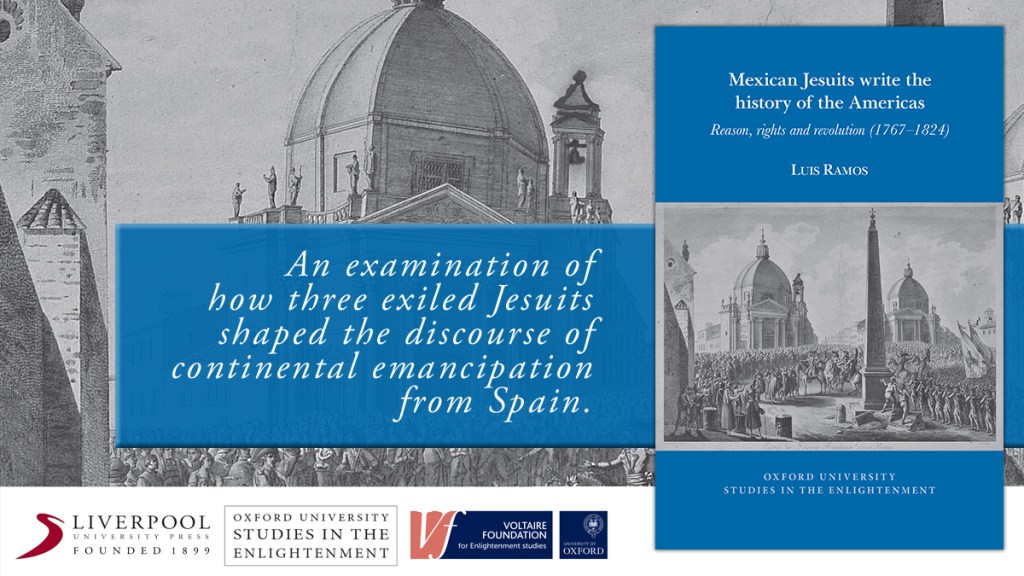
Mexican Jesuits write the history of the Americas by Luis Ramos has recently been published in the Oxford University Studies in the Enlightenment series. The volume is an examination of how three exiled Jesuits shaped the discourse of continental emancipation from Spain. In this blog post, Ramos reflects on his research and explains how the book uncovers the transformative role that eighteenth-century Mexican Jesuits played in reshaping European intellectual life.
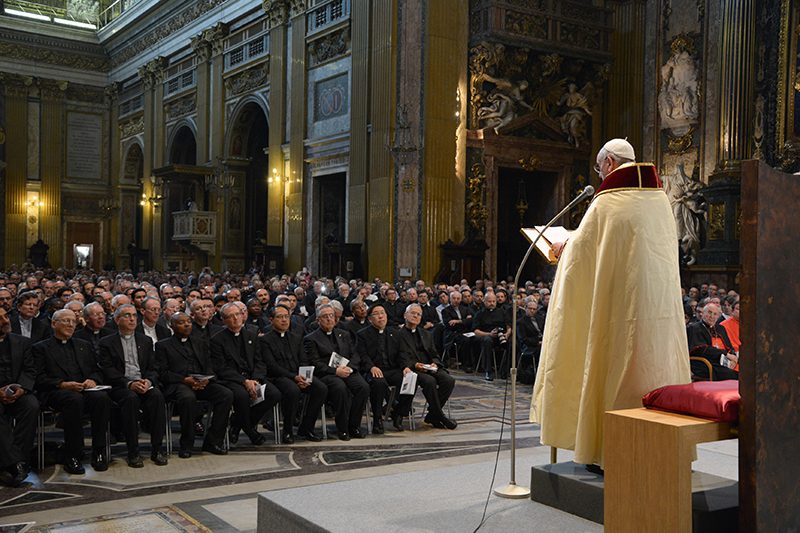
During his twelve year pontificate (2013-2025), Pope Francis rarely spoke about the international expulsion (1759-1767) and suppression (1773) of the Society of Jesus. In one notable exception, the first Jesuit and Latin American pope gave his reflections on the greatest existential crisis that his religious order faced since its founding in 1540 on the two hundred year anniversary of its restoration (1814-2014). Before his confreres at the Church of the Gesù in Rome, Francis likened their expulsion, suppression and restoration to the suffering, death and resurrection of Christ. He affirmed that their extinction and rebirth brought them closer to the Lord. 1 The holy father’s homily in the Jesuits’ awe inspiring mother church drew attention to events that have been for too long relegated to the footnotes of history.
Writing for the Vatican’s L’Osservatore Romano, the historian Gianpaolo Romanato recalled several years later how the presence of a large number of exiled Jesuits from Spain and its global empire in Italy during the last quarter of the eighteenth century left an indelible mark on the intellectual life of Europe. As Gianpaolo Romanato further noted, despite being neglected in the historiography of the Enlightenment, the pioneering scholarship of Miguel Batllori (1966) and more recently of Niccolò Guasti (2007 & 2017) along with a conference held at the University of Bologna in the early 2000s sparked a recovery and revalorization of these embattled Jesuits’ lives and works.2
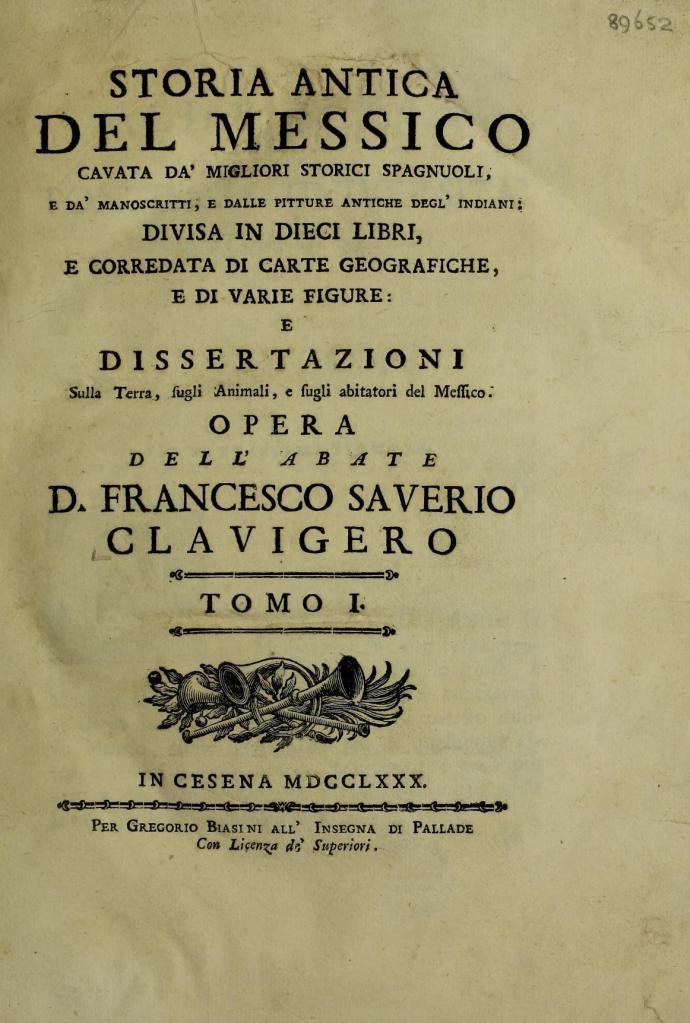
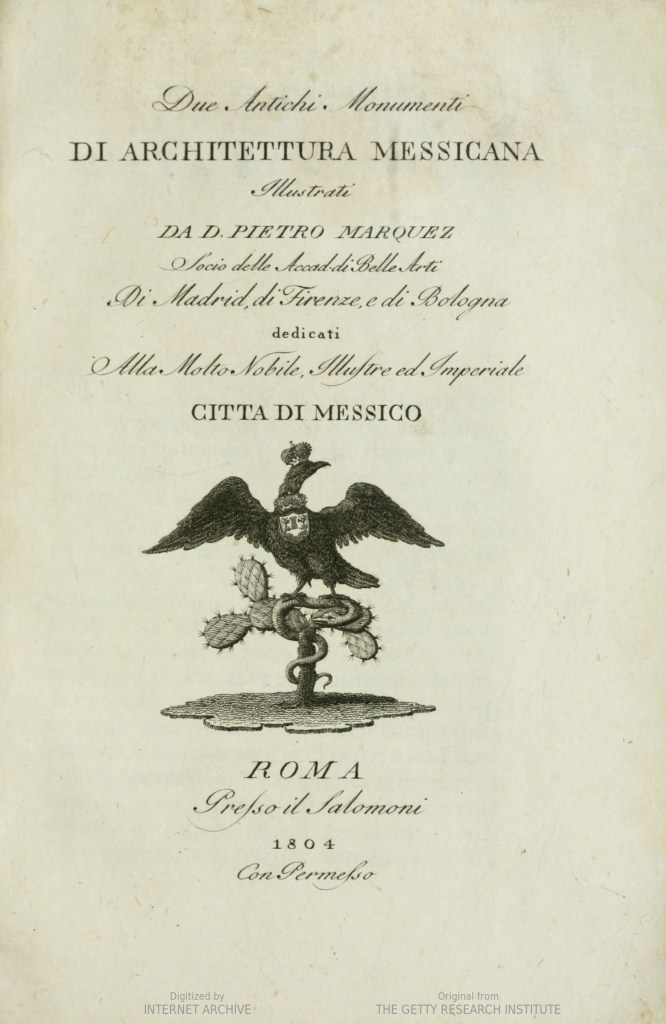
In keeping with this broader wave of historical recovery, my recently published book, Mexican Jesuits write the history of the Americas: Reason, rights, and revolution (1767-1824), demonstrates how three exiled authors helped transform the intellectual life of the Papal States. Focusing on the published works and correspondence of Francisco Clavijero, Rafael Landívar and Pedro Márquez, I argue that these Jesuit writers established the parameters of an emerging poetics of continental independence from Spain.
By considering their works in relation to critical debates about the root causes of the international expulsion and suppression of the Jesuits and scholarship about the Spanish American Wars of Independence, I examine these pivotal events as inextricably linked. All three authors arrived in Italy at different stages of their spiritual and intellectual development and extolled their homeland through similar and distinct strategies of representation. They instilled in their compatriots a bolder understanding of colonial Mexico’s place within the broader Republic of Letters while prompting their Italian readers to question their assumptions about the New World. They broadened the horizon of an eighteenth-century European reading public eager for the most reliable information about the New World and gave the discourse of creole patriotism a past, present, and futurist dimension. In so doing, Landívar, Clavijero, and Márquez established the spatial and political parameters of an emerging poetics of continental independence, and their works served as a wellspring of literary inspiration that subsequent authors from Spain’s recently emancipated colonies would draw from.
Francisco Clavijero, Rafael Landívar and Pedro Márquez were torn from their homeland as a result of Charles III’s expulsion of the Society of Jesus from Spain and its empire, and joined a larger community of exiled Jesuits in the Papal States. During their residence in Italy, they encountered the writings of eighteenth-century European naturalists who drew connections between a culture’s climate and its capacity to reason. Buffon, Raynal, Robertson and de Pauw all posited that the New World’s climate was inhospitable and thus yielded degenerate life-forms. Clavijero, Landívar and Márquez were dismayed by the disparaging views that these influential European authors expressed about their continent, and published works that offered an alternative perspective based on empirical evidence and their nostalgic memories. They produced a corpus of works across a range of genres (poetry, natural history, sacred history, and art criticism), languages (Spanish, Nahuatl, Latin and Italian), and literary forms (sermons, letters, histories, and translations). In doing so, they contributed to a flourishing Italo-Hispanic print culture during the last quarter of the eighteenth century in the Papal States.
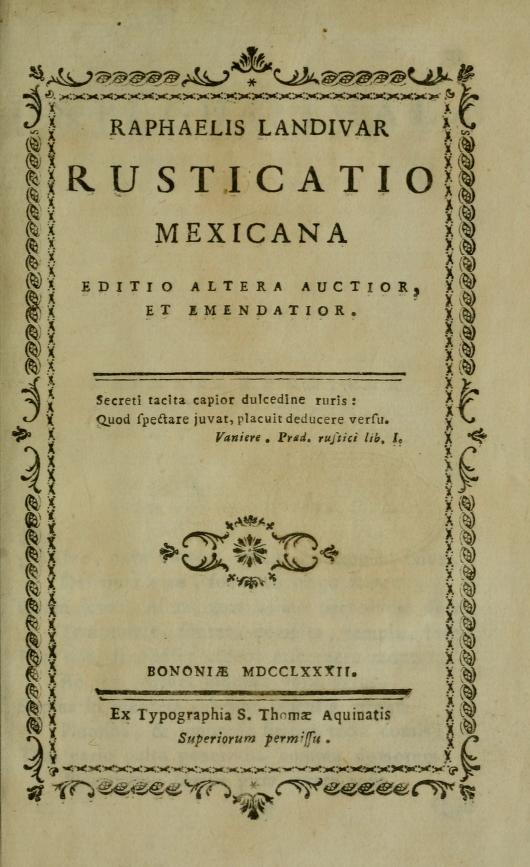
All three authors devised shared and distinct strategies to vindicate their homeland before an Italian and Latinate reading public, and gave the discourse of creole patriotism a sharper expression. They shifted between distinct lifeworlds (European versus Mesoamerican), knowledge systems (baroque versus enlightened), and authorial identities (Jesuit versus Mexican), and served as mediators between the heterogeneous realities of Italy and the Hispanic world. While assuming the role of cultural mediators, they expanded the geography of reason in the broader Republic of Letters, and gave voice to a New World patriotic discourse.
I recast their writings in their proper Italo-Hispanic cultural context, and draw from the intervention of scholars across disciplines who have identified both the moderate and radical sources of the Enlightenment in the Italian Peninsula. First, I demonstrate how these three writers forged a strategic relation to European discourses of reason and progress and drew inspiration from the religious, artistic, and political expressions of the Enlightenment in central and northern Italy. Subsequently, I examine their textual strategies in relation to their distinct personal trajectories and exilic conditions, and locate a rhetoric of discontent with the shifting dynamics of Spanish colonial rule in their works. Finally, I analyze how Landívar, Clavijero, and Márquez gave this rhetoric of discontent a progressively sharper expression and anticipated the discourse of continental emancipation from Spain.
Rather than draw a causal connection between their rhetoric of discontent and the ultimate outcome of the continental wars of independence, I argue that these exiled Jesuits envisioned a future that could be mobilized for republican–or royalist–emancipatory purposes. In conclusion, I consider how the architects of Gran Colombia and Mexico’s First Empire–Simón Bolívar and Agustín de Iturbide–gave the poetics of continental independence a republican and monarchist expression. By examining how Landívar, Clavijero and Márquez shaped Bolívar and Iturbide’s competing patriotic imaginaries in both subtle and overt ways, I argue that these two revolutionary leaders tapped into a wellspring of literary inspiration that their Jesuit predecessors had replenished with their literary works. In so doing, my book addresses both general and specialist readers across disciplines interested in the complex interplay between the age of reason and the age of revolution.
Luis Ramos
- https://www.vatican.va/content/francesco/en/speeches/2014/september/documents/papa-francesco_20140927_vespri-bicentenario-ricostituzione-gesuiti.html : “And this attitude led the Jesuits to experience the death and resurrection of the Lord. Faced with the loss of everything, even of their public identity, they did not resist the will of God, they did not resist the conflict, trying to save themselves. The Society – and this is beautiful – lived the conflict to the end, without minimizing it. It lived humiliation along with the humiliated Christ; it obeyed.” ↩︎
- “L’epopea dei gesuiti in America meridionale,” January 13, 2018: “È una vicenda fondamentale per la cultura europea del tempo, a lungo trascurata dalla storiografia, anche specialistica, ed emersa in Italia in tutta la sua importanza solo di recente, prima con gli studi del gesuita Miguel Batllori e poi con quelli di Niccolò Guasti. Qualche anno fa si tenne sull’argomento un importante convegno a Bologna…” ↩︎
Luis Ramos teaches Latin American cultures and humanities at New York University. His research interests include Spanish American and Italian literatures in exilic and diasporic contexts; the Enlightenment; the Age of Revolution; and antiquity and classical revival in the Hispanic world. He is serving as president of the Ibero-American Society for Eighteenth-Century Studies for the 2025-26 academic year.

Follow us for more updates
Sign up to our mailing list
OSE Bluesky | LUP Bluesky | Instagram
www.liverpooluniversitypress.co.uk
 Liverpool University Press Blog