
The Sash on the Mersey: The Orange Order in Liverpool (1819-1982) is a ground-breaking study which deploys a range of sources including Orange archives to examine how lodges became deeply rooted within Liverpool’s working class communities, guarded and transmitted their outlook, impacted the religious and political ethos of the city and analyses societal changes which eroded their strength and influence. Find out more about this new publication in our blog post written by author Mervyn Busteed.
The research and writing for this book, together with a recent visit to the sites of my childhood and a viewing of Kenneth Branagh’s brilliant cinematic love-letter ‘Belfast’ have combined to provoke a host of memories and reflections. In the intensely working-class district of Protestant loyalist west Belfast where I was brought up, the Orange Order was an integral part of the social landscape. Once a month notable numbers of quite smartly dressed men would appear in the early evening, walking past our front window in purposeful fashion – it was ‘lodge night.’ There was little talk of what happened at those meetings, except for the occasional tight-lipped knowing murmur, but somehow who was and was not a member was common secret knowledge. Branagh’s film brilliantly captures the intense closeness of social life of such districts, but there is no mention of the Order even though it was such a major factor in the lives, both private and public, of the local population.
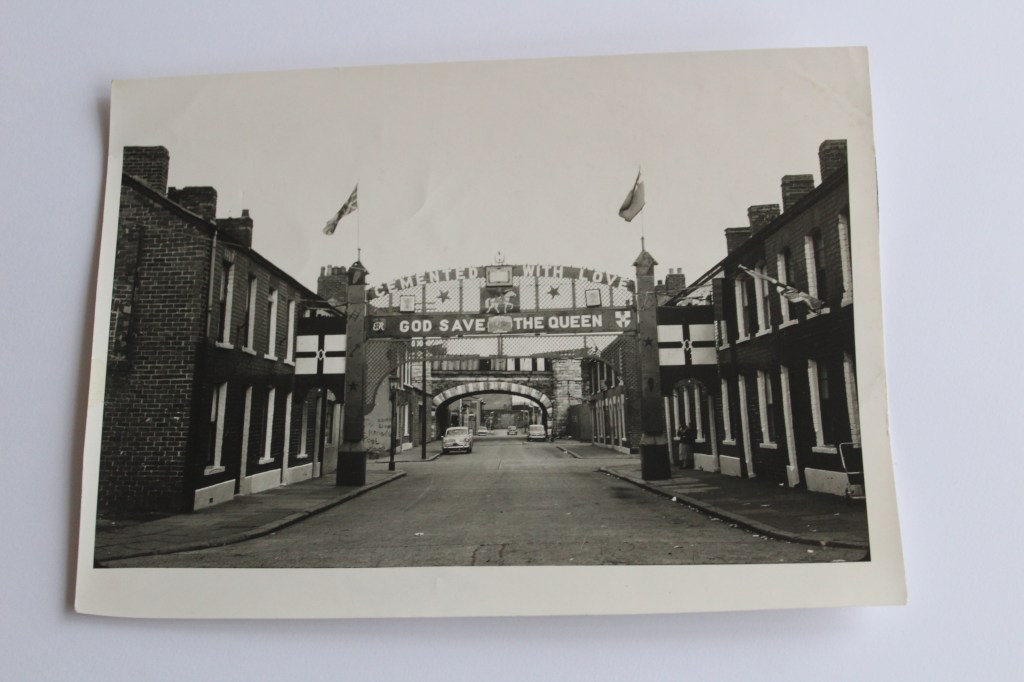
Lodges would parade throughout the middle of the year, but the main event was on 12th July when the largest procession was held in Belfast. Lodge members turned out wearing collarettes studded with office holders’ ranks, flags and banners were carried and bands played loud music. The local streetscape was adorned with emblems of Orange loyalties and beliefs. In some places elaborate arches and colourful bunting spanned the street, union flags were displayed by virtually every house, fixed into metal flag holders attached to the wall and kerbstones were painted red, white and blue. Bonfires piled high with material which had been acquired by any means available and stored on top of backyard sheds were built on any vacant space and lit on the evening of 11th July. Walls at the end of terraces were adorned with vivid murals displaying significant figures and events in the Orange version of history.
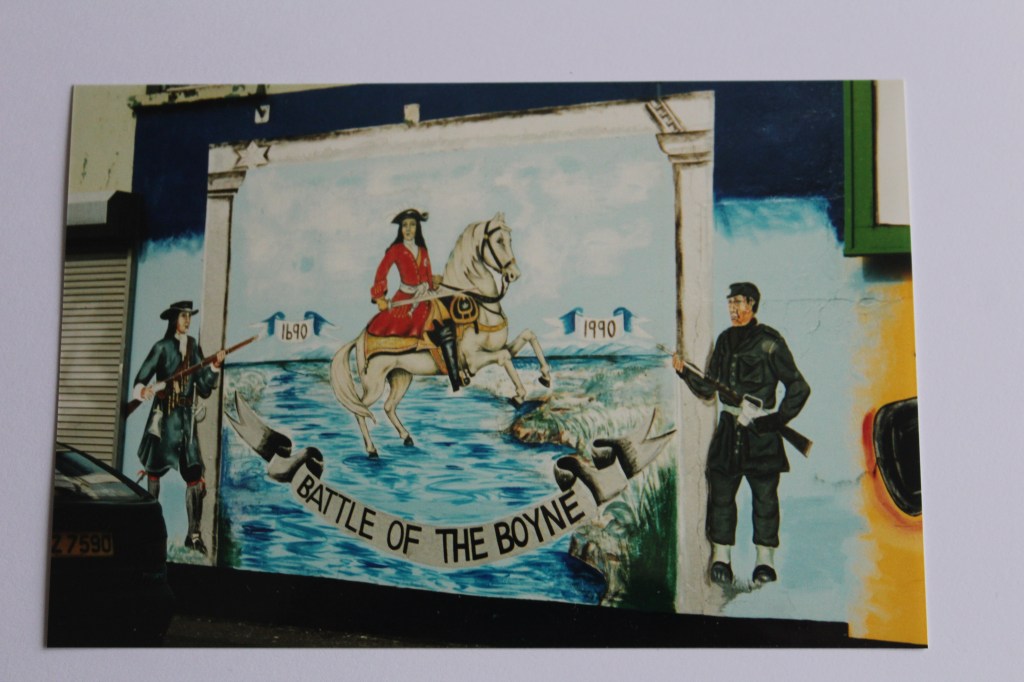
By far the most popular personality to be displayed was King William III crossing a river on a white horse brandishing a sword as he led his troops into battle against the Catholic forces of the recently expelled Catholic King James 11. For the Order, the person and the event represented a distinctive historical narrative with William as a hero saving the Protestant kingdom and people of Great Britain and Ireland from the threat of a restoration of James and his Catholic coreligionists. The reality was rather different.
First, the man. William was first and foremost Stadtholder of the Netherlands, a post which made him head of state and commander in chief of Dutch military forces. His title Prince of Orange was derived from the fact that his family had governed the small province of Orange in south eastern France. He was married to Princess Mary, a daughter of King James II. Most importantly, he was a devout Protestant. In personal terms he was quite short, lightly built, asthmatic, rather lacking in social skills, serious minded, highly intelligent and did not suffer fools gladly. His abiding aim was to preserve the independence of his beloved native Protestant Netherlands against the ambitions of France, the superpower of the day under the leadership of Louis XIV. He spent most of his adult life leading long drawn-out military campaigns in which he displayed notable determination, tenacity and personal courage. Consequently, when invited to take the crown of Great Britian in 1687 he did so with the overall intention of mobilising British resources for the struggle against Louis and in defence of his homeland. In effect, Ireland was a sideshow in the wider geopolitical struggle against French hegemony.
But for the Irish Protestant community struggling against James’ Catholic Irish and French troops William’s intervention seemed a providential delivery from the threat of subordination under Catholic rule. Consequently, William was rapidly elevated to iconic hero status and his 1690 victory became a hallowed event to be remembered in annual celebrations. The colour orange was adopted as a defining badge of those loyal to the Protestant British royal house. Throughout the eighteenth century, short lived local ‘orange’ societies came and went in Ireland and Britain, meeting annually to celebrate the victory, members wearing orange lilies or scarves and cockades, dining, drinking and singing together in pubs and hotels, with frequent loyal and anti-Catholic toasts and speeches.

It was in Ireland that these ephemeral groups solidified into a more serious enduring organisation. By the mid-1790s that country was a deeply divided society. From the late 1690s onwards, successive Irish parliaments passed a series of acts which firmly entrenched the Protestant Anglican minority as the ruling caste and the Catholic majority, which numbered approximately 75% of the population, was effectively barred from participation in the political and public life of the country. However, by the early 1790s the ideas of universal political rights flowing from the American and French revolutions had infiltrated Irish public discourse and led to the organisation of groups campaigning for the granting of political rights to Catholics. By 1793, Britain was at war with France and the British government increasingly bore down on such reform groups with a series of acts which drove them underground into the hands of increasingly militant elements. Some took up the cause of an independent Irish republic, to be established by a rising assisted by French troops and arms.
For the Protestant minority it seemed like the late 1680s come again and informal armed groups supporting the British connection began to appear, often raiding Catholic homes in search of arms. Catholic armed groups were equally active and clashes were increasingly frequent. In September 1795, these culminated in a battle in co. Armagh from which Protestants emerged victorious and determined to put their local groups on a more formal permanent footing. From this emerged the Orange Order, which spread rapidly in the ensuing troubled years. Amongst those who joined were soldiers from Britain, drawn to the patriotic Protestant ethos of the movement. On returning home they formed lodges which attracted not only retired soldiers and Irish Protestant immigrants but locals drawn by the traditional anti-Catholic sentiment of the Order, the heightened wartime patriotism of the period and the well lubricated socialising at meetings. The book examines how an organisation which originated in the peculiar circumstances of late eighteenth century Ireland came to flourish so spectacularly and play a key role for so long in the civic life of Liverpool.
Find out more about Mervyn Busteed’s new book The Sash on the Mersey: The Orange Order in Liverpool (1819-1982) on our website, or join us at the book’s launch event on Wednesday 13th December.

Follow us for more updates
Sign up to our mailing list
Twitter | Instagram
www.liverpooluniversitypress.co.uk

