
To celebrate Open Access week, Dr Alison Oliver (Voltaire Foundation) discusses Open Voltaire, a new open access resource that complements Oxford University Voltaire, offering a suite of freely available digital tools to support research into Voltaire’s life, works, and legacy.
How did Voltaire become one of the most recognisable figures of the Enlightenment? From celebrated portraits and sculptures to caricatures, medals, porcelain figurines, playing cards and even board games, images of Voltaire circulated in a remarkable variety of forms during and after his lifetime.
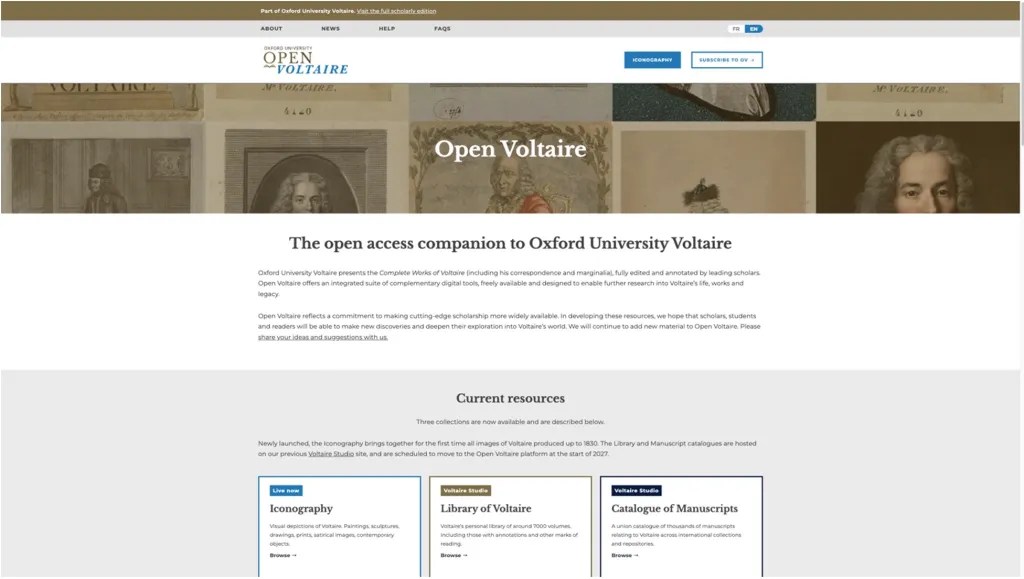
Now this rich visual history can be explored through Voltaire Iconography, the first critically annotated digital database of Voltaire’s portraits, freely available to access. It is also the first resource to launch as part of Open Voltaire, a new platform designed to bring together the Voltaire Foundation’s digital resources and enable new connections between them.
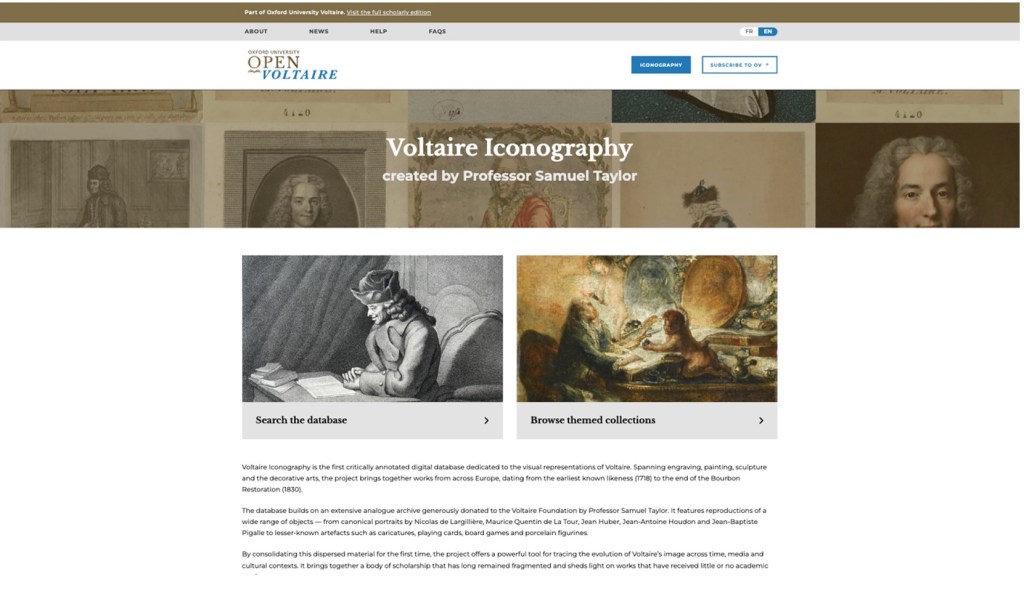
Voltaire Iconography
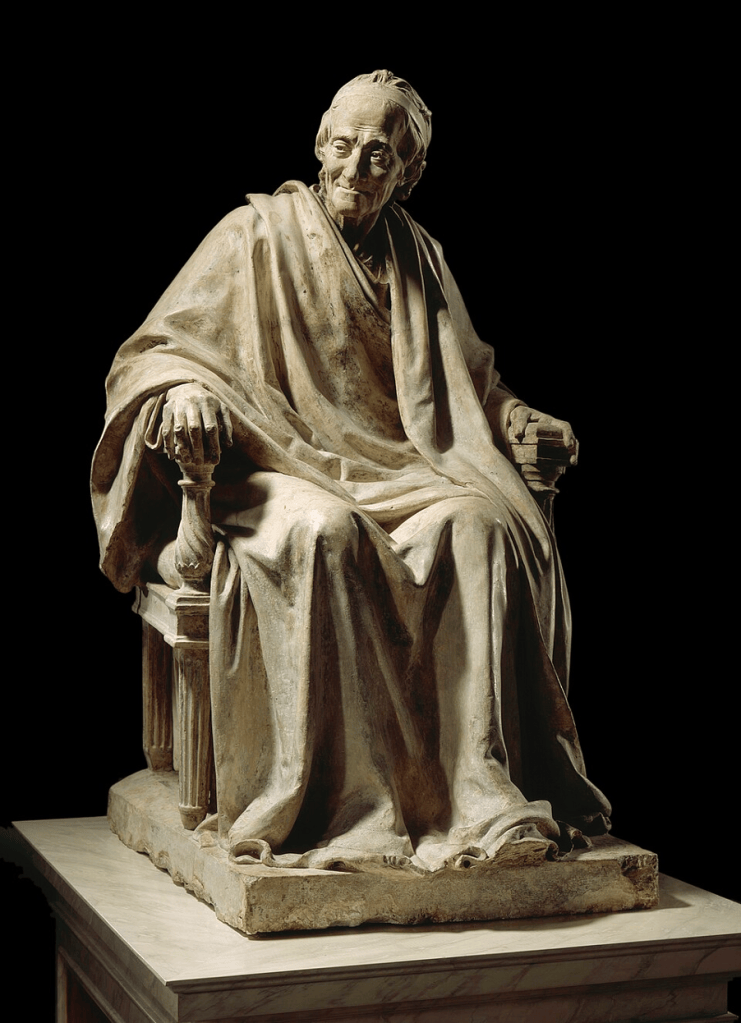
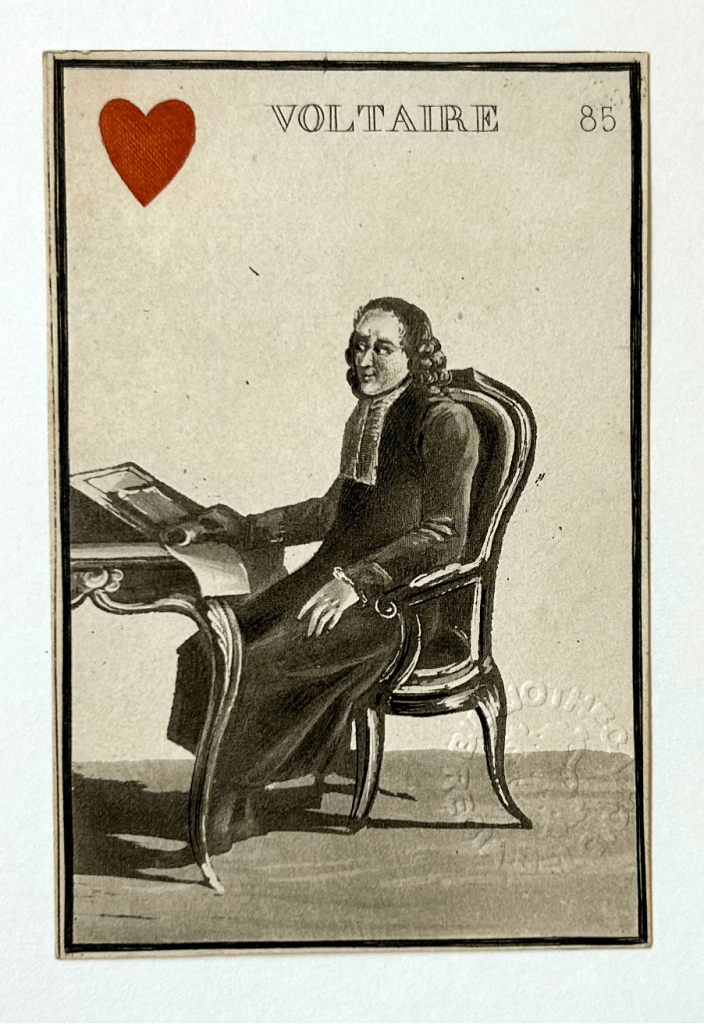
Voltaire Iconography builds on an extensive analogue archive generously donated to the Voltaire Foundation by Professor Samuel Taylor. Covering the period from the earliest known likeness of Voltaire in 1718 to the end of the Bourbon Restoration in 1830, it brings together material previously scattered across museums, libraries, auction catalogues and private collections. Canonical works – including Jean-Antoine Houdon’s celebrated Voltaire assis – feature alongside a fascinating range of less familiar objects, from caricatures and playing cards to medals and porcelain figurines.
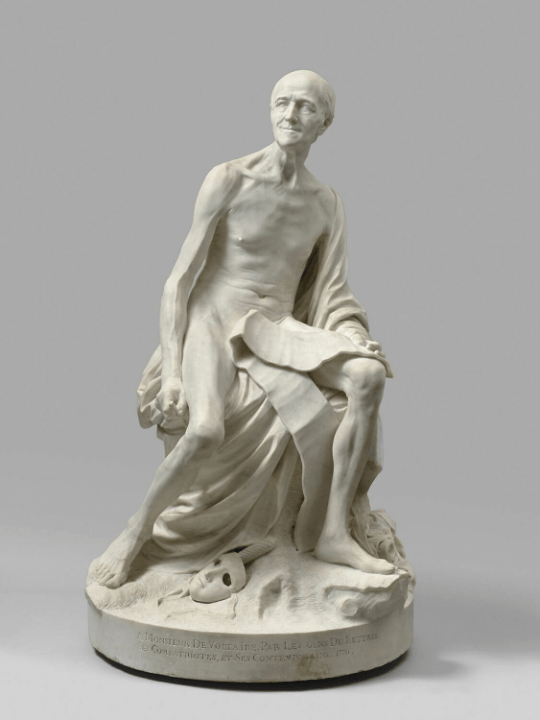
Behind these images lie some remarkable histories. When Jean-Baptiste Pigalle travelled to Ferney in 1770 to model Voltaire for what would become his controversial Voltaire nu, he found his subject almost impossible to capture. Voltaire would sit dictating letters, fidgeting and pulling faces as the despairing sculptor attempted to work. An unlikely breakthrough came courtesy of the biblical Golden Calf. Voltaire was questioning whether the famous idol could really have been cast in the time allowed by the account given in the Book of Exodus. When Pigalle confirmed that such a casting would take at least six months, Voltaire was delighted – and finally sat still long enough for Pigalle to do his job.
The encounter eventually found its way into Voltaire’s Questions sur l’Encyclopédie. Connections like this between an artwork, its creation, Voltaire’s writings, correspondence and the people around him, are at the heart of Voltaire Iconography and, more broadly, the ambitions of Open Voltaire.
At launch, the database brings together 694 fully searchable artwork records, rich in information about their makers, subjects and histories. Users can follow relationships between studies, copies and variants, explore the collection by creator, date, place, person represented and iconographic features, and where relevant, move directly from an image to Voltaire’s writings and letters in Oxford University Voltaire, the first ever digital scholarly edition of Voltaire’s complete works and correspondence. As the open-access companion to Oxford University Voltaire, Open Voltaire will ultimately link across Voltaire’s text and correspondence, creating still more routes between his works and the material gathered here.
Eight curated themed collections offer another way in, combining historical commentary with iconographic analysis to explore the artists who helped create Voltaire’s visual legacy, from the formal portraiture of Nicolas de Largillière and Maurice Quentin de La Tour to the striking later images by Jean Huber and Jean-Antoine Houdon.
Voltaire Iconography will continue to grow. Over the coming year, new themed collections, images and metadata will be added, with two major updates planned for December and July.
What’s next for Open Voltaire?
Voltaire Iconography is the first important step in a larger digital project. Open Voltaire is designed to bring the Voltaire Foundation’s growing range of digital resources into a shared environment, making it easier to move between different kinds of evidence and discover the connections between them. A portrait, a manuscript, a book from Voltaire’s library and a passage in his writings can each tell us something different. Bringing resources describing those objects into a shared digital environment opens up possibilities for seeing the relationships between them and for asking new questions of the material.
Next to join the platform will be the Library of Voltaire and the Catalogue of Manuscripts, currently available through the Voltaire Studio. The Library contains records of books and manuscripts known to have formed part of Voltaire’s personal collection, while the Catalogue of Manuscripts brings together detailed records of the surviving documentary record of his life and works, including manuscripts in Voltaire’s hand and other documents addressed to or concerning him. As these resources come together, a search might lead from a portrait to a letter, from a manuscript to a published work, or from a passage in Voltaire’s writings to a book he owned.
– Alison Oliver

Follow us for more updates
Sign up to our mailing list
Follow us on social media
www.liverpooluniversitypress.co.uk

