
This year, the Bayeux Tapestry is being displayed in the UK for the first time after 1,000 years. Here, Anne-Hélène Miller, discusses this significant moment and her new book, The Invention of Frenchness.
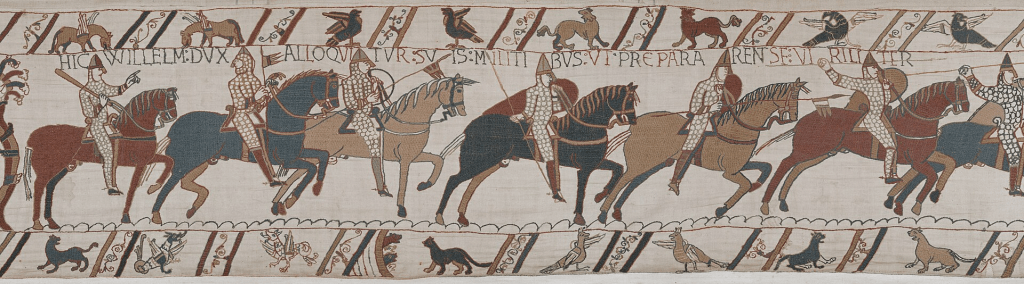
The year 2026 marks the “return” of the Bayeux Tapestry from Normandy to Britain after some 1,000 years. As part of an exceptional collaboration between France and the United Kingdom, this masterpiece that recounts the 1066 Battle of Hastings is on display at the British Museum for nearly a year. This exhibition is meant to highlight the two countries’ long and intertwined history that dates at least as far back as to 1066 when a Norman, William, became king of England.
The subsequent implications of a francophone king sitting on the throne of England is integral to The Invention of Frenchness. This important study re-examines a history of the French literature and culture from the 12th to the 16th centuries. It encompasses what it meant to be francophone and to belong to a French speaking community in the Middle Ages – something of particular relevance for the English following the events of 1066. Rather than focusing on Francophonie outside of France (including in England, for which there are several excellent studies), this book argues for a reconsideration of the complex linguistic and literary landscape of Medieval France, in which English rulers and authors were deeply involved.
Moreover, beyond the English, some Italian, Catalan, and Flemish writers were also actively engaged in this cultural conversation, alongside various authors and scribes who composed in different forms of French and other literary languages of Medieval France, such as Latin and Occitan. The authors studied here navigated between a desire to locate a sense of belonging for themselves and an aspiration to construct a francophone society based on universal values that transcended national boundaries, while others grappled with what it means to be a French literate during that period. In doing so, these authors invented a rich and impactful idea of Francité, or Frenchness, that was both local and global.
This comprehensive approach shows the persistence and evolution of cultural attitudes and structures, including those born out of reactions to opposing frameworks. At the turn of the Middle Ages, authors grappled with issues of linguistic identities and power structures in ways that resemble postcolonial subjects. In this sense, this book could be called the “ideology” of French, as the literary status of the French language always seems to be inextricably connected with political authority and dominance. From its inception, French literature alerts us to crucial socio-political tensions, including an implicit alliance between the act of writing in French and writers’ contribution to socio-cultural changes, more broadly. This book, thus, analyses how Medieval French Culture and Literature have been received in the modern era.
Due to its scope and core argument, The Invention of Frenchness makes a vital contribution to French and Francophone Studies, the history of diplomacy and European cultural history in the medieval period and beyond. Ultimately, this book calls for a re-examination of a pre-border European cultural identity in light of today’s post-border European context. This consideration is uniquely timely as the European Union prepares to sponsor a series of event for another historical commemoration in 2027: “The Year of the Normans”. This commemoration will mark the millennium of the birth of William the Conqueror in 1027. Not only was William the first francophone king of England, but his reign also generated one of the most enduring and significant cultural legacies of the medieval era, shaping Europe and the wider world.
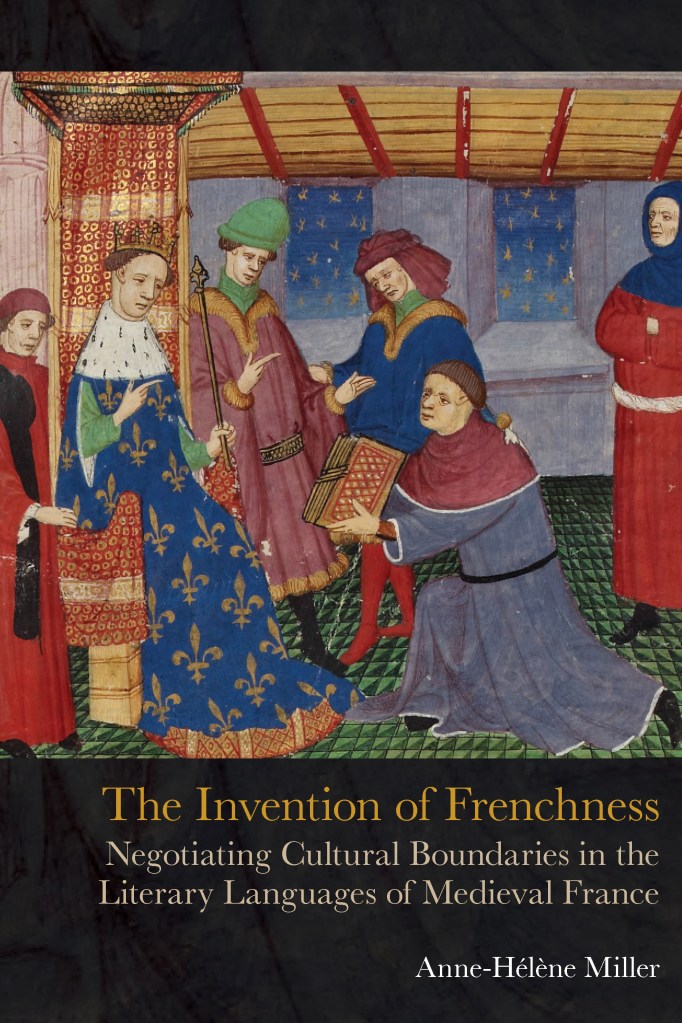
Anne-Hélène Miller is Associate Professor of French and Francophone Studies and Riggsby Director of the Marco Institute for Medieval and Renaissance Studies at the University of Tennessee-Knoxville. The Invention of Frenchness, a volume in the Exeter Studies in Medieval Europe series, is available to purchase via the LUP website here, where you receive 20% discount.

