Making Madness Visible explores how societies have pictured insanity, from medieval fools to modern brain scans. Alvise Sforza Tarabochia shows how these images not only reflect but also shape ideas of madness, defining boundaries between sanity and insanity while questioning their stability across history and culture. For World Mental Health Day 2026, the author guides the reader through five images from their monograph, exploring how madness and mental health have been depicted historically.
‘If sanity and insanity exist, how shall we know them?’ When the American psychologist Rosenhan posed this question in 1973, he was challenging psychiatry’s ability to diagnose mental disorder. But the question has a much longer history. Across centuries and cultures, one of our most persistent answers has been: by making madness visible. We have searched for madness in the face and the posture of the body, imagined it as a stone lodged in the head or as vapours that could escape from it, recorded it through the supposedly objective eye of the camera, and more recently sought it in images of the living brain. Making Madness Visible traces this restless attempt to give visible form to something that is fundamentally invisible—and asks what happens when images do not simply represent mental disorder, but teach us what undesirable ‘others’, the insane, are supposed to look like and how to treat and marginalise them. The following are five examples taken from the monograph of ways in which madness and its treatment have been visualised, and how the tropes of this visualisation have been blurred and sometimes inverted.
Air: Making the Invisible Visible
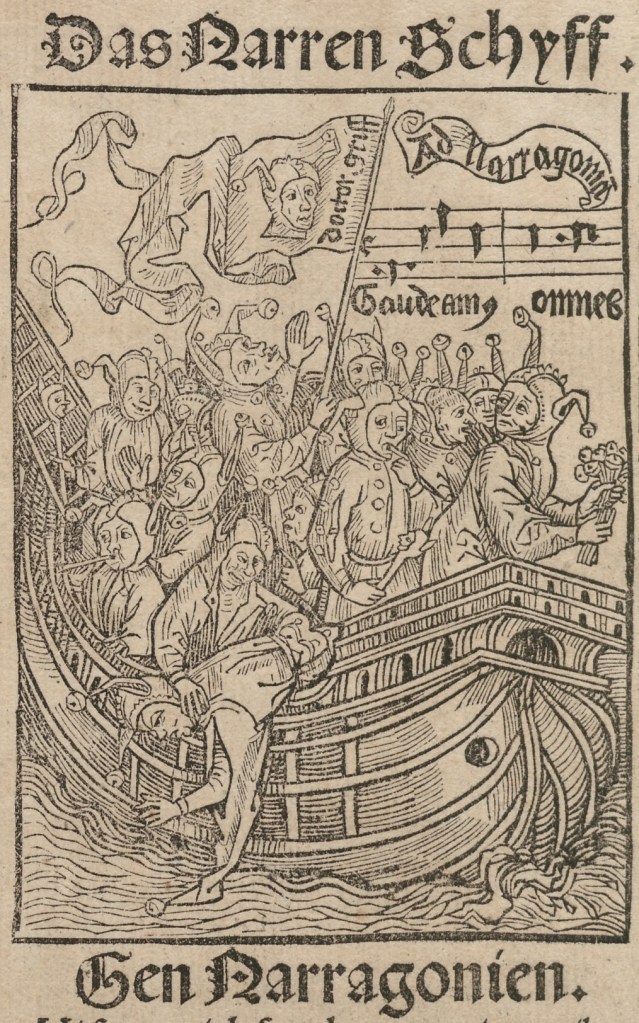
One of the oldest problems in representing madness is also the simplest: how do you picture something that cannot be seen? Medieval and early modern images developed a remarkably durable visual vocabulary for doing so. Fools carry staffs, inflated bladders (Augustine’s follis inflatus), pinwheels and bundles; they wander, travel and sometimes take to sea. Brant’s famous Ship of Fools brings several of these associations together. Fools are not simply irrational: they are adrift, outside the settled community. Even the wind that propels the ship matters. Across different cultures and periods, air, breath, vapours and wind have repeatedly provided ways of imagining the invisible and intangible nature of madness.
Extracting the Stone of Madness
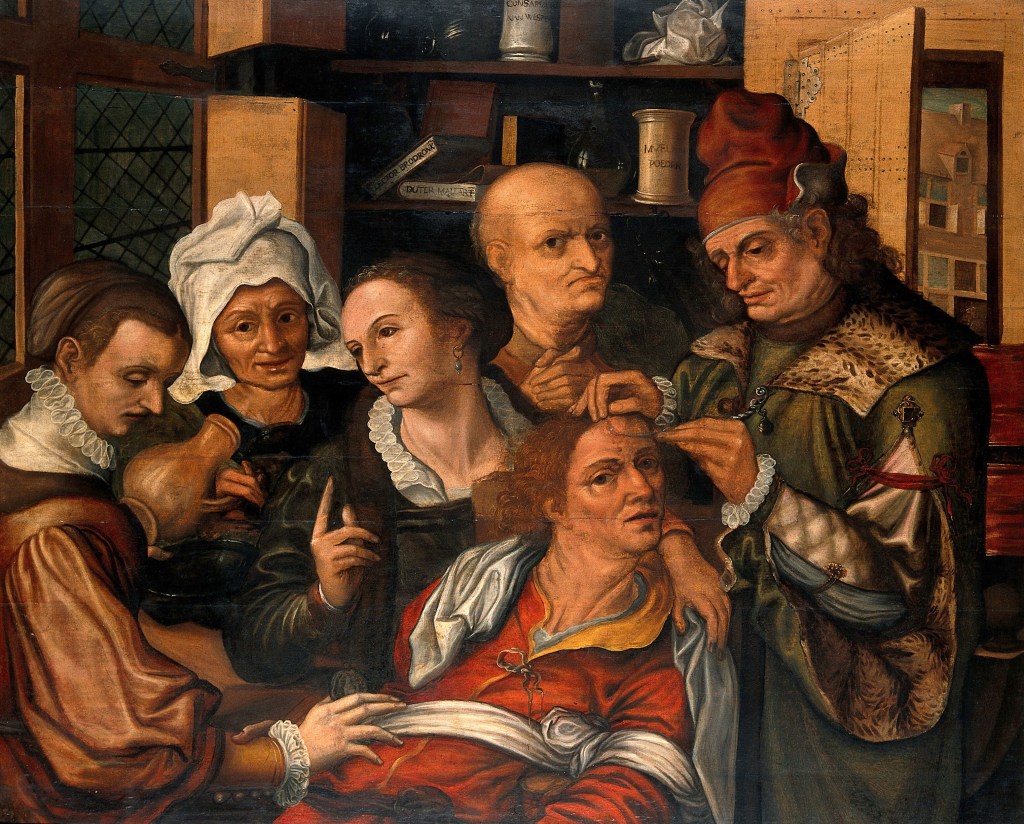
If madness cannot be seen, another solution is to give it substance. From the late Middle Ages onwards, European artists repeatedly pictured madness as a stone lodged inside the head which could, at least in the works of art, be removed by an operation. These strange scenes should neither be considered records of actual psychiatric surgery nor of charlatans pretending to cure madness. They belong to a much larger allegorical visual tradition in which madness becomes something material: a stone, a vapour, smoke or some other unwanted substance that can be extracted, purged or allowed to escape. The concept is powerful because it does more than make madness visible—it makes madness material. Once madness becomes a thing, it becomes possible to imagine taking it out—and therefore curing it.
Putting Madness in a Cage
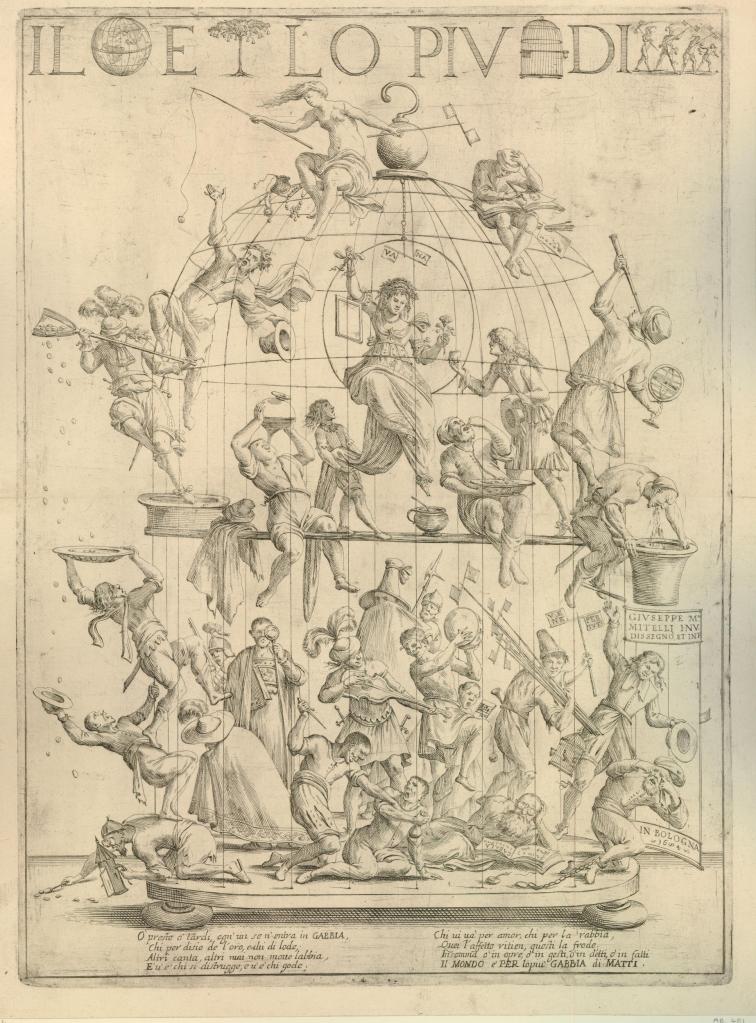
Madness has not only been imagined as something inside an individual body; it has also been represented as a threat to the social body. The solution, visually as well as historically, was often containment. Mitelli’s extraordinary etching The world is by and large a cage of fools gathers different manifestations of human folly inside a single enclosure. Yet the boundary between those inside and those outside is far from secure, as the notion of a cage would suggest. The cage becomes a permeable membrane, a metaphor for the world itself: rather than protecting a sane society from a population of fools, it raised the more unsettling possibility that the whole world might be an asylum—and that everyone might in fact belong in the cage.
Capturing Madness with the Camera
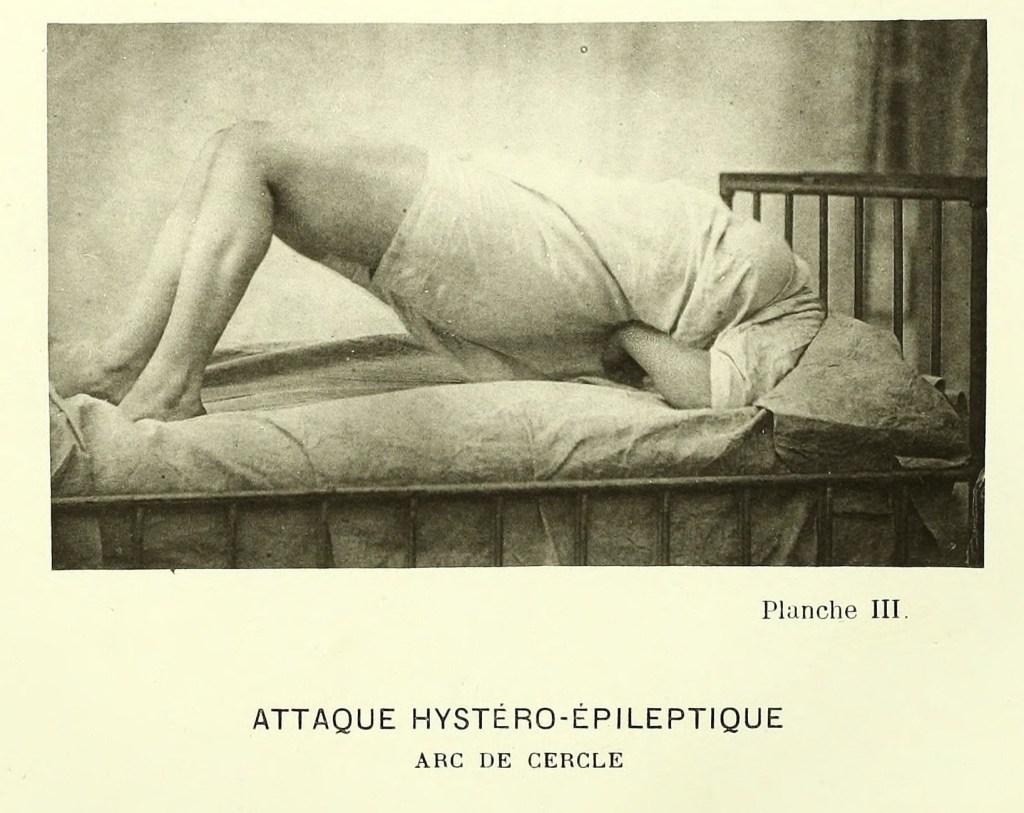
Photography seemed to promise something that painting and drawing could not: an objective record of what stood before the camera. Psychiatry quickly embraced that promise. At the Salpêtrière hospital in Paris, Jean-Martin Charcot and his collaborators photographed patients diagnosed with hysteria, attempting to record what they believed were the characteristic stages, gestures and postures of an attack. Yet photography did not simply remove interpretation from the representation of mental disorder. Patients were observed, posed, classified and arranged within an already existing visual vocabulary. Charcot’s hysterics performed for his camera. Photography therefore changed the technology through which madness was made visible without necessarily escaping older assumptions about what madness was supposed to look like.
Turning the Asylum Inside-Out
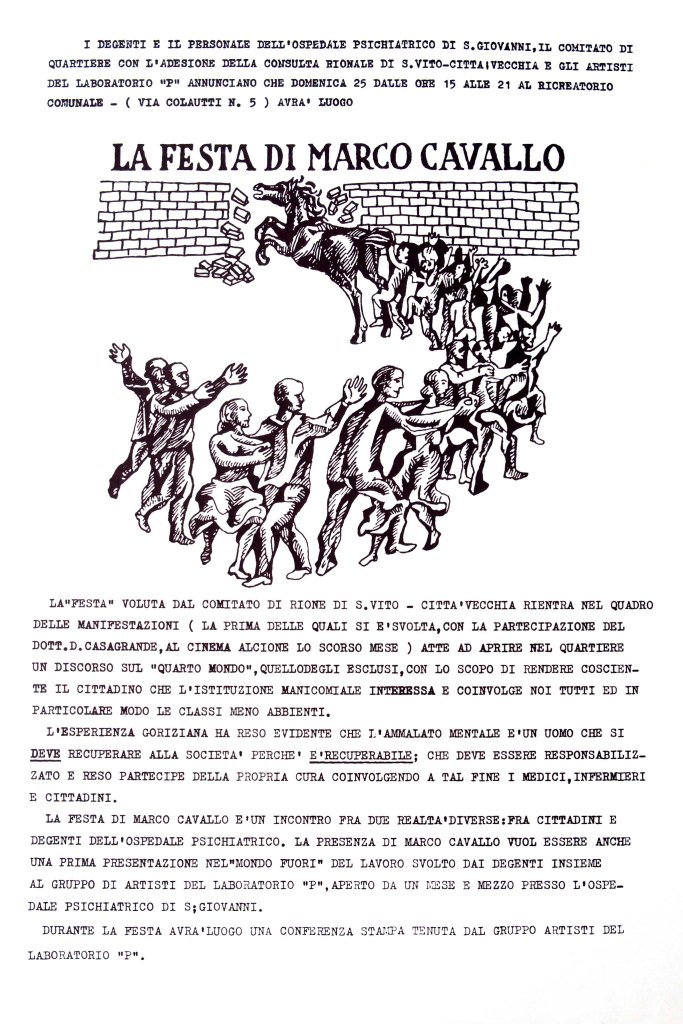
In 1973, a huge blue papier-mâché horse called Marco Cavallo was wheeled out of the psychiatric hospital in Trieste. Created collectively by patients and artists, the horse became a symbol of the movement to dismantle the asylum and return those confined within it to the community. The imagery surrounding the march deliberately reverses an older visual tradition. Earlier representations imagined fools invading the ordered city and therefore needing to be contained; here, people join hands across the asylum wall to help Marco Cavallo break out. Madness is no longer something that must be kept safely on the other side of a boundary. The boundary itself has become the problem.
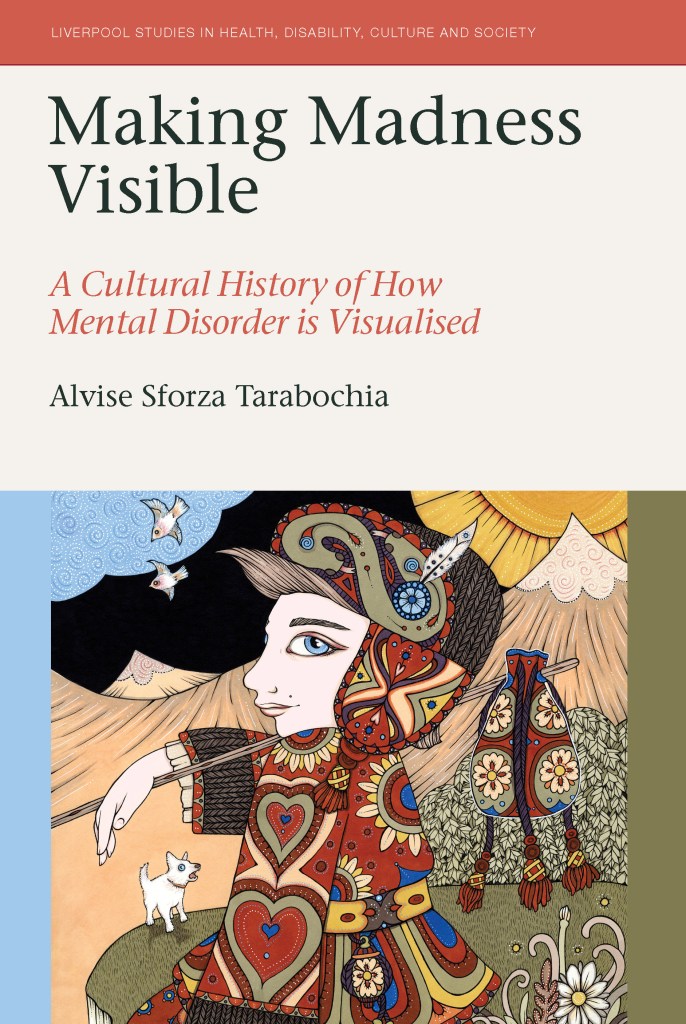
Alvise Sforza Tarabochia is Senior Lecturer in Italian at the University of Kent. He is the author of Psychiatry, Subjectivity, Community: Franco Basaglia and Biopolitics and has co-edited several volumes, including The Years of Alienation in Italy and The Impact of AI on Language Education.
You can purchase Making Madness Visible via the LUP website here. Making Madness Visible is a volume in the Liverpool Studies in Health, Disability, Culture & Society series. Find out more about the series here.
Interested in Disability Studies?
You may also like the Journal of Literary & Cultural Disability Studies, which publishes a wide variety of textual analyses that are informed by disability theory and, by extension, experiences of disability. Find out more here >