
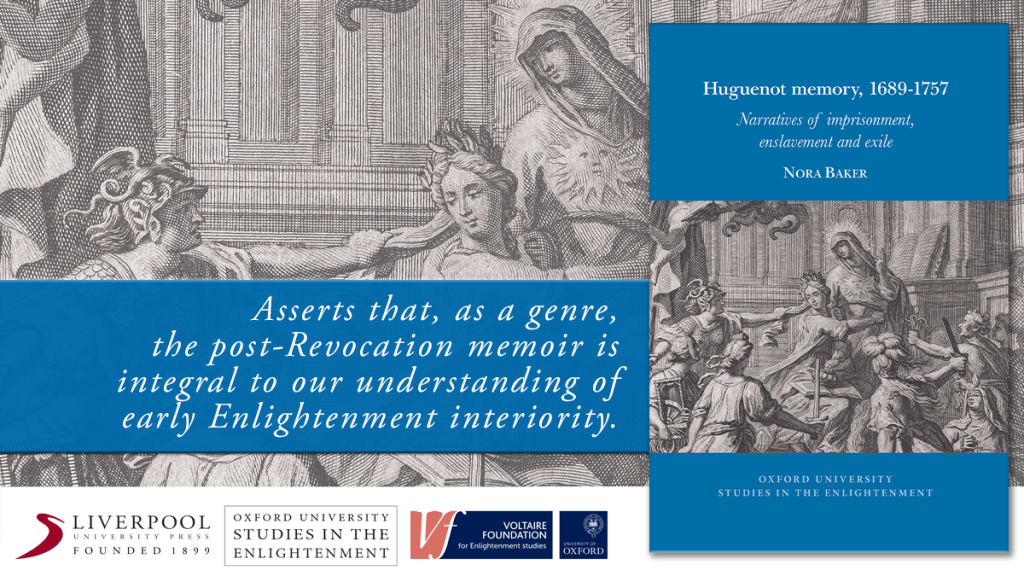
Drawing on the memoirs of French Protestant prisoner Jean Marteilhe, Nora Baker explores a dramatic maritime incident that turns social hierarchies upside down. The story offers a fascinating glimpse into how Huguenots remembered experiences of persecution, imprisonment, and survival. Nora Baker is the author of the Oxford University Studies in the Enlightenment series volume Huguenot memory, 1689-1757: Narratives of imprisonment, enslavement and exile.
Nora will be celebrating the publication of her book at a launch on 9 November 2026, 5.15pm at the Maison Française d’Oxford. The author will be in conversation with Katherine Astbury (University of Warwick). The discussion will reflect on the act of writing in the wake of a traumatic rupture, and on the modalities of self-expression in the eighteenth century, with specific reference to the Huguenot post-Revocation context. Please find more information here >
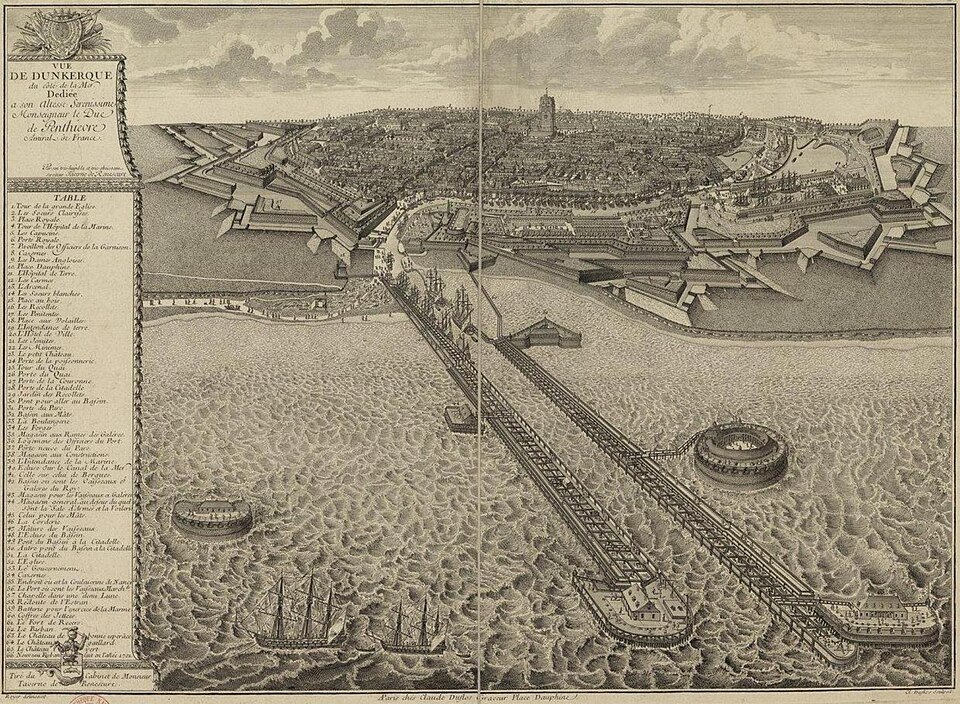
One fine day in 1707, a galley ship set sail from Dunkirk, taking advantage of seemingly good conditions. Among its fairly motley crew were French Protestants, petty criminals, and captives from the Ottoman Empire — men found to have acted in contravention of the laws of the Kingdom of France risked being condemned to row on these kinds of ships in perpetuity, their toil functioning as a highly visible symbol of the King’s power.[1] The commander of the ship which headed out from Dunkirk was filled with confidence, having been assured of good weather by his team of pilots, and decided to stop for the night in a cove on the Côte d’Opale. All seems well and good, though there is one voice onboard prophesying calamity. But it is only that of Pieter Bart, a poor fisherman who spends much of his time inebriated. Though a pilote côtier tasked with supplying navigational knowledge,[2] Bart’s expertise was disregarded, not least because he apparently spoke French badly and addressed everybody using the informal ‘tu’.[3] On this occasion, however, the commander not heeding Bart’s warning nearly cost everyone onboard the ship their lives. The manmade bearings of the ship could do little in the face of the devasting power of the sea, and the pilots who once mocked the fisherman’s advice are forced to seek his help for their survival.
We see in this episode, taken from the Mémoires d’un Protestant of Jean Marteilhe (first published 1757), a curious use of the time-worn yet ever-popular trope of the ‘Ship of State’, and its parodic counterpart, the ‘Ship of Fools’ — the latter enjoying great popularity in the early modern period in the decades and even centuries following the publication of Sebastian Brant’s Narrenschiff (1494).
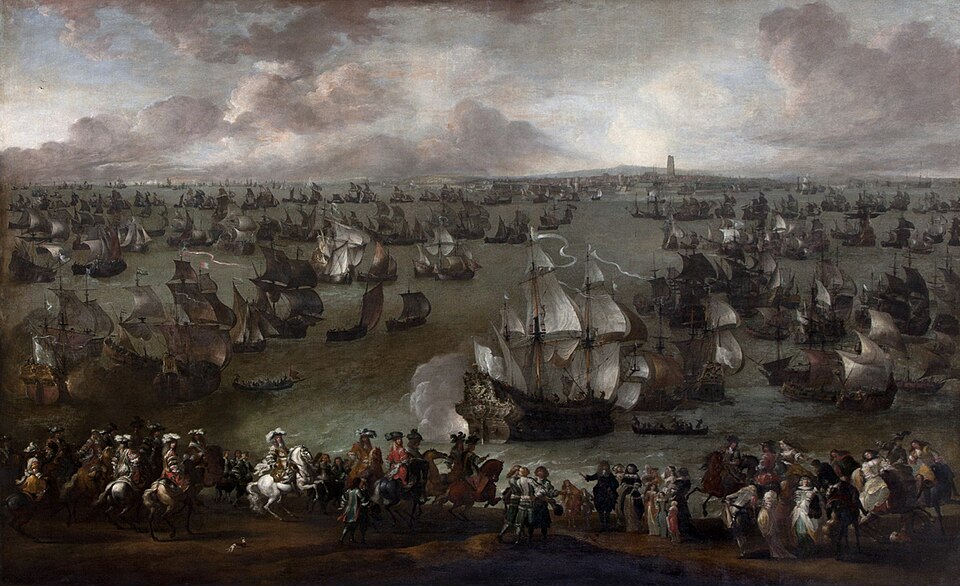
In Marteilhe’s depiction of this near-shipwreck, it is the confident commander and pilots who are shown to be foolhardy, whereas Bart, for all his supposed naïveté, is the one in whom faith should be placed. Eventually, the higher-ups onboard ship are driven to defer to Bart in order to save their lives, though not before the prisoners who would ordinarily provide the vessel’s manpower have the chance to cry out “Allez, messieurs, nous allons bientôt être tous égaux” (p.164). All is topsy-turvy, roles are reversed, and the hierarchy which normally would keep things on board running smoothly has been thoroughly unsettled.
While indulging in the dramatic effects of the incident, Marteilhe, as narrator, takes care to associate himself and his fellow French Protestant captives with the enlightened approach to all this turmoil. He aligns himself with Bart’s rustic wisdom by professing that he also did not understand the commander’s keenness to anchor in the cove, and even imbues the episode with light Biblical undertones: at some point, while the ship is being shaken by the sea, Bart is shown to have initially slept through the ruckus before being called upon to help, similar to Jesus’ slumber in Matthew 8:23-27, Mark 4:35-41, and Luke 8:22-25. Of course, Bart does not calm the storm in the same supernatural manner as Christ, but he does manage to calmly and confidently direct the crew to safety. Marteilhe makes shrewd use, then, of Bart as a narrative tool: the pilot côtier embodies the trope of the ‘wise fool’, deeply in tune with and knowledgeable about nature and the sea, but expressing himself in a rough, coarse manner.[4] His status as ‘wise fool’ frees him from having to abide by certain rules of social niceties: it is what Marteilhe terms his “naïve rusticité” which permits him to get away with threatening that he would let the others “noyer comme des cochons” (p.128) were his own life not on the line.
Bart proves a useful figure, then, for Marteilhe to lampoon the ship’s secular authorities, all the while hinting at a deeper, more sincere knowledge that can be appreciated only by those willing to look beyond secular trappings. Other episodes portrayed in Marteilhe’s narrative highlight the dehumanization of the captive rowers at sea, often forced to perform humiliating rituals for onlookers or crowded into unsanitary living conditions, and always running the risk of brutal punishment for any transgression. While the legal status of a galérien was not that of a slave, or esclave, the loss of autonomy associated with being condemned to the ships was extreme, with the English translation of the term – ‘galley slave’ – helping give the lie to the claim of free French soil.[5] Marteilhe even flippantly refers to himself as “l’esclave du Roi” in his mémoires (p. 104). Using Bart to showcase the ineptitude of his captors helped Marteilhe construct his life story in a manner that reflected favourably on him and on his coreligionnists, highlighting the often farcical nature of his imprisonment. This traumatic period of his life could not be glossed over, but it could be tackled in a way that enabled him to integrate his experiences into his wider sense of self.
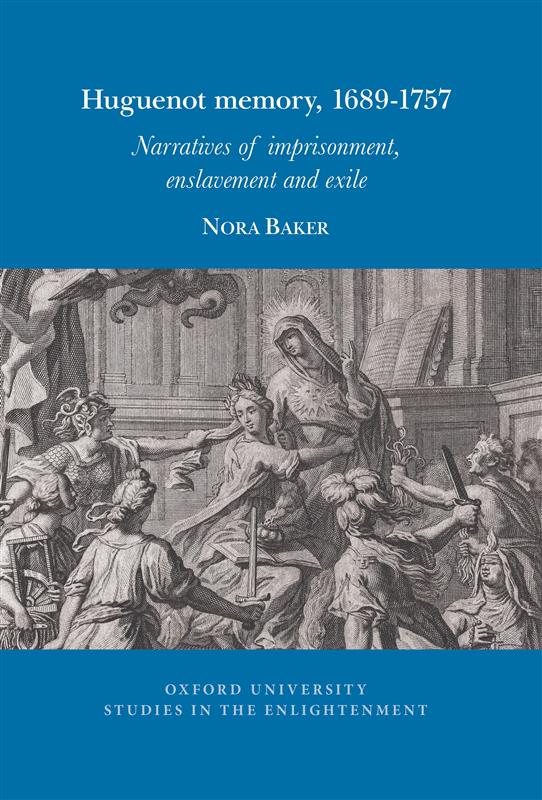
Marteilhe was not alone in seeking to process difficult life experiences in this way. Many of his fellow French Protestants, or Huguenots, turned to memoir-writing as a practice which allowed them an outlet for self-expression, often engaging creatively with intertextual references to the Bible and martyrologies to make sense of their predicaments and of the conflicting emotions felt in the wake of the rupture wrought by the Revocation of the Edict of Nantes. Galley servitude was just one of the many fates which Huguenots were liable to suffer following 1685: many women were confined to convents, and those who escaped captivity were often ultimately destined for precarious existence in exile. My book, Huguenot Memory, 1689-1757: Narratives of Imprisonment, Enslavement, and Exile, looks at just six stories drawn from these different kinds of lives which awaited French Protestants in the post-1685 world. I read these stories through the lens of trauma theory, for insight into how the crafting of a narrative aided the development of a cohesive sense of self.
[1] Ruth Whelan, “Turning to Gold: The Role of the Witness in French Protestant Galley Slave Narratives”, Seventeenth-Century French Studies 32, (2010), 3-18.
[2] Nouveau commentaire sur l’Ordonnance de la marine, du mois d’août 1681, A La Rochelle : chez Jerôme Legier, imprimeur du roi, au canton des Flamands, 1766: 483.
[3] Jean Marteilhe, Memoires d’un protestant, condamné aux galeres de France pour cause de religion 1881 edition, p. 125. Further in-text references are to this edition.
[4] Walter Kaiser, Praisers of folly : Erasmus, Rabelais, Shakespeare, (Cambridge, MA, 1963).
[5] For more on this, see Gillian Weiss, and Meredith Martin, The Sun King at Sea: Maritime Art and Galley Slavery in Louis XIV’s France, (New Haven, 2022).
Nora Baker is a Wiener-Anspach Foundation Postdoctoral Fellow at the Université Libre de Bruxelles. She earned her DPhil (PhD) from Jesus College, Oxford, and previously worked as a Postdoctoral Fellow at the University of Tokyo. Her research interests revolve around the religious, cultural, and literary history of the late seventeenth and early eighteenth centuries. She is the author of Huguenot memory, 1689-1757, a volume in the Oxford University Studies in the Enlightenment Series. You can find her website here.
Interested in Huguenot history?
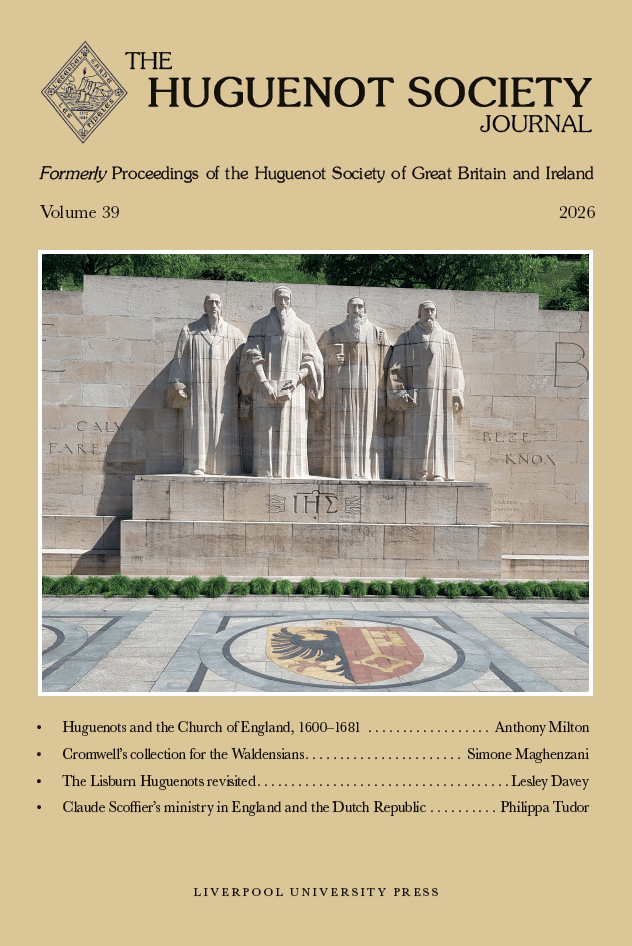
You may also like the Huguenot Society Journal, which aims to nurture and disseminate research on Huguenots and also to form a bond of fellowship among those who respect the Huguenots and seek to perpetuate their memory.

Follow us for more updates
Sign up to our mailing list
OSE Bluesky | LUP Bluesky | Instagram
www.liverpooluniversitypress.co.uk

