
“Spain Mad”: British Engagement with the Spanish Civil War explores one of the most frequently asked questions about this subject: why did the Spanish Civil War make such a profound impact in Britain? In this blog post, Tom Buchanan explores the intense and multifaceted British response to the Spanish Civil War, highlighting the extraordinary activism of ordinary individuals who rallied to support the Spanish Republic through donations, demonstrations, and direct action, while examining the broader political and emotional motivations behind this prolonged engagement.
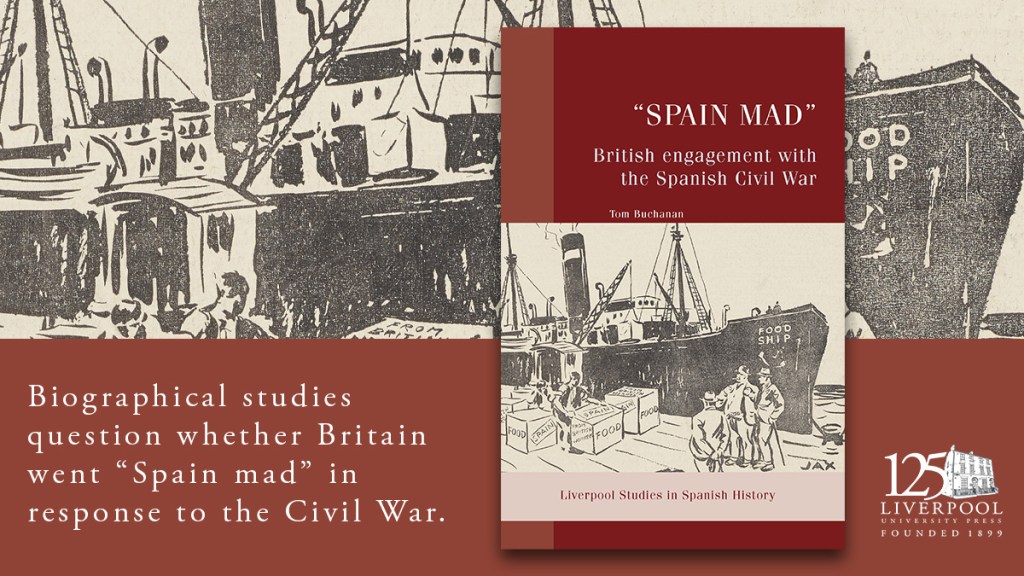
The Spanish Civil War not only provoked a major response within Britain, but one of peculiar intensity which lasted throughout the entire conflict. Supporters of the Spanish Republic sacrificed their time, money and other precious resources to take part in mass rallies, demonstrations, door-to-door collections and a myriad other activities. Large amounts of money were raised – often from multiple small donations – to equip ambulances and send ships filled with food and clothing to Spain. This intense activism was encapsulated in a comment made by a police informer at the Royal Aircraft Establishment who told his handlers in September 1936 that his fellow workers had gone “Spain mad”. My latest book explores this idea through a series of essays, and the introductory chapter asks how we can learn more about what motivated those individuals who gave so much to support the Spanish Republic.
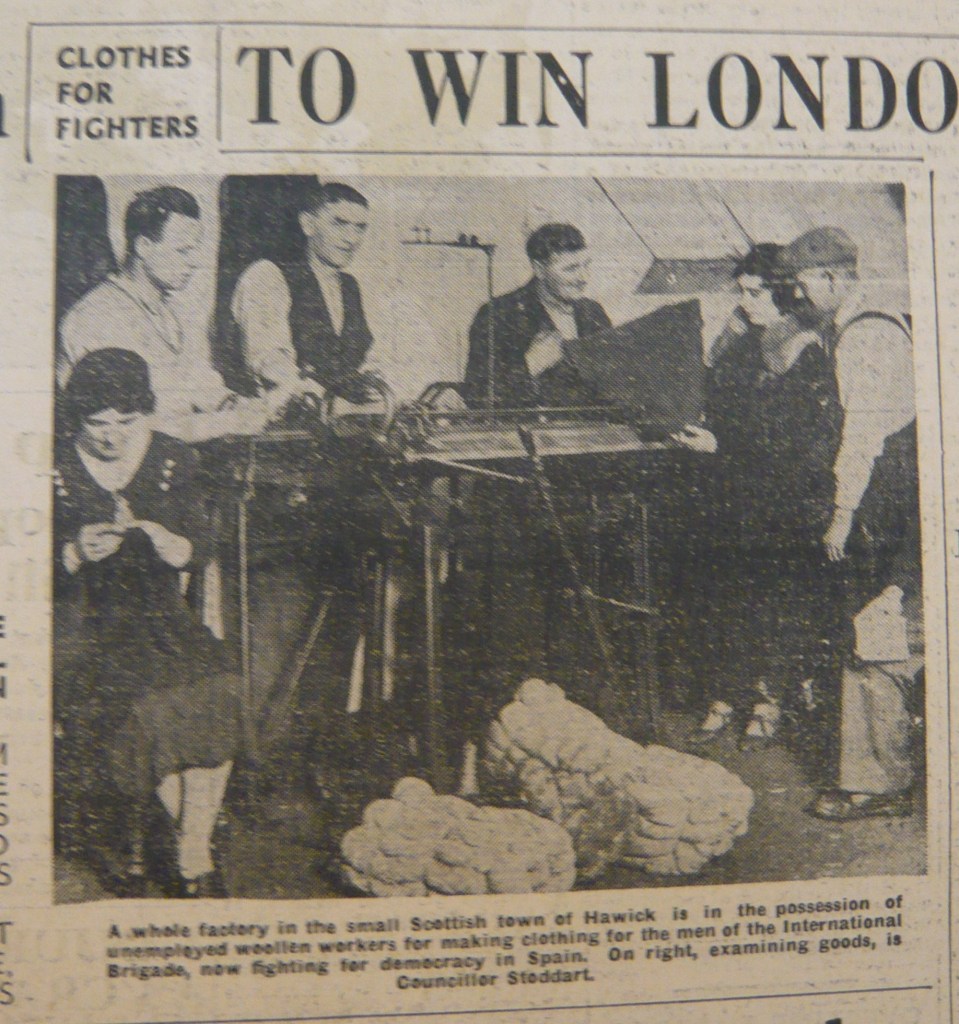
One extremely valuable source is the manuscript diary of William Townsend, an artist and dedicated supporter of the Republic who lived in Canterbury but regularly travelled up to London. Townsend’s diary records his daily efforts to organise meetings and other activities, breathing life into W.H. Auden’s famous line about activists expending their powers “on the flat ephemeral leaflet and the boring meeting” (“Spain”, 1937). I also discuss the legal statements made by demonstrators calling for “Arms for Spain” in early 1939 and use local newspaper reports to tell the story of the unemployed woollen workers in Hawick who reactivated a mill to make clothing for the International Brigades. A chapter is devoted to the Plymouth Drake parliamentary by-election of June 1937, when the Labour candidate G.T. Garratt, was flown back to Britain from Spain – where he was organising humanitarian aid for Madrid – to contest the seat. Garratt was defeated and bitterly regretted his failure to turn British policy towards the Civil War into an election-winning issue.
Only a few days after Garratt’s defeat George Orwell travelled home from Dover through a somnolent southern England, after fighting with the POUM militia in Spain. If the results from Plymouth Drake and other by-elections are anything to go by, this was, as Orwell observed in Homage to Catalonia, a country still sleeping “the deep, deep sleep of England, from which I sometimes fear that we shall never wake till we are jerked out of it by the roar of bombs”. Indeed, it should be noted that the popular image of the later 1930s as a moment of heightened political activism in Britain does not coincide with the view of many contemporary observers that this was an era of worrying apathy, in which ordinary people did not take the threat of fascism seriously enough. The activists in my book were, therefore, doing something exceptional and in defiance of the political establishment. Prime Minister Neville Chamberlain liked to describe the demonstrations over Spain as mere “indignation meetings”: at best letting off steam, at worst an impediment to the serious business of appeasing Hitler. Meanwhile senior figures in the Labour Party fretted that activists were getting too drawn into a single issue which offered little political benefit. Hence the comment by James Walker, Labour MP that “the party can’t live on Spain”. Ted Bramley, the Communist Party’s London Divisional organiser asked “why have we not done the same for, say, Holidays With Pay?”
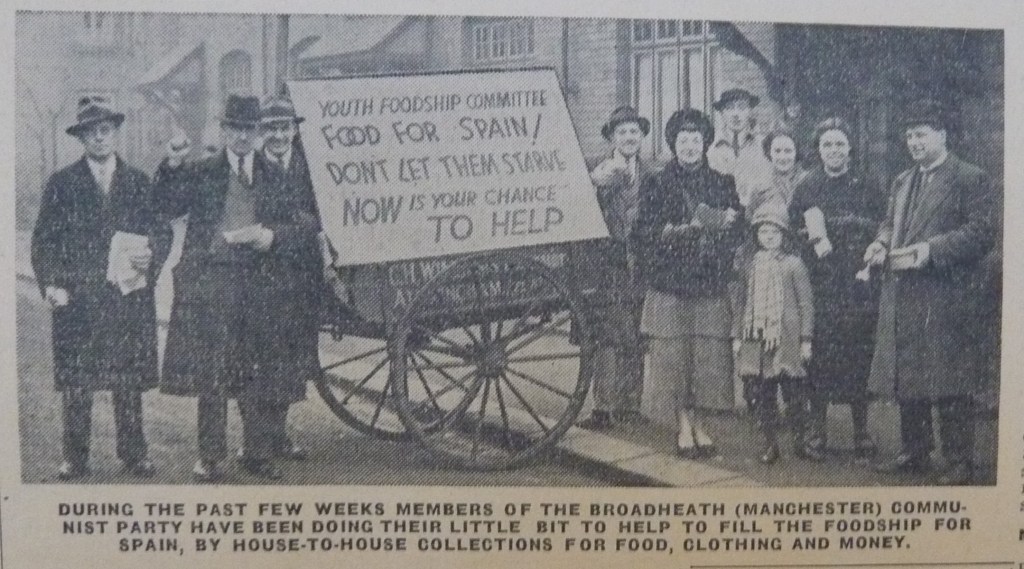
One question that remains is why this intense reaction came in response to Spain, and why it lasted for so long? Clearly, for many the Spanish Civil War represented a decisive clash between democracy and fascism, and its importance transcended Spain itself. In the words of one contemporary slogan it was a case of “SAVE SPAIN SAVE BRITAIN SAVE PEACE”. However, the political situation was a complicated one, and even on the pro-Republican side we encounter minority responses such as the Independent Labour Party’s sympathy for the revolutionary POUM and the Anarchists. To take another example, G.T. Garratt was a critic of empire, but did not want to see parts of the British empire transferred to the fascist powers, let alone the loss of Gibraltar sealing the Mediterranean to the Royal Navy. The book contains a number of chapters that examine the ambiguities of anti-fascism in the Spanish Civil War, notably the cases of the journalist Philip Jordan and the Anglican priest Rev. Eliot Iredell.
The intensity of the political messages emanating from Spain during the Civil War was amplified by the emotive images of conflict, political violence and humanitarian distress that accompanied them, backed up by the propagandists’ innovative use of film, drama and visual displays. Colourful Republican posters, for instance, had an important part to play on stage at rallies, as did cheaply made touring films such as The Defence of Madrid. These media ensured that British activists did not just engage with Spain at a cerebral level, but also at a highly empathetic one.
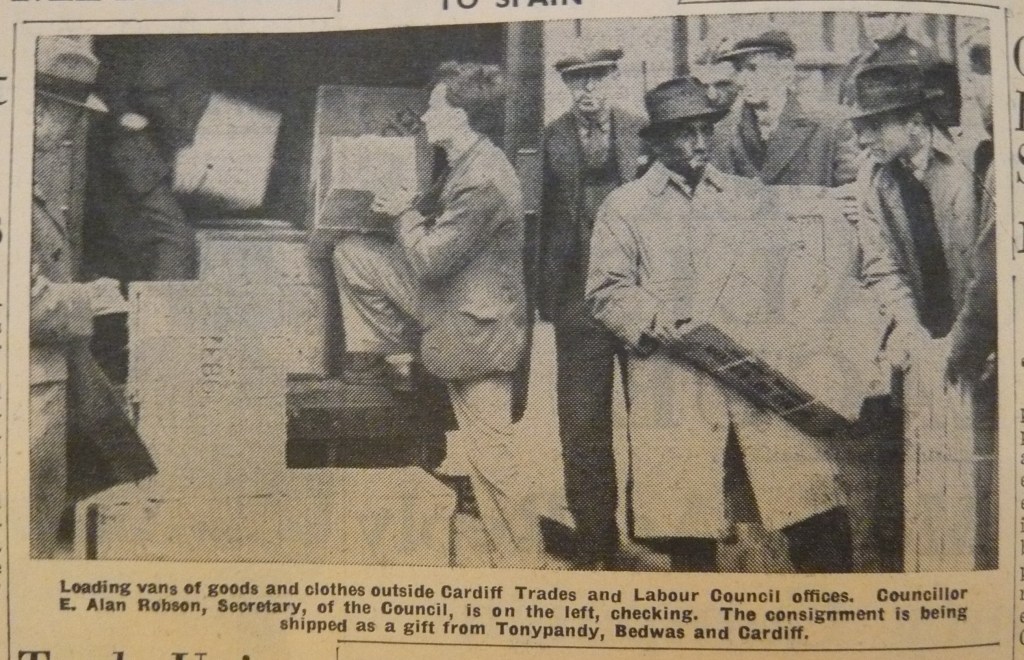
Above all, much of the intensity was due to the nature of the conflict itself: its length and scope, its relative proximity to Britain, the difficulty of controlling it, its evolution within a threatening international environment, and the challenges that it posed. The Spanish Civil War represented a remarkable forum for direct action, presenting the opportunity for all those who wished to take part to do so. This did not necessarily mean going to fight, but rather doing ordinary things in one’s own community to an extraordinary degree. Whatever one’s abilities, whether turning lorries and motorcycles into battlefield medical units, making clothes, taking collections or distributing goods, there was an opportunity here to be seized. Photographs in the press such as those reproduced here – an underutilised historical source – underline the point that for a significant minority aiding Spain was a democratic and all-consuming activity.
Tom Buchanan
Tom Buchanan is Professor of Modern British and European History at the University of Oxford’s Department for Continuing Education, and a Fellow of Kellogg College. He is the author of three books and numerous articles on British involvement in the Spanish Civil War. His most recent book is Amnesty International and Human Rights Activism in Postwar Britain, 1945-1977 (Cambridge University Press, 2020).
Read “Spain Mad”: British Engagement with the Spanish Civil War Open Access on the Liverpool University Press website.
Follow us for more updates
Sign up to our mailing list
X | Bluesky | Instagram
www.liverpooluniversitypress.co.uk

