
In this blog post, Carl Dixon, author and translator of the latest title in the Translated Texts for Byzantinists series, discusses the Paulicians of the Byzantine Empire and the controversies of Peter the Sicilian’s writings on them.
The Paulicians are one of the more unusual heresies of the Middle Ages. Unlike many of their ilk, who have long faded from history, their name resonates today, in the Pavlikians or Palćene who reside in parts of Romania, Serbia, and Bulgaria. Their origins are more obscure. They are first attested in early medieval Armenia but enjoyed greatest renown in the ninth-century East Roman, or Byzantine, Empire.
The Paulicians are one of the more unusual heresies of the Middle Ages. Unlike many of their ilk, who have long faded from history, their name resonates today, in the Pavlikians or Palćene who reside in parts of Romania, Serbia, and Bulgaria. Their origins are more obscure. They are first attested in early medieval Armenia but enjoyed greatest renown in the ninth-century East Roman, or Byzantine, Empire.
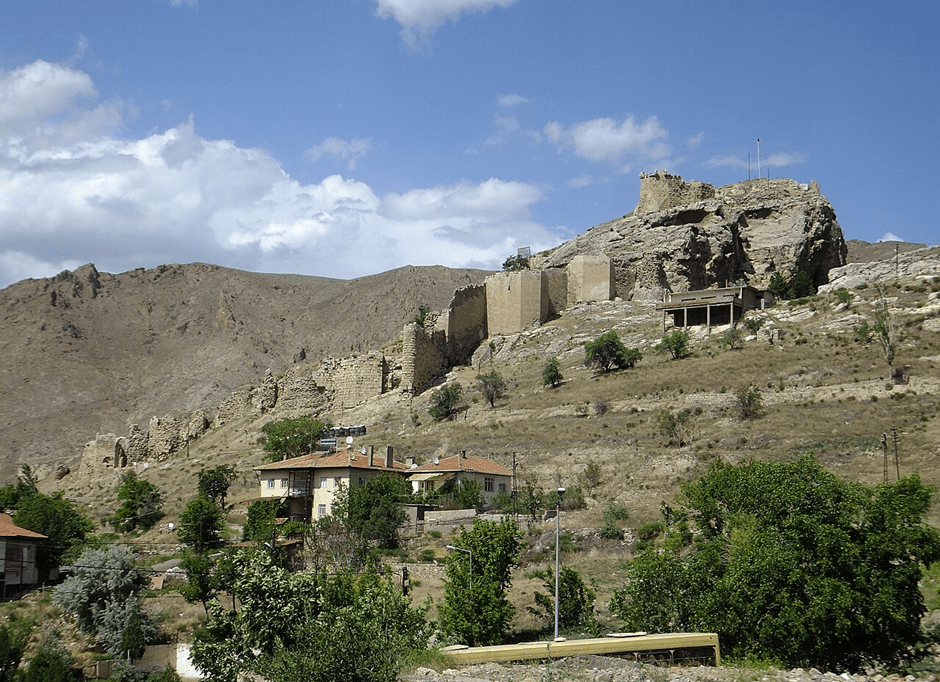
This did not quieten them, though. Further restlessness in the following century led some to be relocated to the empire’s European provinces, where they left one of their more debated legacies: a conjectured influence upon the Bogomils of Bulgaria and Cathars of the Languedoc. In the Balkans they remained an unruly presence, enduring Ottoman rule, Catholic missionary activity and the throes of modern state formation. Their survival demonstrates the unifying force of religious belonging in a hostile world.
Amid this troubled history, attention usually focuses on the zenith of their influence in the Byzantine period and, more specifically, on the writings of Peter the Sicilian. These include the circuitous but hostile History of the Paulicians, which interweaves religious polemic with fascinating details about the Paulicians’ leaders, migrations, and internal politics. It is followed by three sermons that refute their most notorious heretical tenets, including their dualism, denunciation of the Virgin Mary, and rejection of the eucharist. In these sermons, Peter often quotes the Paulicians directly, making them a valuable witness to heretical beliefs. The sermons are accompanied by three florilegia which provide scriptural justification for the orthodox position.
Like many medieval works, Peter’s corpus has provoked controversy. There are two main reasons, the first of which is not unusual for its subject matter. Heresy is a contentious subject for good reasons. With rare exceptions, we know of heretics through the writings of their enemies. This presents issues but it is difficult to determine how serious these are. On the one hand, people in the past believed many things that seem unusual to modern sensibilities. The Manichaeans, their cosmic drama of light opposing darkness, and its bewildering array of archons and creations, are one such example.
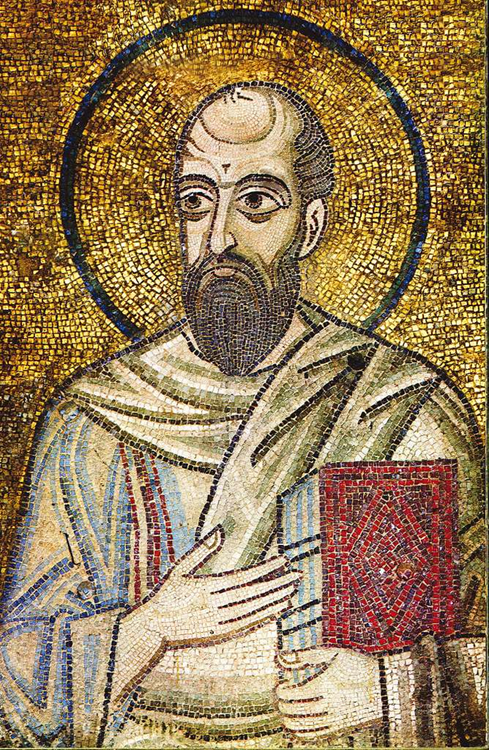
On the other hand, accounts of other movements rightly raise suspicions. The allegations of flight and satanic orgies levelled against medieval and early modern witches are only the most infamous and tragic example. As historians we need to be careful about texts such as these. A line must be drawn, but where? The Paulicians are usually identified as Manichaeans, but opinions are understandably divided on how accurate this is. Their testimony suggests they considered themselves followers of St Paul.
The second point of contention is more unique to Peter’s corpus. Like much Byzantine literature, its form and aims are complex, and its scope ambitious. It borrows generously from other texts and it is tricky to determine which material is Peter’s and which is not. This isn’t unusual for the period but, even so, his work has oddities. For a writer who says he wrote in the early 870s, he tells us little about Chrysocheir, a Paulician general who had the empire at his mercy at this time. Instead, he saves his ire for Sergios-Tychikos, a successful missionary who died a generation before.
For this and other reasons, some have considered at least part of Peter’s corpus a forgery. Yet he clearly interacted with Paulicians, perhaps frequently, and he displays a deep concern for the religious well-being of the empire and its populace. This concern did not extend to the Paulicians, whom he thought worthy of the death penalty.
Peter the Sicilian is, then, as controversial as the movement he described. He is perhaps also as misunderstood. The History has traditionally been privileged over the sermons and florilegia, which have only recently received a modern edition. There is still much to be learned from his writings. It is for that reason that Peter the Sicilian: History of the Paulicians, Sermons and Florilegia hopes to shed more light on a gripping episode in the history of the East Roman state, and the elusive writer who documented it in such characterful and argumentative fashion.
Carl Dixon is the author of several works on Paulician identity, social praxis, and doctrine. His broader interests include heresy, persecution, and diplomacy. Peter the Sicilian: History of the Paulicians, Sermons and Florilegia is available via the LUP website now. Discover more titles in the Translated Texts for Byzantinists series here.

Follow us for more updates
Sign up to our mailing list
Follow us on social media
Visit our website

