
Professor Stephen Small, author of the recently published Black Liverpool, ‘The real thing’: West African, West Indian and Afro-American culture at the end of the twentieth century, introduces his new book in this blog post, touching on how different the history of Black Liverpool is to that of Black London, and the influences which makes Black Liverpool so unique.
In a context of widespread racism in media, schools and politics in Liverpool and across Britain in the 1970s, the Black and multiracial community of Liverpool 8 defiantly rose with initiative, resourcefulness and creative energy to produce a series of original cultural practices and organisations that had a tremendous impact on the city as a whole. The Liverpool 8 community drew heavily on transnational cultural influences from Africa, the West Indies and Afro-America via film, television and radio, while others were brought first-hand by visitors to Liverpool, and by Liverpool residents who travelled internationally. This included soul and reggae music and nightlife, social and political ideologies, Black Studies courses, language and dialect, as well as personal fashion, dress and hairstyles. Black women were at the forefront of all these activities as leaders, directors and members of groups. Black Liverpool, ‘The real thing’: West African, West Indian and Afro-American culture at the end of the twentieth century is essential reading for all who are interested in Black history and culture in the city of Liverpool, and for Black Britain more generally.
Afro-American culture was the most prominent cultural influence and was shared by organizations like the Black Church (the Blackie), Stanley House, the Timepiece, and the Gladray; by the Charles Wootton Centre and Liverpool Anti-Racist and Community Arts Association (LARCAA); in books on Civil Rights, Black Power and Black Feminism; and by constant streams of Afro-America military men (GIs) visiting the city. West Indian culture increased over the decades and was spread by organizations like the Caribbean Centre, Jamaica House, (Third) World Promotions, Mary Seacole House, and the Caribbean Carnival; and by the 12 Tribes of Israel Rastafarian organization and local reggae music sound systems. One of the most distinctive features of the city was the rapid ascent and embrace of African cultural patterns, revealed in the prevalence of African family names, the largest concentration of African clubs in the nation, and the emergence of African-inspired organisations like Elimu Wa Nane library, Delado African Drum and Dance company, the Steve Biko Housing Association, and Amadudu women’s refuge.
‘What we need for a more complete account of Black Britain are more textured, inclusive and historically grounded accounts from across the nation.’
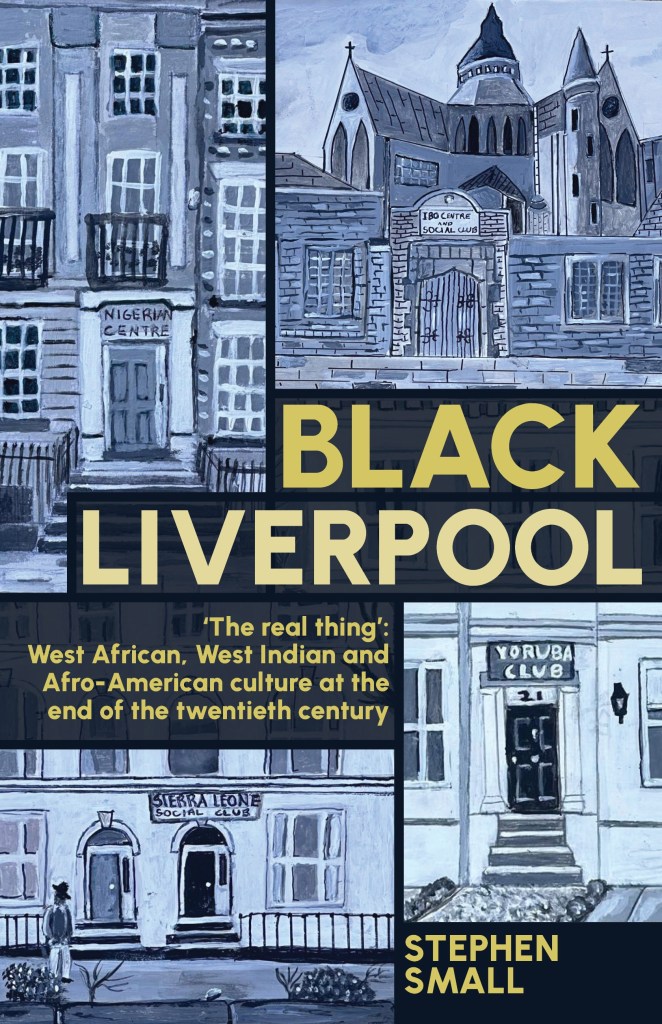
One of the main arguments of this new book is that while Black Liverpool shared many things in common with Black London and other cities at the start of the 1970s, there were also distinct differences. There were far more Africans than West Indians, more long-term citizens than recent immigrants, the highest proportion of inter-racial marriages and people of mixed race in the nation, and a far more vivid collective memory of imperialism in West Africa than in any other city. These differences arose from the unique history of the city’s role in slavery and the colonisation and exploitation of land and labour in West Africa; the settlement in Liverpool of (overwhelmingly male) seamen from West Africa; and the forced concentration of Black and multi-racial families in one neighbourhood, that is Liverpool 8 (later known as Toxteth). The city historically also had a far greater reliance on port activities and consistently higher rates of unemployment overall than in any other city. All these factors shaped the unique forms that Black culture took in the city.
My research draws on first-hand insights and experiences shared in more than seventy original interviews with Liverpool 8 residents, workers, activists and celebrities; as well as multiple interviews obtained from television, radio and social media. It draws on rich factual information from a wide array of leaflets, pamphlets, drawings and other documents from community and city organisations, and from newspapers. The people interviewed and the documents consulted reveal precious textured insights into Black culture in Liverpool, information not previously available in books and journals.
What I’ve found in Liverpool are cultural patterns that are unique in the country. They were directly shaped by an ocean of waves and flows, currents and undercurrents, tides and rushes, ebbs and flows of culture arriving on the city’s shores. It’s true that transnational Black culture in other cities reflected similar experiences, but not to the same extent, not with the same intensity, not in a community packed into one segregated neighbourhood, not over the decades, generations and longer, nor with the on-the-ground local experiences and memory of imperialism, as happened in Liverpool.
The stories in this book are local stories, as well as national stories. Consideration of Black Liverpool means that Black Britain cannot be extrapolated or understood from the experiences of Black London or the Windrush Generation alone. They are important considerations but fail to grasp the full story. What we need for a more complete account of Black Britain are more textured, inclusive and historically grounded accounts from across the nation.
Follow us for more updates
Sign up to our mailing list
Follow us on social media
www.liverpooluniversitypress.co.uk

