
Published in partnership with the Winthrop-King Institute, our World Writing in French series brings cutting-edge contemporary French-language fiction, travel writing, essays, and other prose to English-speaking readers. It serves as a vital reference point for contemporary French-language prose in English translation. In a new blog post to mark International Translation Day 2026, series editors Charles Forsdick and Martin Munro reflect on translation’s role in sustaining linguistic and literary diversity, and ask an urgent question: what can translation do?
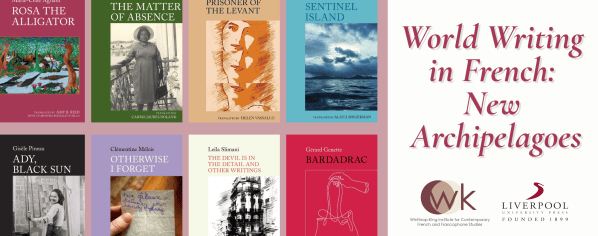
As scholars and teachers of languages, we have long been committed to challenging monolingual mindsets. We are keen to ensure not only that our students are enabled to engage with a range of languages but also that we encourage a wider public understanding of the importance of linguistic diversity. Linguistic diversity, as manifest in cultural production as it is in everyday life, is a key element of cultural identity. We are both specialists of French in the world, notably in the Caribbean, but have broader interests in French as a global language, and in French in its contacts with a range of other languages (notably the Creoles of the Americas). Launching the series World Writing in French: New Archipelagoes (WWiF) was a way of exploring how translation is indispensable to ensuring that linguistic diversity is not merely acknowledged but actively sustained through scholarship and practice. The collection seeks to publish a broad range of contemporary French-language fiction and prose translated for an English-speaking audience. The works we select for inclusion reflect the diversity and dynamism of new and recent writing in French from across the French-speaking world. A collaboration between a research centre (Winthrop-King Institute for Contemporary French and Francophone Studies at Florida State University) and an academic publisher (Liverpool University Press), the defining aim of the series is to encourage bibliodiversity as a vehicle of literary and linguistic diversity, circulating in English translation a range of contemporary French-language works otherwise not commercially available. In the title of our series, we borrowed the figure of the archipelago from Edouard Glissant, drawing on his concept of “archipelagic thinking” to support several aims: to encourage, in a modest way, greater diversity in the book publishing ecosystem; to champion relational connectivity across a range of literary works from across the French-speaking world; and to underline the importance of resistance to homogenizing global monocultures (and the multiple narratives that underpin them).
The series has allowed us to reflect on the relationship of translation to bibliodiversity – but also on the function and status of literature more broadly. In his novel Sympathy for the Phantom (forthcoming in our WWiF translation series), the author Michaël Ferrier writes about a senior university colleague in Japan who is organizing a major conference on “Identity and Globalization”, a theme that would appear to resonate with the aims of our translation series. The colleague wishes the narrator figure to be part of his group, as he would increase its diversity. The narrator mentions the importance of literature to such a conference, but the colleague is dismissive. “He waves his hand, annoyed, as if swatting a fly on the wooden table”, the narrator writes, “Literature is all well and good, but we have to move on, he tells me.”
Reflecting later on his colleague’s dismissiveness, the narrator writes: “I’ve noticed that before: literature annoys him or leaves him speechless, a misery. The truth is that literature is the great enemy of the university, that’s it. One and the other are incompatible, it is the great obsession of the professors: to recover, to collect, to reduce, to finish with this thing which moves and fidgets, which palpitates, to leave it for dead, then throw everything but the kitchen sink back up to the blue sky of thinking, and make a quick escape from the danger lurking in the ink…”
Literature is the great enemy of the university: in Ferrier’s telling, this is so as literature, in its unpredictable diversity, has the potential to be elusive, alive and dangerous, to escape categorization and even interpretation in ways that unsettle the colleague, who wants fixed ideas, identities, meanings and ways of being.
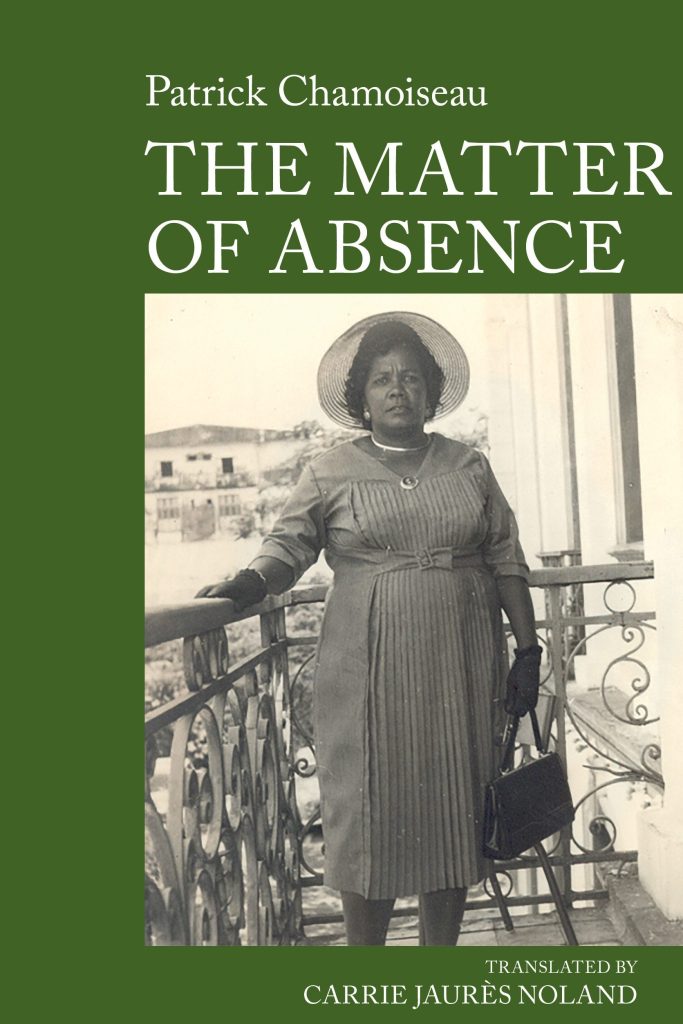
Literature, and especially the novel, has a potency for Ferrier that he brandishes and exploits, just as the great writers that he draws on and connects with – from Japan, France and also the Caribbean – have done themselves: authors such as Aimé Césaire, Maryse Condé, Edouard Glissant, Dany Laferrière and Patrick Chamoiseau, who wrote a foreword for the translation into English of Ferrier’s Mémoires d’outre mer in 2019.
In that foreword, Chamoiseau writes that the theme of Ferrier’s book is Relation, a concept that he borrows from the work of Glissant. “By means of the wretched workings of Western conquests and colonization,” Chamoiseau writes, “the world has become the Tout-monde, the world as one, everything. In our consciousnesses, our lives, our individual experiences freed from the old restrictions relating to identity and belonging, the world has been opened up to its own diversity” (vii). For each of us, Chamoiseau writes, everything is connected to everything; everything is now shaped in unpredictable multiple ways in a coming into contact of cultures and visions of the world, national histories and old phenotypes. This unprecedented mixing, far more unpredictable than a simple form of miscegenation, produces a human reality that is at once apparent and opaque, that we live day by day, but that most often we do not see, that we struggle against sometimes in ourselves and all around us” (viii).
Although he does not state it overtly, this interconnected world that Chamoiseau discerns in Ferrier’s work, this reordering of the world and of human and cultural relations, this new but ancient way of being in the world, is made in and through literature. Literature is understood here as the enemy of the university, of fixed ideas of identity and belonging. It is the great ally of Relation, of creating new ways of being in the world through words, sounds and rhythms.
What can literature do, Chamoiseau asks, in a recent essay, when it cannot? Que peut Littérature quand elle ne peut? When it faces the many atrocities, disasters, genocides – and the general sense of injustice in a world gone wrong? How can, how should one write in the face of such catastrophes?
By way of response, Chamoiseau, on the one hand, denounces the state of the contemporary literary market, saying that “our literatures are becoming strangely innocuous”. But on the other hand, he suggests it is at this moment of silence, inaction and powerlessness that literature “asserts itself” and, he says, “rises to meet its obligation”. Today, then, he writes, faced with a time of crisis and disaster, Adorno is “still correct: It is impossible to act as if nothing is happening. Never in my life have I felt the urgency of our literature so keenly. It stands at the center of nothing, yet everything converges within it and radiates outward through it.”
Literature for Chamoiseau has a paradoxical power, one that is implicit also in Ferrier’s reflections in Sympathy for the Phantom: just at the point of its powerlessness, its innocuousness, it becomes suddenly relevant, vital, necessary.
Such ideas and convictions underlie our Liverpool University Press translation series, World Writing in French, which was born from a shared belief in the power of literature, and specifically, the many writers who had inspired our academic work. Following Chamoiseau’s thoughts on the potency and necessity of literature more generally, we now ask ourselves an urgent and related question: what can translation do?
Charles Forsdick, University of Cambridge
Martin Munro, Florida State University.
World Writing in French: New Archipelagoes
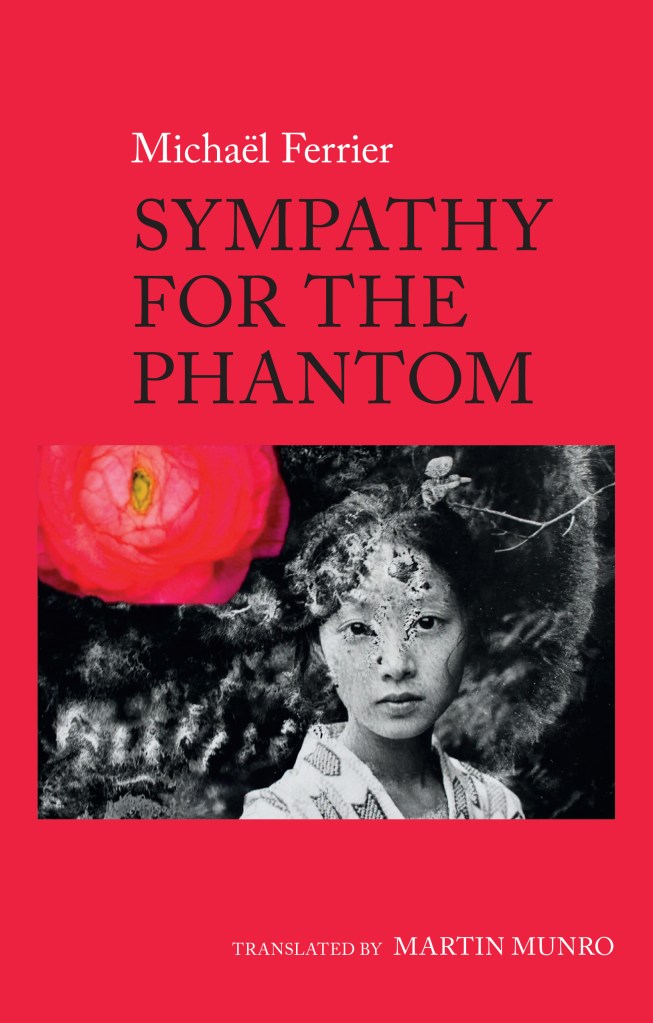
FORTHCOMING TITLE
Sympathy for the Phantom: by Michaël Ferrier
Translated by Martin Munro Sympathy for the Phantom marks a new level of ambition and achievement for Tokyo-based, French-Mauritian author Michaël Ferrier. It is his first full-length work of fiction that stages something of a turn towards France and Frenchness, and the narrator’s experiences of those concepts after a decade or so in Japan. Who is French? What is Frenchness? And how does France reckon with its colonial past in the present?
Available in a dual edition hardback and paperback with 20% off when you purchase via the LUP website.
Pre-order this book >
Recommend to your librarian to gain access via your institution >
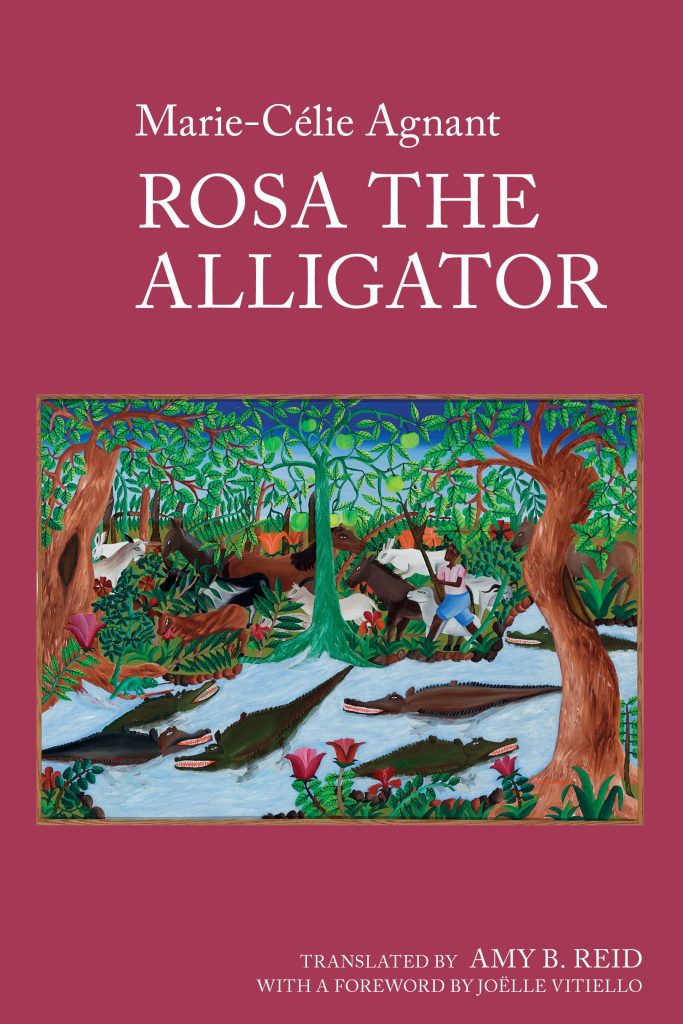
Also in the series

Follow us for more updates
Sign up to our mailing list
Follow us on social media
www.liverpooluniversitypress.co.uk

